Rural power quality must lead India's next electricity reforms: Experts
Synopsis
India has connected nearly every village to the grid — but experts warn that access without reliability is an incomplete victory. At a New Delhi roundtable focused on Uttar Pradesh, former UPERC chairman Suresh Kumar Agarwal argued that electricity quality is now a matter of dignity and livelihood, not just infrastructure, and that the next wave of reforms must fix distribution from the ground up.
Key Takeaways
Former UPERC Chairman Suresh Kumar Agarwal called reliable electricity a matter of dignity and livelihood , not merely infrastructure, at a roundtable on 7 July in New Delhi .
Experts identified network constraints , staffing shortages and poor monitoring of rural feeders as critical gaps in India’s power distribution system.
Dr Debajit Palit of Chintan Research Foundation said future reforms must shift focus from electricity access to reliability, quality and consumer-centric services .
Uttar Pradesh was highlighted as a key test case given its rising demand, rapid industrialisation and the rollout of the PM Surya Ghar initiative.
A joint policy brief on bridging the rural-urban power divide was unveiled by researchers from APCO and CRF at the event.
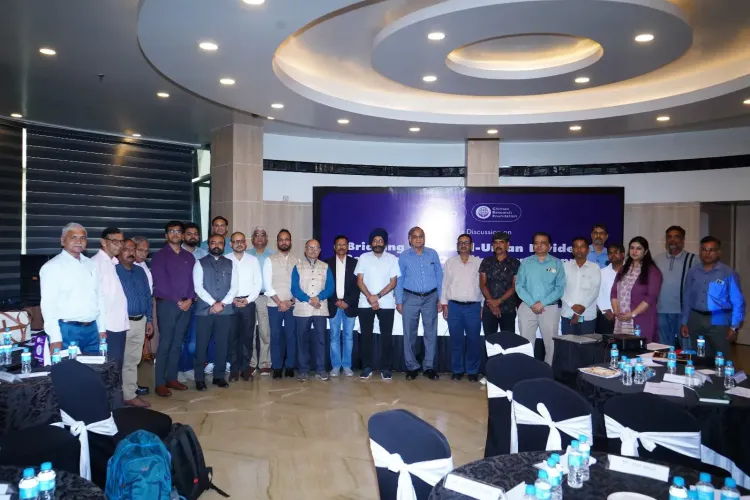
Ensuring reliable and quality electricity supply in rural areas must be the defining priority of India's next phase of power sector reforms, experts said at a high-level roundtable held in New Delhi on Tuesday, 7 July. The discussion brought together policymakers, researchers and sector specialists to examine the persistent rural-urban divide in electricity access and service quality, with a focus on Uttar Pradesh.
Keynote: Electricity as Dignity, Not Just Access
Former Uttar Pradesh Electricity Regulatory Commission (UPERC) Chairman Suresh Kumar Agarwal delivered the keynote address, arguing that the conversation around power supply must move well beyond basic electrification. “Electricity supply is not just for light and fan — it is a matter of dignity, honour and livelihood,” he said.
Agarwal acknowledged that past reforms had delivered significant gains in generation capacity and nationwide electrification, but stressed that reliability and service quality — particularly in rural areas — remain “major challenges.” He identified network constraints, staffing shortages, distribution planning gaps and inadequate monitoring of rural feeders as the critical bottlenecks that structural reforms must address.
Sector at a Crossroads: From Access to Reliability
Dr Debajit Palit, Centre Head of the Centre for Climate Change and Energy Transition at Chintan Research Foundation (CRF), said India’s electricity sector has reached a stage where future reforms must pivot from expanding access to delivering reliability, quality and consumer-centric services.
He noted that the growing role of renewable energy in meeting electricity demand has made the distribution segment the crucial link between policy intent and consumer experience. This comes amid a broader push under the PM Surya Ghar initiative, which is accelerating rooftop solar adoption and adding new complexity to distribution network management.
Uttar Pradesh: A Critical Test Case
Uttar Pradesh, with its rapidly rising power demand, expanding industrialisation and persistent rural-urban service disparities, was highlighted as both a major challenge and a significant opportunity. Experts at the roundtable argued that structural reforms piloted in the state could serve as a replicable model for other large states grappling with similar distribution-side constraints.
APCO Associate Director Vipin Chanddra welcomed participants and underscored the importance of strengthening the power distribution system through evidence-based policy dialogue.
Policy Brief Unveiled
During the inaugural session, speakers unveiled a joint policy brief titled ‘Bridging the Rural-Urban Divide in Reliable and Quality Power Supply: A Path to Equitable Development’, prepared by researchers from APCO and CRF. The brief lays out a framework for addressing structural inequities in electricity service delivery, with Uttar Pradesh as its primary focus.
The roundtable was organised by APCO in collaboration with Chintan Research Foundation. As India’s power sector looks beyond the milestone of near-universal electrification, the question of whether rural consumers receive the same quality of supply as their urban counterparts is set to define the next decade of energy policy.
Point of View
But the harder question is institutional. Distribution companies in states like Uttar Pradesh are financially stressed, politically constrained and chronically understaffed — conditions that no policy brief alone can fix. The PM Surya Ghar push adds urgency but also complexity: rooftop solar on a fragile rural feeder is not a solution without a smarter grid behind it. The real reform test is whether the Centre and state governments are willing to restructure DISCOMs in ways that go beyond tariff revision and touch governance, accountability and workforce capacity.
NationPress
6 Oct 2026
Frequently Asked Questions
What was the main message of the New Delhi power roundtable on 7 July?
Experts at the roundtable argued that India’s next phase of power sector reforms must prioritise the quality and reliability of electricity supply in rural areas, not just access. Former UPERC Chairman Suresh Kumar Agarwal said reliable electricity is a matter of dignity and livelihood, and called for structural reforms to address distribution-side gaps.
Why is Uttar Pradesh the focus of rural electricity reform discussions?
Uttar Pradesh was highlighted because of its rapidly rising power demand, expanding industrialisation, persistent rural-urban service disparities and the ongoing rollout of the PM Surya Ghar initiative. Experts said reforms piloted there could serve as a replicable model for other large Indian states.
What are the key barriers to reliable rural electricity supply in India?
According to experts at the roundtable, the main barriers include network constraints, staffing shortages, inadequate distribution planning and poor monitoring of rural feeders. These structural gaps mean that even electrified villages often receive unreliable or poor-quality power.
What is the policy brief released at the roundtable?
Researchers from APCO and Chintan Research Foundation jointly released a policy brief titled ‘Bridging the Rural-Urban Divide in Reliable and Quality Power Supply: A Path to Equitable Development’. It lays out a framework for addressing structural inequities in electricity service delivery, with a focus on Uttar Pradesh.
How does the PM Surya Ghar initiative relate to rural power quality?
The PM Surya Ghar initiative, which promotes rooftop solar adoption, is increasing the complexity of rural distribution networks. Experts noted that as renewable energy plays a growing role in meeting demand, the distribution segment becomes the critical link between policy and consumers — making quality reforms even more urgent.