CM Saini Hails 12 Years of Vikas Bhi Virasat Bhi
Synopsis
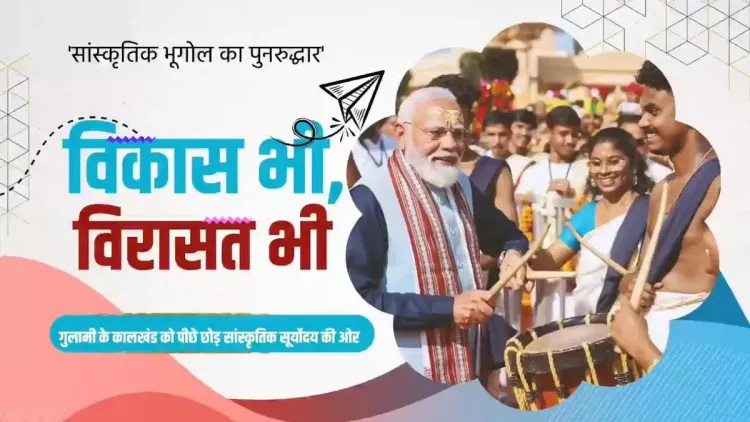
Haryana Chief Minister Nayab Singh Saini has lauded the Modi government's 12-year record on the 'Vikas Bhi, Virasat Bhi' agenda, citing the Ram Mandir consecration, Kashi Vishwanath Corridor, Mahakal Lok, Kedarnath redevelopment, and Somnath development as milestones in India's cultural renaissance.
Key Takeaways
CM Nayab Singh Saini posted on 18 June 2026 marking 12 years of the Modi government's 'Vikas Bhi, Virasat Bhi' policy.
The Ram Mandir consecration at Ayodhya on 22 January 2024 is cited as a landmark cultural achievement.
The Kashi Vishwanath Corridor (inaugurated December 2021 ) and Mahakal Lok (inaugurated October 2022 ) are highlighted as heritage redevelopment milestones.
Antiquities repatriation and digitisation of heritage objects are named as pillars of cultural diplomacy.
The PRASAD scheme , launched in 2014-15 , underpins the central government's pilgrimage and heritage development framework.
Saini argues these projects have boosted tourism, employment, and local economies alongside their cultural significance.
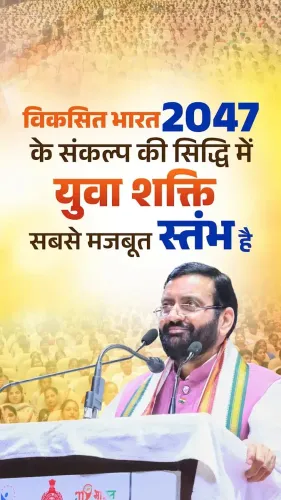
Haryana Chief Minister Nayab Singh Saini on Thursday, 18 June 2026 praised the 12-year record of the Narendra Modi-led central government, saying India has written a 'new chapter of development and cultural renaissance' under the mantra of 'Vikas Bhi, Virasat Bhi' — 'Development as well as Heritage.'
Context
Posting on X under the hashtag #12YearsOfVikasBhiVirasatBhi, CM Saini said India is today 'swiftly advancing towards modernity while preserving its glorious traditions, and is asserting its identity on the world stage with confidence.' The post marks a broader BJP exercise to document the Modi government's cultural and developmental legacy at the 12-year milestone since the party came to power in May 2014.
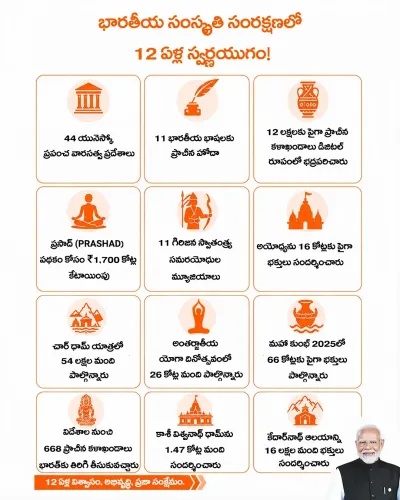
Saini highlighted three broad pillars: the repatriation of ancient artefacts to India, the digitisation of heritage objects, and the conservation of historical and cultural sites. He also pointed to sustained promotion of Indian languages, art, and culture as part of the same continuum.
Policy Backdrop
The projects cited by Saini have well-documented policy lineages. The Kashi Vishwanath Corridor in Varanasi was inaugurated in December 2021, linking the ancient Shiva temple directly to the Ganga ghats. The Mahakal Lok corridor at Ujjain followed in October 2022, redeveloping the precinct around the Mahakaleshwar Temple to improve pilgrim facilities.
The Ram Mandir consecration at Ayodhya — which Saini describes as the 'pran pratishtha of Prabhu Shri Ram Mandir' — took place on 22 January 2024, following years of government-supported construction. Kedarnath Dham in Uttarakhand saw phased redevelopment after the devastating 2013 floods, and the Somnath Temple precinct in Gujarat has undergone successive phases of conservation and tourism development. These efforts run parallel to the central government's PRASAD scheme, launched in 2014-15, which channels funds specifically to pilgrimage and heritage destinations.
On the cultural-diplomacy front, the government has pursued repatriation of antiquities from foreign collections and digitisation of museum holdings — both cited by Saini as evidence of the 'unprecedented efforts' made for heritage preservation.
Stakeholders and Impact
The redevelopment of major pilgrimage corridors has directly affected pilgrims, the domestic tourism sector, and local economies in states such as Uttar Pradesh, Uttarakhand, Madhya Pradesh, and Gujarat. Improved roads, airports, and amenities around these sites have drawn higher footfall to towns that are heavily dependent on religious tourism.
Saini's post argues that these projects have given 'new identity to centres of faith' while simultaneously generating 'new momentum for tourism, employment, and local economies.' The research notes that precise post-2024 revenue or employment figures remain unverified in established public records, and NationPress does not independently assert specific numbers beyond what is documented.
What's Next
Further phases of temple-corridor projects and their measurable impact on state tourism revenues are expected to feature in upcoming central and state budget documents and tourism ministry updates. Possible new parliamentary legislation on antiquities export controls, or state-level heritage bye-laws, could add a regulatory dimension to the cultural agenda Saini has championed here.
As BJP governments at the centre and in states continue to frame heritage revival as inseparable from economic development, the 'Vikas Bhi, Virasat Bhi' formulation is likely to remain a central plank in the party's political communication ahead of future electoral cycles.
Point of View
Framing temple-corridor projects and antiquity repatriation as evidence of a confident, self-reliant India rather than purely religious gestures. The timing — marking exactly 12 years in power — signals a coordinated party-wide communication push to consolidate this narrative before the next electoral cycle. By invoking tourism and employment alongside faith, Saini is also pre-empting the standard opposition critique that heritage spending crowds out welfare expenditure. The broader arc points to 'Vikas Bhi, Virasat Bhi' hardening from a campaign slogan into a durable governing philosophy that state-level BJP leaders are now expected to amplify.
NationPress
17 Sept 2026
Frequently Asked Questions
What is 'Vikas Bhi Virasat Bhi' and what does it mean?
'Vikas Bhi, Virasat Bhi' is a Hindi phrase meaning 'Development as well as Heritage.' It is the Modi government's policy formulation that links infrastructure and economic growth with the preservation and promotion of India's cultural and religious heritage.
What did Haryana CM Nayab Singh Saini say about PM Modi's 12 years?
CM Saini said that under PM Modi's leadership over 12 years, India has written a new chapter of development and cultural renaissance, citing projects like the Ram Mandir consecration, Kashi Vishwanath Corridor, Mahakal Lok, Kedarnath redevelopment, and Somnath Temple development.
When was the Ram Mandir in Ayodhya consecrated?
The Ram Mandir in Ayodhya was consecrated on 22 January 2024 in a ceremony widely described as a landmark moment for India's cultural and religious heritage.
What is the PRASAD scheme in India?
The PRASAD (Pilgrimage Rejuvenation and Spiritual Augmentation Drive) scheme was launched by the central government in 2014-15 to develop and beautify pilgrimage and heritage destinations across India, funding infrastructure improvements around major religious sites.
What is the Kashi Vishwanath Corridor and when was it inaugurated?
The Kashi Vishwanath Corridor is a redevelopment project in Varanasi that links the ancient Kashi Vishwanath temple directly to the Ganga ghats. It was inaugurated in December 2021 as part of the government's broader heritage revival programme.