Gujarat Dy CM Sanghavi joins 149th Rath Yatra as procession moves through Dariyapur
Synopsis
With 30,000-plus personnel and AI-powered surveillance, the 149th Ahmedabad Rath Yatra is being guarded at a scale rarely seen before. Gujarat Deputy CM Harsh Sanghavi's ground-level presence alongside the DGP and police commissioner signals how seriously the state is treating security for India's second-largest Jagannath procession.
Key Takeaways
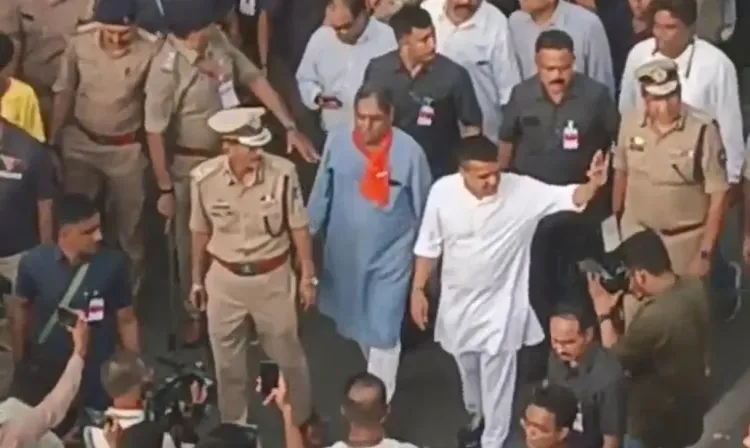
Gujarat Deputy CM Harsh Sanghavi joined the 149th Jagannath Rath Yatra at Dariyapur, Ahmedabad on Thursday evening .
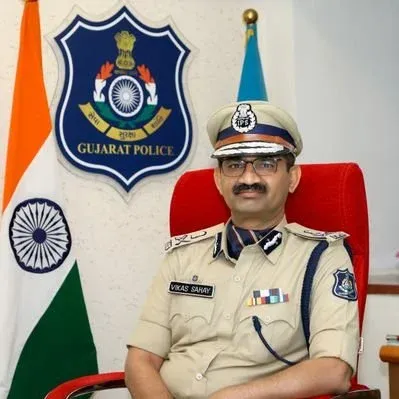
Malik and Police Commissioner Anupam Singh Gahlaut accompanied him to review security arrangements on the ground.
The procession follows a 16.2-km route starting from Shree Jagannath Temple, Jamalpur , held annually on Ashadhi Bij .
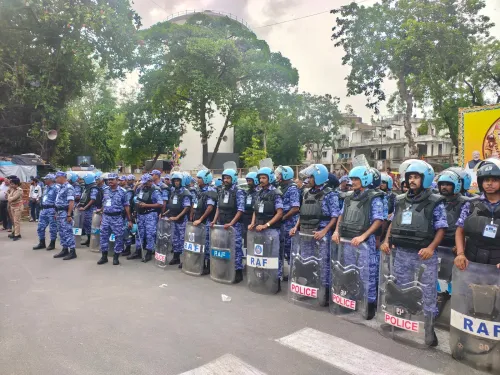
More than 30,000 police personnel from state police, SRPF, and CAPF have been deployed along the route.
Advanced surveillance includes AI-enabled monitoring , facial recognition cameras , drone surveillance , and GPS tracking .
The Ahmedabad Rath Yatra is India's second-largest Jagannath procession after Puri .
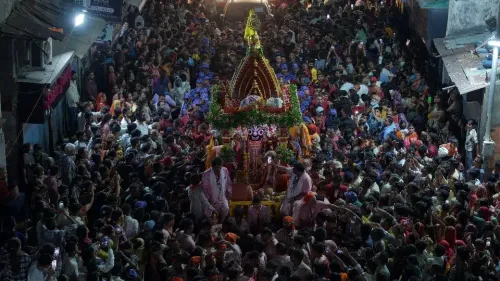
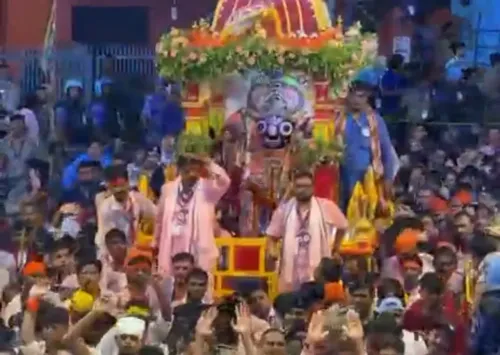
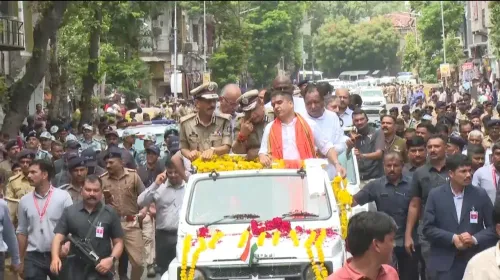
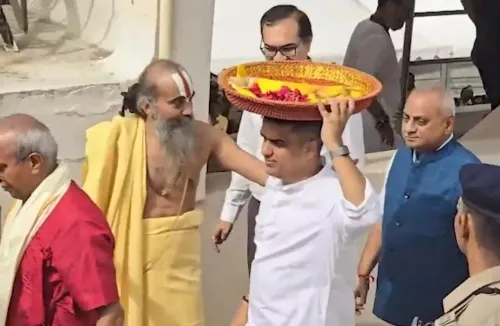
Gujarat Deputy Chief Minister Harsh Sanghavi joined the 149th Jagannath Rath Yatra at the Dariyapur area in Ahmedabad on Thursday evening, as the centuries-old procession continued its customary passage through the walled city. The visit underscored the state government's direct oversight of one of India's largest annual religious gatherings.
Senior Officials Review Security on the Ground
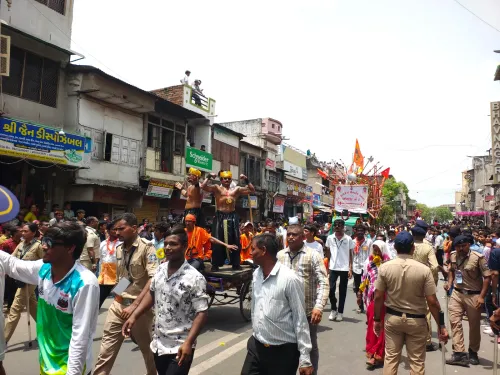
Sanghavi was accompanied by Director General of Police G.S. Malik and Ahmedabad Police Commissioner Anupam Singh Gahlaut, who joined him from Lolhandwala Hospital in the Dariyapur area. The senior officials reviewed the procession's movement at a key checkpoint and interacted with officers managing security and crowd control along the route.
Ahead of the yatra, Sanghavi had personally inspected the entire 16.2-km route alongside Malik and Gahlaut, assessed arrangements at sensitive locations, and directed officials to ensure the event proceeded without disruption.
Scale of the Procession and Its Route
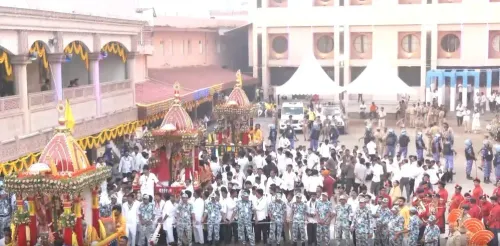
The yatra commenced earlier in the day from the historic Shree Jagannath Temple in the Jamalpur area, following traditional religious rituals. It traces its customary path through the walled city before returning to the temple. The Ahmedabad Rath Yatra, held annually on Ashadhi Bij, is widely regarded as the second-largest Jagannath Rath Yatra in India after the one held in Puri, and draws lakhs of devotees each year.
Unprecedented Security Deployment
This year's edition is being conducted under what authorities describe as one of the most extensive security deployments in the city's history. More than 30,000 police personnel — drawn from the state police, the State Reserve Police Force (SRPF), and the Central Armed Police Forces (CAPF) — have been positioned along the route.
Authorities have also deployed a suite of advanced surveillance tools, including artificial intelligence-enabled monitoring, facial recognition cameras, drone surveillance, GPS tracking, body-worn cameras, and an integrated command-and-control system for real-time oversight of the procession. This marks a significant technological upgrade over previous years.
Civic and Emergency Services on Standby
Beyond law enforcement, civic agencies and emergency services remain stationed along the route to provide medical assistance, traffic management, and other essential support. The multi-agency coordination reflects the scale of the event, which sees participation from lakhs of devotees across Gujarat and beyond.
With the procession on track along its traditional corridor, all eyes remain on the safe completion of the yatra and its return to the Jamalpur temple later in the evening.
Point of View
000-plus personnel and AI-driven surveillance for a religious procession reflects a broader shift in how Indian states manage mass gatherings — treating crowd safety as a technology problem as much as a policing one. Sanghavi's personal route inspection before the event is also a political signal: in Gujarat, high-profile religious occasions carry electoral weight, and visible ministerial presence on the ground is standard practice. The real measure of success here is not the spectacle of the security apparatus but whether it remains unobtrusive enough to let lakhs of devotees participate freely — a balance that large deployments do not always strike.
NationPress
15 Oct 2026
Frequently Asked Questions
What is the Ahmedabad Jagannath Rath Yatra?
The Ahmedabad Jagannath Rath Yatra is an annual religious procession held on Ashadhi Bij, originating from the historic Shree Jagannath Temple in the Jamalpur area. It is considered the second-largest Jagannath Rath Yatra in India after the one in Puri, attracting lakhs of devotees each year.
Which edition of the Rath Yatra is being held in 2025?
The 2025 edition is the 149th Jagannath Rath Yatra in Ahmedabad. The procession follows a 16.2-km route through the walled city before returning to the Jamalpur temple.
Why did Gujarat Deputy CM Harsh Sanghavi join the Rath Yatra?
Sanghavi joined the procession at the Dariyapur area on Thursday evening to review security arrangements and oversee the event's progress alongside senior police officials. He had also personally inspected the full route ahead of the yatra to ensure smooth and safe conduct.
How many police personnel are deployed for the Ahmedabad Rath Yatra?
More than 30,000 police personnel have been deployed, drawn from the state police, the State Reserve Police Force, and the Central Armed Police Forces. Authorities have also introduced AI-enabled surveillance, facial recognition cameras, drone monitoring, and GPS tracking for real-time oversight.
What advanced security measures are in place for the 2025 Rath Yatra?
Authorities have deployed artificial intelligence-enabled monitoring, facial recognition cameras, drone surveillance, GPS tracking, body-worn cameras, and an integrated command-and-control system. Civic agencies and emergency services are also stationed along the route for medical assistance and traffic management.