CM Himanta Biswa Sarma pays tribute to Lakshmi Nandan Bora
Synopsis
Assam Chief Minister Himanta Biswa Sarma remembered eminent litterateur Dr Lakshmi Nandan Bora on his Punyatithi, hailing the Sahitya Akademi awardee as a towering figure of Assamese literature whose writings captured society's struggles and the pulse of changing times, and saying his legacy will continue to inspire generations of readers and writers.
Key Takeaways
Assam CM Himanta Biswa Sarma posted a tribute to Dr Lakshmi Nandan Bora on his Punyatithi on 3 June 2026.
Bora was a Sahitya Akademi awardee (1980) and a leading figure in modern Assamese fiction.
Sarma described Bora's writings as capturing 'the spirit of society, the struggles of people and the pulse of changing times'.
The tribute fits a wider pattern of Assam government recognition of literary figures tied to Assamese identity.
Commemorative references are likely at upcoming Asom Sahitya Sabha sessions and state cultural events.
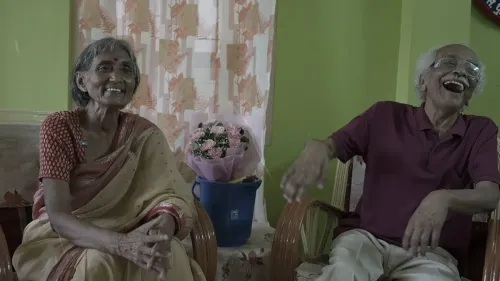
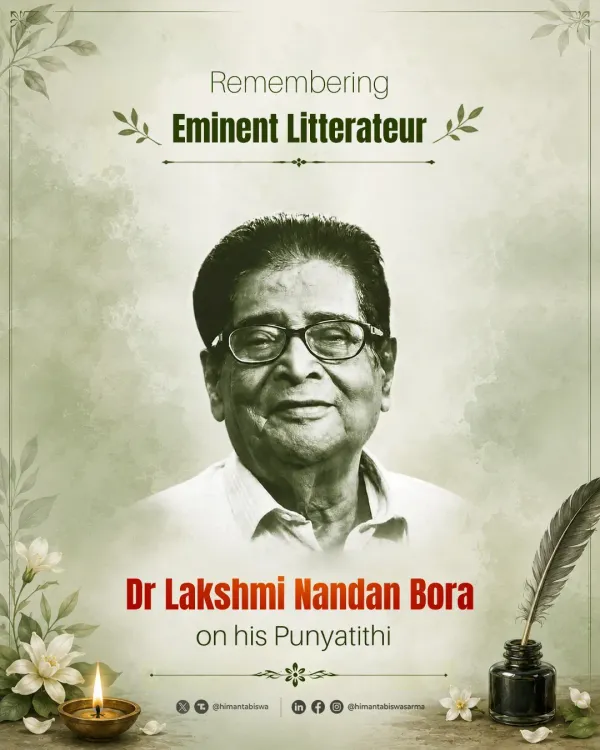
Assam Chief Minister Himanta Biswa Sarma on Wednesday, 3 June 2026 paid tribute to eminent Assamese litterateur Dr Lakshmi Nandan Bora on his Punyatithi (death anniversary), describing him as a 'towering figure of Assamese literature' whose writings 'captured the spirit of society, the struggles of people and the pulse of changing times'. The remembrance, posted on X, was accompanied by a photograph of the late author.
Context
In his post, the Chief Minister wrote that Bora's 'rich literary legacy will continue to inspire generations'. The brief tribute frames the late novelist as a chronicler of Assamese society across decades of change, an assessment widely shared within the state's literary establishment.
Dr Lakshmi Nandan Bora was among the most decorated voices in modern Assamese fiction. Trained originally as a physicist, he built a parallel career as a novelist and short-story writer, receiving the Sahitya Akademi Award in 1980 for his contribution to Assamese letters. His body of work is widely read as a record of the social churn that shaped twentieth-century Assam.
Policy backdrop
Public tributes by the Assam Chief Minister to literary figures form part of a sustained pattern of state-level cultural observance. Successive governments in Dispur have used such occasions to reaffirm the centrality of the Assamese language and its literary canon, often in coordination with institutions such as the Asom Sahitya Sabha, the apex body for Assamese literature.
For a Chief Minister who also serves as convenor of the North-East Democratic Alliance (NEDA), cultural commemorations carry a wider regional resonance, signalling continuity with the linguistic and literary identity that anchors politics across the Northeast.
Stakeholders and impact
The most immediate audience for the tribute is the Assamese literary community, including readers, publishers and university departments that have engaged with Bora's novels and essays over the years. Recognition from the head of government typically reinforces the inclusion of such writers in school and college reading lists and in state-supported translation programmes.
For general readers, the post serves as a reminder of a writer whose fiction is often cited for its sociological texture. By foregrounding 'the struggles of people', the Chief Minister's framing aligns Bora with a tradition of Assamese realism that has shaped the regional novel.
What's next
Punyatithi observances of major Assamese writers are frequently marked by commemorative readings, lectures and felicitations organised by literary bodies and district administrations. References to Bora's legacy can be expected in forthcoming sessions of the Asom Sahitya Sabha and in state-supported cultural programming through the year.
The tribute also underlines a recurring choice by the Sarma government to keep literary and cultural figures visible in public discourse, a stance likely to continue shaping how the state projects its identity within the broader Northeast.
Point of View
Himanta Biswa Sarma reinforces the BJP's effort to be seen as a custodian of Assamese linguistic and cultural identity, a positioning that has been central to its electoral consolidation in the state. It also fits a broader Northeast strategy where cultural recognition runs alongside political outreach. Expect more such commemorations as Assam moves deeper into the next electoral cycle.
NationPress
18 Oct 2026
Frequently Asked Questions
Who was Dr Lakshmi Nandan Bora?
Dr Lakshmi Nandan Bora was an eminent Assamese novelist and short-story writer who received the Sahitya Akademi Award in 1980. Trained as a physicist, he built a parallel career in literature and is regarded as a major chronicler of twentieth-century Assamese society.
What did Himanta Biswa Sarma say about Lakshmi Nandan Bora?
The Assam Chief Minister called Bora a 'towering figure of Assamese literature' whose writings 'captured the spirit of society, the struggles of people and the pulse of changing times', adding that his legacy would continue to inspire future generations.
When is Lakshmi Nandan Bora's Punyatithi observed?
His Punyatithi, or death anniversary, was marked on 3 June 2026, when the Assam Chief Minister posted a public tribute on X.
What awards did Lakshmi Nandan Bora receive?
He received the Sahitya Akademi Award in 1980 for his contribution to Assamese literature, among other recognitions accumulated over a long writing career.
Why do Assam Chief Ministers publicly mark literary anniversaries?
Public tributes to writers are part of a sustained pattern in Assam of linking state leadership to the Assamese literary canon, reinforcing regional linguistic identity and aligning governance with cultural institutions such as the Asom Sahitya Sabha.