Jharkhand opium crackdown: Satellite watch on 11 districts

Synopsis
For the first time, NCB satellite imagery is being used to find illegal opium fields hidden in Jharkhand's hills and forests. The 11-district drive pairs eyes in the sky with drones, GIS mapping and village awareness vans. The aim is to end illicit cultivation by December 2027.
Key Takeaways
Jharkhand Police , district administrations and the NCB launched a special anti-opium drive across 11 districts .
NCB satellite imagery is being used for the first time to detect cultivation in remote hilly and forest areas.
The drive falls under the Centre's Narcotics Control Vision Document 2026-2029 , which targets complete elimination by December 2027 .
Eight awareness vehicles will tour villages in Ranchi district , focusing on Bundu , Tamar , Sonahatu and Namkum , over the next month.
In Chatra , police and forest departments are using drones and GIS technology.
Illegal cultivation, or leasing land for it, is a serious offence under the NDPS Act .
The Jharkhand Police, district administrations and the Narcotics Control Bureau (NCB) have launched a special drive against illegal opium cultivation across 11 affected districts, using satellite surveillance to find hidden cultivation sites in remote areas. The operation was announced from Ranchi on 27 November 2026. It combines technology-driven monitoring, on-ground enforcement and awareness campaigns in rural communities.
Key Developments
Special vigilance has been ordered in districts including Ranchi, Khunti, Chatra, Palamu, Latehar, Hazaribagh and West Singhbhum, where illegal cultivation has been reported. Officials say the aim is to wipe out the illicit crop rather than simply contain it.
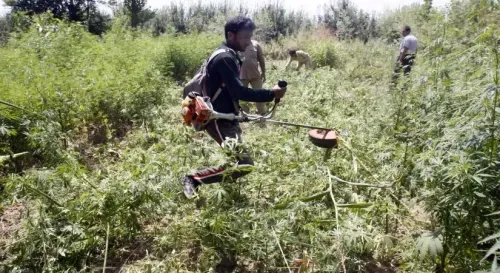
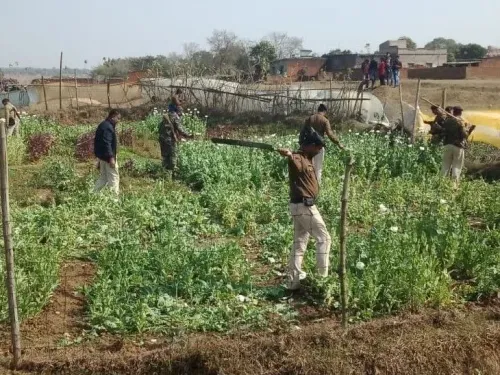
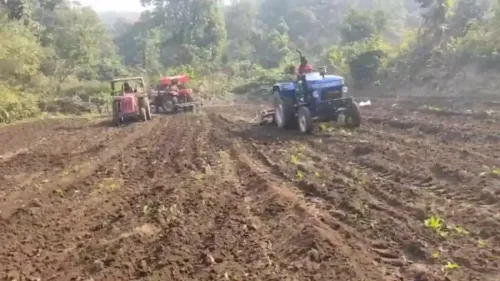
For the first time, satellite imagery supplied by the NCB is being used to spot suspected opium fields in inaccessible hilly and forest terrain. Images of suspicious locations will be shared directly with the district police concerned. Teams will then visit the sites to verify them physically and destroy the illegal crop.
Part of a National Plan
The campaign is being carried out under the Centre's Narcotics Control Vision Document 2026-2029, which aims to eliminate illegal opium cultivation completely by December 2027. That deadline is just over a year away.
Notably, the use of satellite data marks a shift from reliance on ground intelligence and routine patrols. Those methods have traditionally struggled in the dense forests and hill tracts where such cultivation tends to be concealed.
Awareness Drive in Ranchi
In Ranchi district, police and the administration have launched an extensive awareness campaign to discourage villagers from growing opium. Eight specially equipped awareness vehicles have been sent to villages and will tour rural areas over the next month.
The vehicles carry LED screens, loudspeakers and street-play teams. These will be used to inform villagers about the harmful consequences of illegal opium cultivation and the laws governing narcotic substances.
The drive is focusing on Bundu, Tamar, Sonahatu and Namkum. Panchayat representatives, Mukhiyas, Gram Pradhans and Mundas are being brought in to strengthen community participation and encourage farmers to take up alternative agricultural activities.
Drones and GIS in Chatra
In Chatra district, the police and forest departments have stepped up joint operations. Drones and Geographic Information System (GIS) technology are being used alongside tighter surveillance to detect illegal cultivation and encroachment on forest land.
This comes amid a wider push to bring technology-led enforcement to regions where terrain has long limited conventional policing.
Legal Warning and Informant Protection
The administration has warned that growing opium illegally, or giving land to others for the purpose, is a serious offence under the Narcotic Drugs and Psychotropic Substances (NDPS) Act. Offenders can face stringent punishment and fines.
Villagers have been urged to report illegal cultivation to the police or administration. Officials have assured that informants' identities will be kept confidential.
With the December 2027 deadline approaching, the coming harvest seasons will show whether satellite surveillance and community outreach can uproot opium cultivation from Jharkhand's remote districts.
Point of View
But they cannot explain why a farmer in a remote forest village planted it. The real test of this drive is the 'alternative agriculture' promise, which is mentioned but not spelled out. If destruction runs ahead of livelihood support, the crop may simply move to the next unmapped hillside. The December 2027 deadline is ambitious. It will be met only if enforcement data comes with transparent figures on acreage destroyed, cases filed and farmers successfully moved to other crops.
NationPress
27 Nov 2026
Frequently Asked Questions
What is the special drive against illegal opium cultivation in Jharkhand?
It is a joint operation by the Jharkhand Police, district administrations and the Narcotics Control Bureau across 11 affected districts. It uses satellite surveillance, drones and awareness campaigns to detect and destroy illegal opium crops.
Which districts are covered under the Jharkhand anti-opium drive?
The drive covers 11 districts, including Ranchi, Khunti, Chatra, Palamu, Latehar, Hazaribagh and West Singhbhum. In Ranchi district, it focuses on Bundu, Tamar, Sonahatu and Namkum.
How is satellite surveillance being used to detect opium cultivation?
The NCB is supplying satellite images of suspected cultivation in inaccessible hilly and forest areas, and these are shared directly with district police. Police teams then visit the sites to verify them and destroy the crops.
What is the deadline to eliminate illegal opium cultivation?
Under the Centre's Narcotics Control Vision Document 2026-2029, the goal is to eliminate illegal opium cultivation completely by December 2027.
What is the punishment for illegal opium cultivation in India?
Growing opium illegally, or providing land for it, is a serious offence under the NDPS Act and can lead to stringent punishment and fines. Officials have urged villagers to report such activity and have promised to keep informants' identities confidential.