NCB uses satellite mapping to destroy 458 acres of cannabis in Arunachal Pradesh
Synopsis
India's anti-narcotics agencies are no longer just arresting traffickers — they're erasing farms from space. Using satellite imaging cleared by the Home Ministry, the NCB and allied forces destroyed 458 acres of hidden cannabis in Arunachal Pradesh on November 7, pushing the state's 2026 destruction total to over eight times last year's figure. It is the most visible sign yet that the government's drug-free-by-2029 mission is moving from rhetoric to real supply-chain warfare.
Key Takeaways
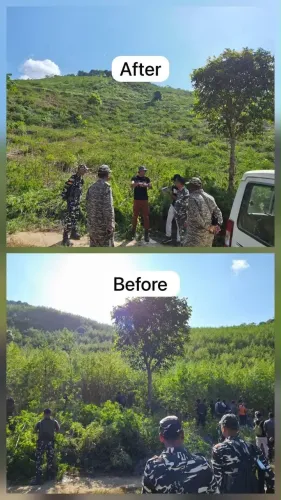
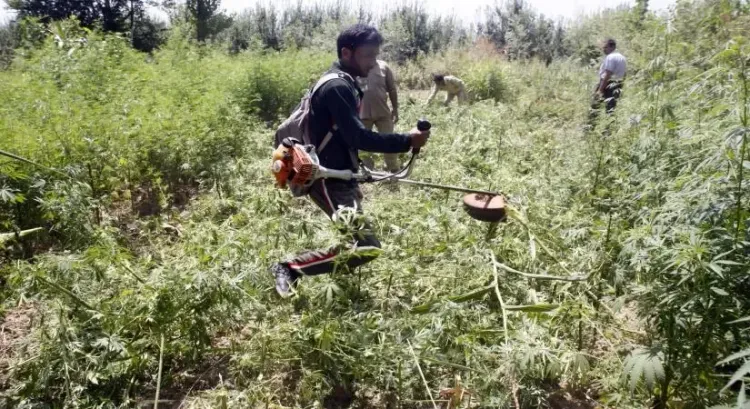
The NCB , SSB , and Arunachal Pradesh Police destroyed 458 acres of illicit cannabis on 7 November 2026 , eliminating an estimated 1,37,000 kg of produce.
A prior phase in October 2026 destroyed 1.37 lakh kilograms of cannabis plants in Arunachal Pradesh , mostly on community lands.
Total cannabis area destroyed in Arunachal Pradesh in 2026 is now more than eight times the 2025 figure.
Satellite mapping, authorised by the Union Home Ministry , is being used to locate hidden high-altitude farms that traffickers had placed beyond conventional reach.
Operations have extended to Himachal Pradesh (592 acres cleared), Odisha (30 acres in Kandhamal), and states including Jharkhand , Uttarakhand , Jammu and Kashmir , and Bihar .
A Vision Document (2026–2029) mandating hotspot identification and synchronised crop destruction has been approved at inter-agency level, aligned with the government's drug-free India by 2029 goal.
The Narcotics Control Bureau (NCB), in a major escalation of India's war on drugs, has deployed satellite mapping technology to locate and destroy illicit cannabis and opium cultivation sites across multiple states, with operations in Arunachal Pradesh alone wiping out 458 acres of illegal cannabis fields on 7 November 2026. The coordinated offensive — involving state police forces, the Sashastra Seema Bal (SSB), and central agencies — reflects a strategic pivot from traditional seizure-and-arrest tactics to dismantling the cultivation supply chain at its root.
Satellite Technology Changes the Game
Following authorisation by the Union Home Ministry, the NCB began using specialised imaging sensors and satellite mapping systems to pinpoint high-altitude illicit farms that traffickers had deliberately hidden deep inside mountains to evade detection. The technology allows agencies to identify concealed fields from space — a capability that was previously unavailable and has significantly expanded the operational reach of anti-narcotics forces.
According to officials, the use of satellite mapping has enabled synchronised crop destruction operations across rugged, hard-to-access terrain that would have been logistically difficult to survey on the ground.
Scale of Operations Across States
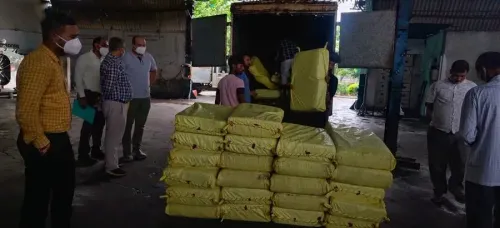
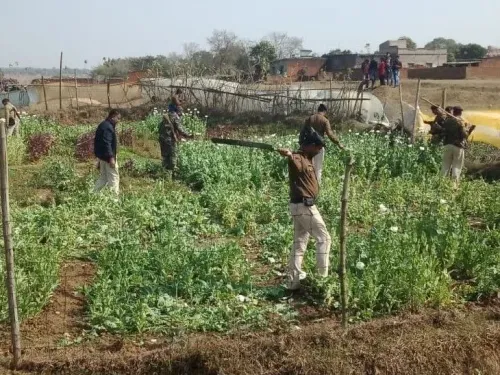
The 7 November joint operation in Arunachal Pradesh — involving the NCB, SSB, and Arunachal Pradesh Police — destroyed 458 acres of illicit cannabis cultivation. This followed a first phase conducted in October 2026, during which 1.37 lakh kilograms of cannabis plants grown mainly on community lands were eliminated. According to available data, the cumulative area of cannabis destroyed in Arunachal Pradesh in 2026 has surged to more than eight times the figure recorded in 2025.
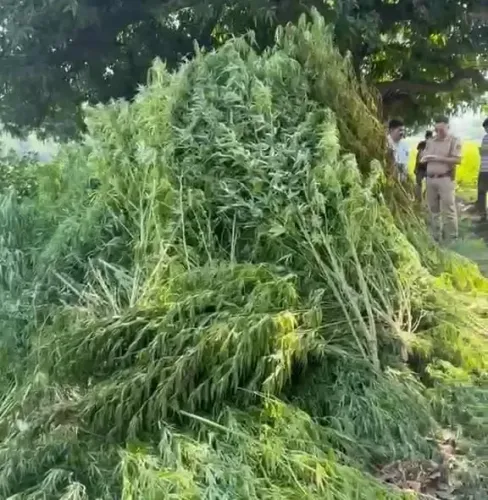
The November bust alone is estimated to have caused a direct supply loss of approximately 1,37,000 kilograms of cannabis produce before it could enter the market.
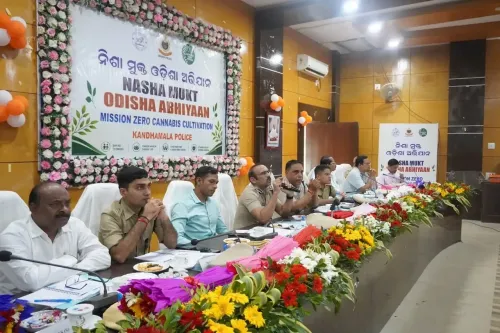
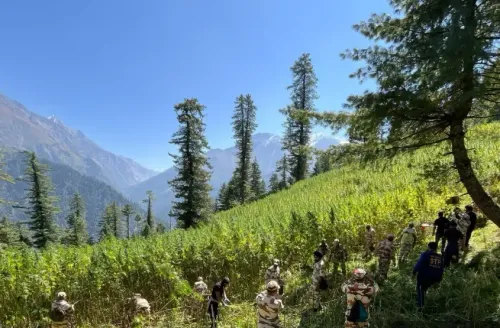
In Himachal Pradesh, coordinated operations targeting rugged and remote valleys have cleared 592 acres of concealed illicit cannabis setups. In Odisha, under the state government's Mission Zero Cannabis Cultivation framework, agencies destroyed 30 acres of operational fields hidden deep in Kandhamal district. Similar operations have also been carried out in Jharkhand, Uttarakhand, Jammu and Kashmir, and Bihar.
A Strategic Rethink: Beyond Arrests and Seizures
An official from the Intelligence Bureau told reporters that the agencies have fundamentally rethought their approach. 'Seizures and arrests are very much necessary, but not enough in the long run,' the official said, noting that narcotics cartels can rapidly replace arrested operatives and compensate for seized consignments by scaling up production.
The official added that by contrast, destroying cultivation fields, blocking supply routes, and severing the production chain at the source creates bottlenecks that cartels cannot easily overcome. This comes amid growing recognition within the security establishment that demand-side and trafficking-side interventions alone have failed to curb the broader narcotics trade.
Vision Document 2026–2029 and the Drug-Free India Goal
Officials said that during high-level inter-agency meetings with top officials of the Home Ministry, it was decided to prepare a Vision Document (2026–2029) that mandates identifying cultivation hotspots and carrying out synchronised crop destruction operations across the country. This roadmap is aligned with the Narendra Modi-led government's stated objective of making India drug-free by 2029.
The scale of operations already underway suggests the Vision Document is being implemented in real time. Agencies acknowledge the challenge ahead: cartels are expected to innovate and adapt, and officials say the emphasis will be on staying ahead of those shifts to achieve a verifiable reduction in domestic drug supply.
Point of View
Yet India's illicit cultivation belt spans thousands of acres across difficult terrain in the northeast, Himachal, and tribal Odisha, much of it economically entrenched. The Vision Document's emphasis on hotspot identification is the right framework, but without publicly reported metrics — acreage destroyed versus estimated total cultivation, year-on-year seizure trends, and trafficking route disruption data — it risks becoming another well-intentioned headline that is hard to verify. The real test is whether the satellite data and destruction records are auditable, and whether the supply reduction translates into measurable price signals in street-level narcotics markets.
NationPress
9 Nov 2026
Frequently Asked Questions
How is the NCB using satellite technology to fight drug cultivation?
The NCB is using specialised satellite imaging sensors, authorised by the Union Home Ministry, to pinpoint illicit cannabis and opium farms hidden in high-altitude and remote terrain. The technology allows agencies to identify concealed fields from space, enabling targeted and synchronised crop destruction operations that were previously impossible given the inaccessibility of such sites.
How much illicit cannabis was destroyed in Arunachal Pradesh in 2026?
In Arunachal Pradesh, a first-phase operation in October 2026 destroyed 1.37 lakh kilograms of cannabis plants, followed by the destruction of 458 acres of cultivation on 7 November 2026. According to available data, the total area destroyed in the state in 2026 has surged to more than eight times the figure recorded in 2025.
Which states have seen anti-cannabis crop destruction operations?
Major operations have taken place in Arunachal Pradesh, Himachal Pradesh (592 acres cleared), and Odisha (30 acres in Kandhamal district under Mission Zero Cannabis Cultivation). Similar drives have also been conducted in Jharkhand, Uttarakhand, Jammu and Kashmir, and Bihar.
What is India's Vision Document 2026–2029 on drugs?
The Vision Document (2026–2029) is an inter-agency roadmap approved in high-level meetings between the NCB, state police forces, and the Union Home Ministry. It mandates the identification of cultivation hotspots and the execution of synchronised crop destruction operations, and is aligned with the government's goal of making India drug-free by 2029.
Why are agencies focusing on destroying fields rather than just making arrests?
Intelligence Bureau officials have noted that narcotics cartels can quickly recruit new operatives to replace those arrested and can compensate for seizures by increasing production. Destroying cultivation fields and blocking supply routes, by contrast, creates bottlenecks that are harder for cartels to overcome, making crop destruction a more durable long-term strategy than arrests and seizures alone.