Operation Shankar: 7,577 cannabis plants destroyed in Udaipur's Kotra tehsil

Synopsis
A three-agency joint operation in Udaipur's Kotra tehsil destroyed 7,577 cannabis plants with a street value of ₹11.76 crore — and it comes with a new administrative teeth: revenue officials who delay reporting illicit cultivation now face disciplinary action, signalling Rajasthan is moving from ad hoc raids to a systemic enforcement model targeting the December 2027 national eradication deadline.
Key Takeaways
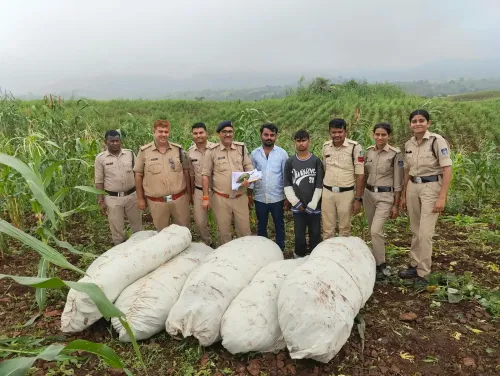
Operation Shankar , a joint drive by NCB Jodhpur , ANTF Rajasthan , and Rajasthan Police , destroyed 7,577 cannabis plants in Nayawas village, Kotra tehsil, Udaipur on 7 October 2026 .
The destroyed crop spanned 9.4 bighas of land, with an estimated yield of 2,273 kg of ganja valued at nearly ₹11.76 crore .
NCB Jodhpur has registered Crime No.
07/2026 ; investigation is ongoing.
Revenue officials including Patwaris and Girdawars are now mandated to report suspected narcotic cultivation to ANTF and NCB within 48 hours , with delays treated as serious negligence.
The operation supports India's National Vision Document on Narcotics Control , which aims to eliminate illicit cultivation by December 2027 .
A joint enforcement drive named Operation Shankar led by teams from the Narcotics Control Bureau (NCB) Jodhpur, Anti-Narcotics Task Force (ANTF) Rajasthan, and Rajasthan Police has uprooted large-scale illicit cannabis cultivation in Nayawas village of Kotra tehsil, Udaipur district, officials confirmed on Wednesday, 7 October 2026. The operation resulted in the destruction of approximately 7,577 cannabis plants across 9.4 bighas of land, dealing a significant blow to the narcotics supply chain in the region.
Scale of the Seizure
Authorities estimated the potential yield from the destroyed crop at around 2,273 kg of ganja, with a street market value of nearly ₹11.76 crore. The NCB Jodhpur has registered Crime No. 07/2026 in connection with the case, and a further investigation is currently underway. Officials described the cultivation as 'large-scale', indicating organised involvement rather than isolated farming activity.
New Reporting Framework for Revenue Officials
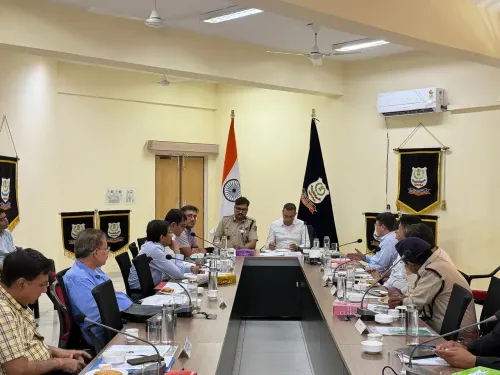
The crackdown is backed by a strengthened administrative framework. Patwaris have been formally instructed to inspect their jurisdictions during girdawari and promptly report any suspected narcotic crop cultivation to the concerned Girdawar and Tehsildar. Upon receiving such information, Girdawars are required to conduct on-site verification and submit a detailed report covering land records, the identity of the landholder, the type and extent of cultivation, individuals involved, and any prior enforcement action taken.
Critically, the state government has made it mandatory for these reports to be forwarded to the ANTF and the NCB within 48 hours of detection. Officials have been warned that any failure or delay in reporting will be treated as serious negligence and may attract disciplinary action. District Collectors have been directed to ensure strict compliance and maintain regular monitoring mechanisms.
Alignment With National Narcotics Control Vision
The operation aligns with India's National Vision Document on Narcotics Control, which sets a target to eliminate illicit cannabis and poppy cultivation in identified areas by December 2027. The strategy rests on sustained enforcement, community-level prevention, and coordinated action involving central and state agencies, district administrations, and local communities.
This comes amid a broader pattern of intensified anti-narcotics operations across Rajasthan, a state that has historically faced challenges with illicit cultivation in its tribal and forested interior regions. Udaipur district, which borders Madhya Pradesh — another region flagged for illicit poppy cultivation — has emerged as a priority zone for enforcement agencies.
What Happens Next
With Crime No. 07/2026 formally registered, the NCB Jodhpur is expected to identify and charge those responsible for the cultivation. Investigators will likely examine land ownership records and supply chain links to determine whether the crop was connected to larger trafficking networks. The stricter reporting chain now in place means future detections in Rajasthan are expected to be escalated faster, potentially leading to more frequent operations of this kind.
Point of View
577 plants worth ₹11.76 crore — is significant, but the more consequential development is the administrative reform running alongside it. Mandating Patwaris to report within 48 hours and threatening disciplinary action for delays attempts to close the gap that has allowed cultivation to go undetected for growing seasons at a stretch. Rajasthan's tribal interior, including tracts around Udaipur, has long been fertile ground for illicit cultivation partly because local revenue machinery had no formal accountability in the detection chain. Whether this new framework is enforced consistently — or becomes another directive that fades on paper — is the real story to watch ahead of the December 2027 national deadline.
NationPress
7 Oct 2026
Frequently Asked Questions
What is Operation Shankar in Udaipur?
Operation Shankar is a joint anti-narcotics enforcement drive conducted by NCB Jodhpur, ANTF Rajasthan, and Rajasthan Police in Nayawas village of Kotra tehsil, Udaipur district. On 7 October 2026, the operation resulted in the destruction of approximately 7,577 cannabis plants spread across 9.4 bighas of land.
What is the estimated value of the cannabis destroyed in Udaipur?
Authorities estimated the potential yield at around 2,273 kg of ganja with a street market value of nearly ₹11.76 crore. NCB Jodhpur has registered Crime No. 07/2026 and a further investigation is underway.
What new rules apply to revenue officials regarding narcotic crop reporting in Rajasthan?
Patwaris are now required to inspect their jurisdictions during girdawari and report any suspected narcotic cultivation to the Girdawar and Tehsildar. Reports must then be forwarded to the ANTF and NCB within 48 hours of detection, and any failure to comply will be treated as serious negligence attracting disciplinary action.
How does this operation connect to the national narcotics control plan?
The operation aligns with India's National Vision Document on Narcotics Control, which aims to eliminate illicit cannabis and poppy cultivation in identified areas by December 2027 through sustained enforcement and coordination between central and state agencies. Rajasthan's crackdown is part of this broader national framework.
Why is Udaipur a focus area for anti-narcotics operations?
Udaipur district, particularly its tribal interior regions such as Kotra tehsil, has been identified as a vulnerable area for illicit narcotic crop cultivation. Its proximity to Madhya Pradesh — another region flagged for illicit cultivation — makes coordinated enforcement by agencies like the NCB and ANTF especially critical.