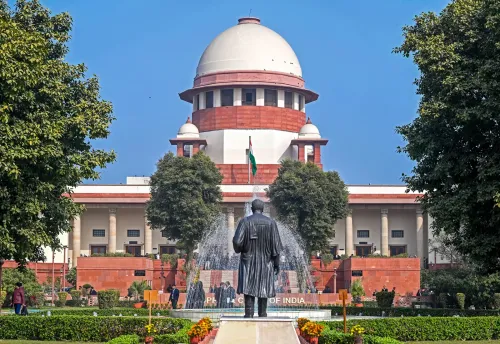
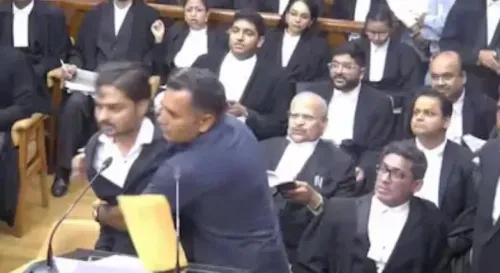
Supreme Court dismisses PIL on anti-cow slaughter law enforcement
Synopsis
The Supreme Court shut the door on a PIL demanding nationwide enforcement of anti-cow slaughter laws, telling the petitioner to file a contempt petition instead. The ruling signals the court's consistent reluctance to issue sweeping mandamus directions where targeted contempt remedies already exist — placing the enforcement burden squarely back on aggrieved parties.
Key Takeaways
The Supreme Court dismissed as withdrawn a PIL on 13 July seeking enforcement of anti-cow slaughter laws across India .
A bench of Justices Vikram Nath and Sandeep Mehta said petitioners must file a contempt petition if any existing court order is being violated.
The PIL, filed by advocate Barun Kumar Sinha , sought compliance with the 2005 Supreme Court ruling in State of Gujarat v.
Mirzapur Moti Kureshi Kassab Jamat .
The petition invoked Article 48 of the Constitution and cited multiple Constitution Bench judgments upholding bans on cow slaughter.
It also referenced a West Bengal government public notice from May 2025 reiterating cattle slaughter restrictions under state law.
The Supreme Court on Monday, 13 July dismissed as withdrawn a public interest litigation (PIL) that sought directions compelling the Centre, all states, and union territories to effectively enforce anti-cow slaughter laws and regulate slaughterhouses nationwide. The bench made clear that any grievance over non-compliance with an existing court order must be addressed through contempt proceedings, not a fresh PIL.
What the Court Said
A bench of Justices Vikram Nath and Sandeep Mehta declined to entertain the plea. 'If there is a violation of some order, file a contempt petition,' the bench told the petitioner. The Justice Mehta-led bench added: 'Dismissed as withdrawn. File a contempt petition if there's violation of some order.'
What the PIL Sought
Filed through advocate Barun Kumar Sinha, the PIL sought a writ of mandamus directing authorities to enforce anti-cow slaughter laws in line with the Supreme Court's 2005 ruling in State of Gujarat v. Mirzapur Moti Kureshi Kassab Jamat. It also sought directions to notify regulatory guidelines for slaughterhouses and to initiate legal action against operators found violating existing anti-slaughter statutes.
The petitioner contended that despite the apex court's judgment upholding the constitutional validity of a complete ban on cow slaughter, the ruling was allegedly not being implemented effectively across the country.
Constitutional and Legal Framework Cited
The petition traced the evolution of anti-slaughter legislation from the pre-Constitution era and invoked Article 48 of the Constitution, which directs the state to take steps for preserving cattle breeds and prohibiting the slaughter of cows, calves, and other milch and draught cattle.
It also relied on a series of judicial precedents, including the Constitution Bench ruling in Mohd. Hanif Quareshi v. State of Bihar and the seven-judge Constitution Bench verdict in the Mirzapur Moti Kureshi Kassab Jamat case, which upheld the validity of a total prohibition on the slaughter of cow progeny.
Other References in the Petition
The PIL additionally cited a 2019 Press Information Bureau release by the Ministry of Fisheries, Animal Husbandry and Dairying on state-level anti-cow slaughter legislation, and a public notice issued by the West Bengal government in May 2025 reiterating restrictions on cattle slaughter under the West Bengal Animal Slaughter Control Act.
Notably, this is not the first time the Supreme Court has declined to use PIL as a vehicle for enforcing existing orders on cow protection — the bench's redirection to contempt proceedings signals a consistent judicial preference for targeted remedies over broad mandamus relief. The ruling effectively places the onus back on affected parties to identify specific violations and pursue them through established legal channels.
Point of View
And aggrieved parties must identify specific, verifiable violations of existing orders before seeking judicial intervention. This raises the threshold considerably. The bench's restraint also reflects a broader pattern — the court has grown wary of PILs that seek to convert policy implementation into a judicial function. What remains unresolved is whether the contempt route is realistically accessible to those who claim enforcement is failing at the ground level, where documenting a specific order violation is far harder than filing a general grievance.
NationPress
12 Oct 2026
Frequently Asked Questions
Why did the Supreme Court dismiss the PIL on anti-cow slaughter laws?
The Supreme Court dismissed the PIL because it held that the appropriate remedy for non-compliance with an existing court order is a contempt petition, not a fresh PIL seeking broad enforcement directions. The bench of Justices Vikram Nath and Sandeep Mehta declined to entertain the plea on those grounds.
What did the PIL on cow slaughter enforcement seek?
The PIL sought a writ of mandamus directing the Centre, all states, and union territories to enforce anti-cow slaughter laws in line with the Supreme Court's 2005 ruling in State of Gujarat v. Mirzapur Moti Kureshi Kassab Jamat. It also sought guidelines for regulating slaughterhouses and legal action against violators.
What is the 2005 Supreme Court judgment on cow slaughter?
The 2005 ruling in State of Gujarat v. Mirzapur Moti Kureshi Kassab Jamat was delivered by a seven-judge Constitution Bench and upheld the constitutional validity of a total prohibition on the slaughter of cow progeny. The PIL contended this judgment was not being effectively implemented across the country.
What is Article 48 of the Constitution and why was it cited?
Article 48 is a Directive Principle of State Policy that directs the state to take steps for preserving and improving cattle breeds and prohibiting the slaughter of cows, calves, and milch and draught cattle. The PIL cited it as part of the constitutional framework supporting anti-cow slaughter legislation.
What should someone do if they believe an anti-cow slaughter court order is being violated?
According to the Supreme Court's observation in this case, the correct remedy is to file a contempt petition specifically identifying the violation of an existing court order, rather than filing a PIL seeking general enforcement directions.