Supreme Court forms IIT Delhi panel over Delhi's illegal construction crisis
Synopsis
The Supreme Court has stopped accepting paperwork as compliance — it has now sent IIT Delhi professors into Delhi's most congested neighbourhoods to measure the gap between sanctioned plans and what actually stands. With contempt proceedings on the table and personal accountability invoked, this marks a rare escalation in judicial pressure on urban civic bodies.
Key Takeaways
The Supreme Court on 9 July constituted an expert committee of IIT Delhi faculty and MCD officials to inspect Saket , Lajpat Nagar , and Sarojini Nagar for illegal constructions.
A bench of Justice Ahsanuddin Amanullah and Justice R.
Mahadevan warned that officials would be held personally accountable for non-compliance.
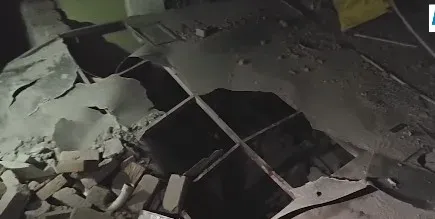
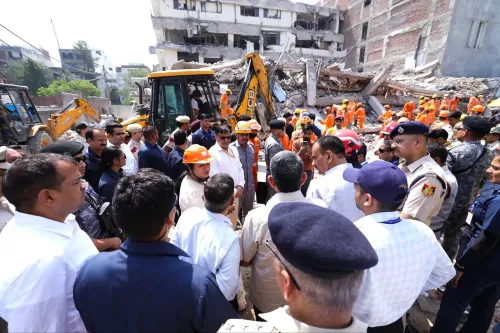
The court flagged recent fire incidents and building collapses in Delhi , Gurugram , and Lucknow as evidence of enforcement failure.
Civic authorities were criticised for limiting action to notices rather than sealing or demolition, despite earlier court orders.
The Union Ministry of Housing and Urban Affairs is already a party to the proceedings; senior advocate Ajit Kumar Sinha serves as nodal officer for complaints.
The court has reserved the right to initiate contempt proceedings for continued non-compliance.
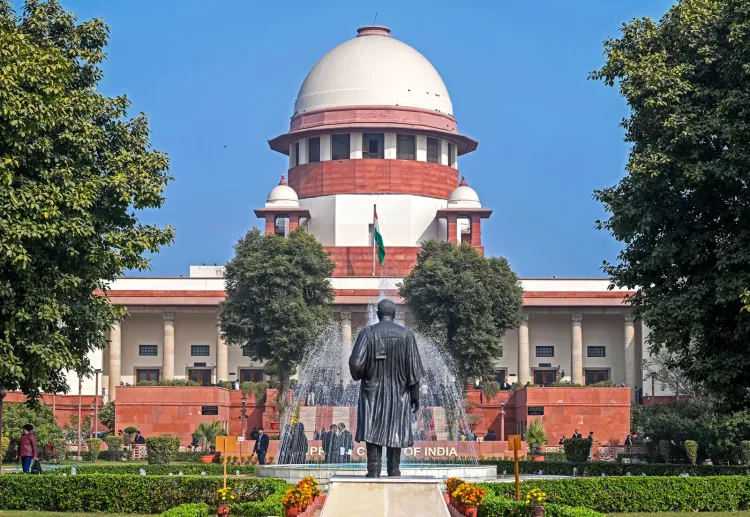
The Supreme Court on Thursday, 9 July sharply rebuked civic authorities for persistent non-compliance with its orders on unauthorised constructions, warning that officials who fail to act despite the top court's directives would be held personally accountable. A bench of Justice Ahsanuddin Amanullah and Justice R. Mahadevan constituted an expert committee of senior professors and draughtsmen from IIT Delhi to inspect key residential and commercial zones in the capital.
What the Court Ordered
The bench directed the newly formed expert committee — comprising IIT Delhi faculty, Municipal Corporation of Delhi (MCD) officials, and the amicus curiae — to physically inspect the Saket, Lajpat Nagar, and Sarojini Nagar areas and submit a report directly to the apex court. The committee's mandate is to assess the on-ground reality of illegal structures in these localities, where buildings have allegedly been raised far beyond sanctioned plans.
The court made clear that issuing notices to violators does not constitute compliance. Authorities had been directed to take 'immediate and effective measures' — including sealing and demolition — yet had largely confined themselves to paperwork, the bench observed.
Fire Incidents and Collapses Cited
Taking judicial notice of recent fire incidents and building collapses in Delhi, Gurugram, and Lucknow, the Supreme Court underscored that lax enforcement of building laws carries the risk of mass casualties. The bench indicated it would not hesitate to initiate contempt proceedings against officials who continue to disregard its orders.
This comes amid a broader pattern of structural failures in Indian cities, where rapid urbanisation has outpaced regulatory oversight. Notably, the court had previously flagged the scale of violations across the country as 'enormous', pointing specifically to Lajpat Nagar and Sarojini Nagar as high-risk zones.
Background: Earlier Directions and Fresh Affidavits
In prior hearings, the Supreme Court had directed all states, Union Territories (UTs), and civic bodies to file fresh affidavits — personally sworn by the heads of the authorities concerned — disclosing actual action taken following surveys of unauthorised constructions, rather than what it called 'mere ritualistic compliance'. The court had clarified that acceptable action includes sealing, demolition, or any other measure warranted under law.
The Union Ministry of Housing and Urban Affairs has already been impleaded as a party to the proceedings. Senior advocate Ajit Kumar Sinha was earlier appointed as the nodal officer to receive public complaints relating to illegal constructions.
What Happens Next
The IIT Delhi expert panel is expected to conduct its inspections and place its findings before the Supreme Court in the coming weeks. The bench has signalled that personal accountability of erring officials — including the possibility of contempt action — will remain on the table until verifiable enforcement is demonstrated on the ground.
Frequently Asked Questions
Why did the Supreme Court form an IIT Delhi expert panel?
The Supreme Court formed the panel because civic authorities, despite earlier court orders, had failed to take concrete action against illegal constructions in Delhi, limiting themselves to issuing notices rather than sealing or demolishing unauthorised structures. The panel of IIT Delhi professors and MCD officials will inspect Saket, Lajpat Nagar, and Sarojini Nagar and report back to the court.
Which areas will the IIT Delhi committee inspect?
The expert committee will inspect Saket, Lajpat Nagar, and Sarojini Nagar in Delhi — areas the Supreme Court has previously identified as high-risk zones where buildings have allegedly been constructed far beyond sanctioned plans.
What action can the Supreme Court take against non-compliant officials?
The Supreme Court has warned that officials entrusted with implementing its orders will be held personally accountable for inaction. The bench has also indicated it will not hesitate to initiate contempt of court proceedings against those who continue to disregard its directives.
What role does the Union Ministry of Housing and Urban Affairs play in this case?
The Union Ministry of Housing and Urban Affairs has been impleaded as a party to the Supreme Court proceedings on illegal constructions, making it directly answerable to the court on enforcement actions taken across the country.
What did the Supreme Court say about recent building collapses and fire incidents?
The court took judicial notice of recent fire incidents and building collapses in Delhi, Gurugram, and Lucknow, warning that ineffective enforcement of building laws could have disastrous consequences. It cited these incidents as direct evidence of the dangers posed by unchecked illegal constructions.