SC reserves verdict on Sambhal Shahi Jama Masjid survey plea
Synopsis
The Supreme Court has reserved its verdict on whether a Chandausi trial court's order to survey the Sambhal Shahi Jama Masjid — a centrally protected monument — can stand. With the Places of Worship Act, the ASI's monument status claim, and memories of fatal violence during a previous survey all in the frame, the ruling could set a precedent for similar mosque-temple disputes across India.
Key Takeaways
The Supreme Court reserved judgment on 25 September 2026 on the plea challenging the survey order for Shahi Jama Masjid, Sambhal .
The bench of Justices P.S.
Narasimha and Alok Aradhe heard submissions from the mosque committee, Hindu plaintiffs, and the Uttar Pradesh government .
The mosque committee challenges the appointment of an Advocate Commissioner to survey the disputed site.
Hindu plaintiffs claim the mosque was built over a pre-existing Harihar temple structure; the mosque side contests the suit's maintainability.
The Archaeological Survey of India (ASI) has told the court the site is a centrally protected monument .
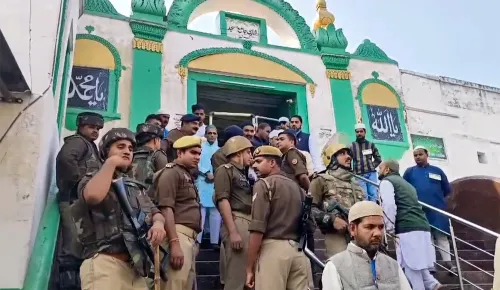
A previous court-ordered survey triggered violence in Sambhal , resulting in multiple fatalities .
The Supreme Court on Friday, 25 September 2026, reserved its judgment on a special leave petition (SLP) filed by the Committee of Management of Jami Masjid, Sambhal, challenging a survey order issued by a trial court in Chandausi concerning the Shahi Jama Masjid in Sambhal district, Uttar Pradesh. The verdict was reserved after a bench of Justices P.S. Narasimha and Alok Aradhe heard submissions from all three parties — the mosque committee, the Hindu plaintiffs, and the Uttar Pradesh government.
What the Case Is About
The Chandausi trial court had directed the appointment of an Advocate Commissioner to survey the mosque premises in connection with a civil suit filed by Hindu plaintiffs, who claim that the Shahi Jama Masjid was constructed over a pre-existing Harihar temple structure. The mosque committee contested both the maintainability of the suit and the process by which the survey order was issued.
The dispute travelled up to the Allahabad High Court, which upheld the trial court's direction and declined to stay the survey proceedings. The mosque committee then moved the Supreme Court, which had, pending examination of the SLP, directed the parties to maintain status quo at the disputed site.
Legal Representatives and Their Arguments
Senior advocate Huzefa Ahmadi and advocate Nizam Pasha appeared for the mosque committee, pressing the challenge against the survey order's legality. Advocate Hari Shankar Jain represented the Hindu plaintiffs, while Additional Solicitor General K.M. Nataraj appeared on behalf of the Uttar Pradesh government.
The mosque committee's counsel argued against the manner in which the survey was commissioned, including the appointment of an Advocate Commissioner, and questioned the procedural propriety of the trial court's direction.
The Places of Worship Act and Its Contested Scope
A central legal question in the dispute involves the Places of Worship (Special Provisions) Act, 1991, which prohibits the conversion of the religious character of any place of worship as it existed on 15 August 1947. The Hindu side has argued that the dispute falls outside the Act's scope, additionally invoking provisions of the Ancient Monuments and Archaeological Sites and Remains Act, 1958.
The Archaeological Survey of India (ASI) has informed the court that the Shahi Jama Masjid is a centrally protected monument and raised questions relating to its status and records of its use as a place of public worship — adding another layer of statutory complexity to the case.
History of Violence and Ground Tensions
The Sambhal dispute carries a fraught on-ground history. During an earlier court-ordered survey of the site, violence broke out in Sambhal, resulting in multiple fatalities. That episode drew national attention to the case and underscored the sensitivity of mosque-temple disputes being adjudicated under judicial survey orders. Notably, the Sambhal case is one of several such mosque-temple disputes before Indian courts in recent years, with the Places of Worship Act emerging as a recurring fault line between the two sides.
What Happens Next
With judgment reserved, the Supreme Court's ruling is expected to clarify whether the survey order can proceed, and may also address the broader question of how courts should handle such disputes in relation to the 1991 Act. The verdict will be watched closely by legal observers and religious communities alike, as its implications could extend well beyond the Sambhal site to similar disputes pending across the country.
Point of View
It effectively tests the boundaries of the Places of Worship Act — a law that Parliament passed precisely to prevent such excavations of the past. The ASI's intervention, flagging the Shahi Jama Masjid's status as a centrally protected monument, adds a rare statutory tripwire that the Hindu side's reliance on the Ancient Monuments Act cannot easily sidestep. What mainstream coverage underplays is the cascading risk: a ruling that upholds survey orders without clearly demarcating the 1991 Act's scope could unleash a fresh wave of similar petitions at contested sites nationwide, each with its own potential for the kind of violence Sambhal has already witnessed.
NationPress
25 Sept 2026
Frequently Asked Questions
What is the Sambhal Shahi Jama Masjid dispute about?
The dispute centres on a civil suit filed by Hindu plaintiffs who claim the Shahi Jama Masjid in Sambhal, Uttar Pradesh, was built over a pre-existing Harihar temple. A Chandausi trial court ordered a survey of the mosque premises through an Advocate Commissioner, which the mosque committee is challenging before the Supreme Court.
Why has the Supreme Court reserved its verdict?
The Supreme Court reserved judgment on 25 September 2026 after completing hearings from all parties — the mosque committee, the Hindu plaintiffs, and the Uttar Pradesh government. The bench is now deliberating on whether the survey order was legally valid and whether the case falls within or outside the scope of the Places of Worship Act, 1991.
What is the Places of Worship Act, 1991, and why is it relevant here?
The Places of Worship (Special Provisions) Act, 1991 prohibits conversion of the religious character of any place of worship as it stood on 15 August 1947. It is central to this dispute because the Hindu side argues the Sambhal case falls outside the Act's purview, while the mosque committee maintains the Act bars any such proceedings.
What role does the Archaeological Survey of India play in this case?
The Archaeological Survey of India (ASI) has told the Supreme Court that the Shahi Jama Masjid is a centrally protected monument and has raised questions about its official status and records relating to its use as a place of public worship, adding a layer of statutory complexity to the case.
What happened during the earlier survey of the Sambhal mosque?
Violence broke out in Sambhal during a previous court-ordered survey of the Shahi Jama Masjid, resulting in multiple fatalities. That episode heightened the sensitivity of the dispute and was a key reason the Supreme Court directed the parties to maintain status quo while examining the current petition.