Supreme Court to Address Shahi Jama Masjid and Sri Harihar Temple Dispute Tomorrow
Synopsis
The Supreme Court prepares to review a significant plea regarding the Shahi Jama Masjid and its controversial survey order, with implications for religious sites in India. The case raises questions about historical claims and legal protections under the Places of Worship Act.
Key Takeaways
Supreme Court Hearing: The Supreme Court is set to hear a plea regarding the Shahi Jama Masjid dispute.
Historical Claims: The conflict involves claims of a temple existing before the mosque.
Legal Framework: The case touches on the Places of Worship Act, 1991.
Safety Concerns: Previous surveys have led to violent incidents in the area.
Archaeological Significance: The ASI's classification of the mosque impacts public worship claims.
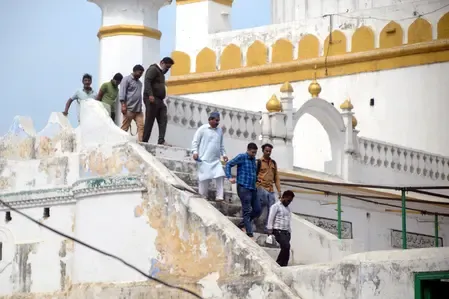
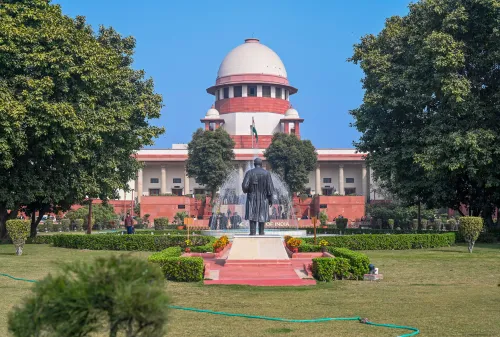
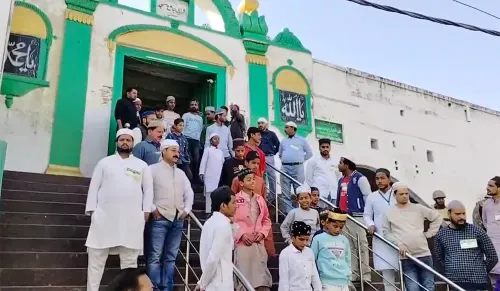
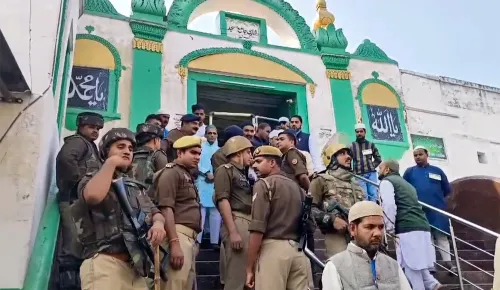
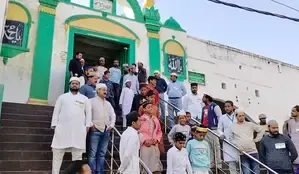
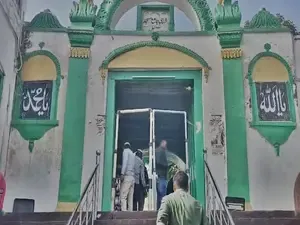
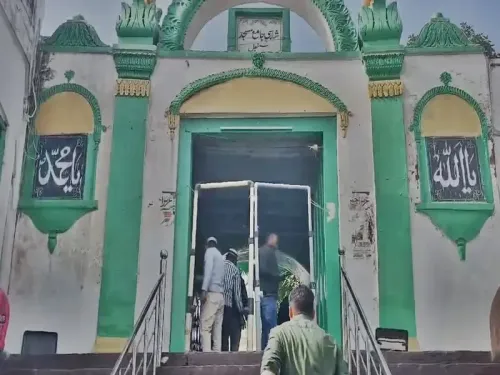
New Delhi, April 19 (NationPress) The Supreme Court is set to deliberate on a plea from the Muslim community challenging a survey order from the Chandousi court regarding the Shahi Jama Masjid in Sambhal, Uttar Pradesh.
According to the schedule released on the Supreme Court's official website, a panel comprising Justices PS Narasimha and Alok Aradhe will address this case on April 20.
The mosque committee has filed the petition against the survey being conducted amidst an ongoing dispute, where Hindu claimants assert that the mosque was constructed over the remnants of an ancient temple.
Previously, the Supreme Court instructed both Hindu and Muslim factions to preserve the status quo at the contested site while examining a special leave petition (SLP) that challenges the Allahabad High Court's decision to allow the survey to proceed.
The contention arises from Hindu claims that the mosque occupies the site of an old Harihar temple, which they allege was destroyed during the Mughal era.
Conversely, the mosque committee has questioned the validity of the lawsuit and has objected to the manner in which the survey was ordered.
The situation escalated when the Allahabad High Court ratified the Chandousi trial court's decision to permit the survey, finding no legal issues with the order.
The High Court also rejected the mosque committee's request for a pause on the proceedings. Subsequently, the mosque committee sought recourse from the Supreme Court, contending that the survey order was made without a fair chance to present its case, violating established legal norms.
This case is particularly significant in the context of the Places of Worship Act, 1991, which prohibits the alteration of religious sites and mandates that their religious character be maintained as it was on August 15, 1947.
However, the Hindu claimants argue that the dispute transcends the Act's provisions, citing regulations from the Ancient Monuments and Archaeological Sites and Remains Act, 1958.
The Shahi Jama Masjid issue has previously seen heightened tensions, with violence erupting in Sambhal during a court-ordered survey, leading to multiple casualties.
In its statements to the court, the Archaeological Survey of India (ASI) indicated that the Shahi Jama Masjid is a centrally protected monument and should not be categorized as a public worship site in the absence of corroborating documentation.
Frequently Asked Questions
What is the Shahi Jama Masjid dispute about?
The dispute involves claims from Hindu plaintiffs that the Shahi Jama Masjid was built over the ruins of a temple, leading to legal challenges regarding a survey ordered by the Chandousi court.
What is the significance of the Places of Worship Act, 1991?
The Act prohibits the conversion of places of worship and requires that their religious character be maintained as it existed on August 15, 1947, aiming to preserve communal harmony.
What has the Supreme Court previously directed regarding the site?
The Supreme Court previously instructed both parties to maintain the status quo at the disputed site during the hearing of a special leave petition challenging survey proceedings.
What were the recent developments in this legal matter?
The Allahabad High Court upheld the survey order, which the mosque committee is contesting; they argue that the order was made without proper hearings.
What role does the Archaeological Survey of India play in this case?
The Archaeological Survey of India has stated that the Shahi Jama Masjid is a centrally protected monument and should not be classified as a public worship site without supporting records.