Supreme Court to Address the Dispute Over Shahi Jama Masjid and Sri Harihar Temple Today
Synopsis
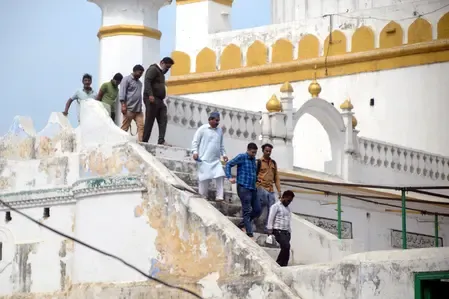
Today's Supreme Court hearing on the Shahi Jama Masjid dispute captures ongoing tensions in Sambhal, as both parties present their arguments regarding a contentious survey order. The outcome could have significant implications for the historical claims of both communities.
Key Takeaways
The Supreme Court will hear a significant case regarding the Shahi Jama Masjid in Sambhal.
The dispute involves historical claims made by both Hindu and Muslim communities.
The Places of Worship Act, 1991 plays a crucial role in the legal arguments.
Previous violence highlights the sensitive nature of the case.
The outcome could have far-reaching implications for religious site disputes in India.
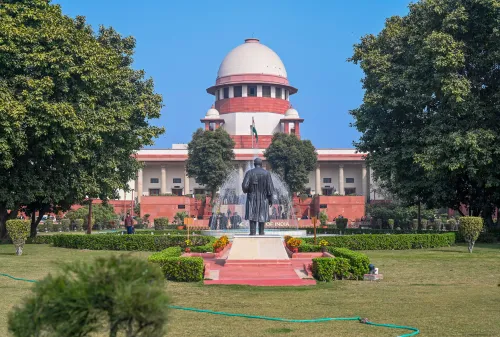
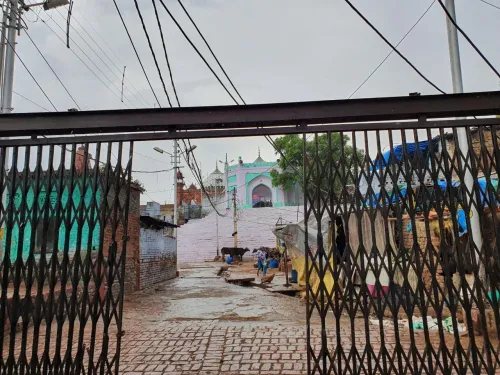
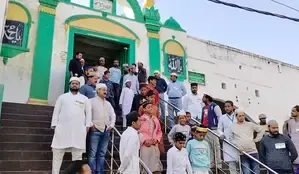
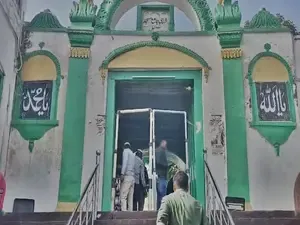
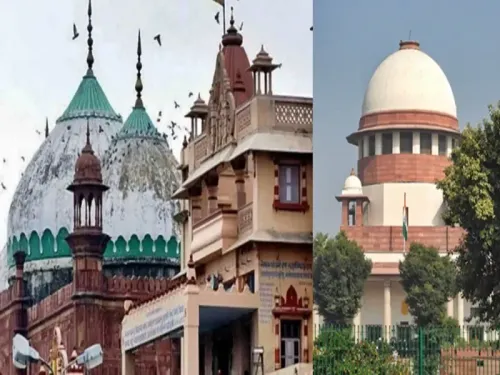
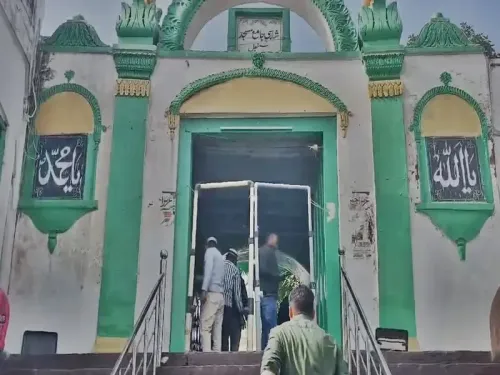
New Delhi, April 20 (NationPress) The Supreme Court of India is scheduled to review a petition on Monday from the Muslim community contesting a survey order issued by a Chandousi court concerning the Shahi Jama Masjid located in the Sambhal district of Uttar Pradesh.
According to the cause list available on the apex court's website, a panel comprising Justices PS Narasimha and Alok Aradhe will deliberate on this matter.
This appeal has been filed by the mosque committee, which is opposing the survey initiative linked to the ongoing conflict regarding the Shahi Jama Masjid. Hindu claimants assert that the mosque was erected over an ancient temple site.
Previously, the Supreme Court had instructed both the Hindu and Muslim factions to uphold the status quo at the disputed location while assessing a special leave petition (SLP) that challenges the Allahabad High Court's decision to not halt the survey activities.
The contention revolves around the Hindu claim that the mosque is constructed on the remnants of a historic Harihar temple, which is alleged to have been destroyed during the Mughal era.
Conversely, the mosque's committee has disputed the legitimacy of the lawsuit and raised concerns regarding the procedure followed in ordering the survey.
The situation escalated further when the Allahabad High Court endorsed the Chandousi trial court's ruling that sanctioned the site survey, finding no legal flaws in the directive.
Additionally, the Allahabad High Court discarded the mosque committee's request for a stay on the survey proceedings. Following this, the committee escalated the matter to the Supreme Court, contending that the survey order was enacted without providing them a fair chance to present their case, thus violating established legal norms.
This case is especially important in light of the Places of Worship Act, 1991, which prohibits the alteration of worship places and requires the preservation of their religious identity as it was on August 15, 1947.
Nonetheless, the Hindu side argues that this dispute falls outside the Act's scope, citing the provisions of the Ancient Monuments and Archaeological Sites and Remains Act, 1958.
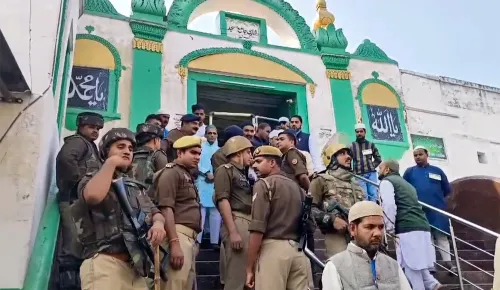
Previously, tensions arose over the Shahi Jama Masjid dispute, culminating in violence during a court-mandated survey in Sambhal, resulting in several fatalities.
In submissions to the court, the Archaeological Survey of India (ASI) has asserted that the Shahi Jama Masjid is protected by national heritage laws and cannot be classified as a public worship site in the absence of supporting documentation.
Point of View
The Supreme Court's impending ruling on the Shahi Jama Masjid dispute highlights the complex interplay of faith, legality, and historical claims. As both communities prepare to present their cases, it underscores the importance of legal frameworks in resolving conflicts rooted in history. The outcome will likely resonate beyond Sambhal, reflecting broader social dynamics.
NationPress
23 Sept 2026
Frequently Asked Questions
What is the Shahi Jama Masjid dispute about?
The dispute centers on claims that the mosque was built over the ruins of an ancient Hindu temple, with ongoing legal battles regarding survey orders and historical assertions.
Who is involved in the legal proceedings?
The legal proceedings involve the mosque committee representing the Muslim community and Hindu plaintiffs asserting ownership based on historical claims.
What is the significance of the Places of Worship Act, 1991?
The Act prohibits the conversion of places of worship and mandates the preservation of their religious character as it existed on August 15, 1947.
What are the potential consequences of the Supreme Court's decision?
The Supreme Court's decision could set a precedent for how historical worship site disputes are resolved in India, impacting community relations and legal interpretations.
Has there been any violence related to this dispute?
Yes, tensions have previously escalated into violence during court-ordered surveys, resulting in fatalities in Sambhal.