Supreme Court refers Rajpal Yadav cheque bounce case to mediation after ₹2 crore deposit
Synopsis
With ₹2 crore now deposited and a two-year jail term looming as a real possibility, the Supreme Court has pulled Rajpal Yadav back from the brink — offering mediation as a last exit ramp in a cheque-bounce saga that has dragged on through seven cases, multiple court orders, and repeated compliance failures.
Key Takeaways
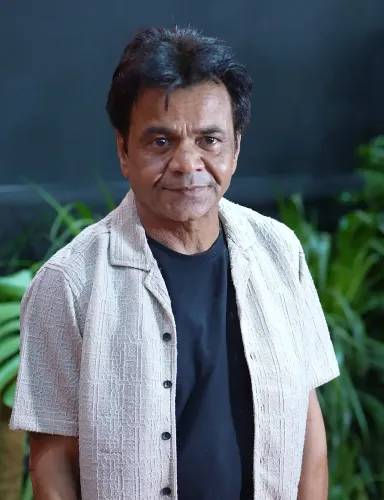
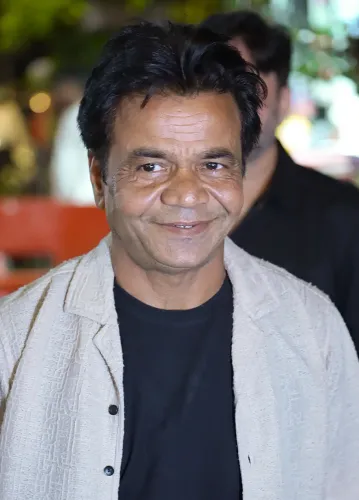
The Supreme Court on 15 October 2026 referred cheque dishonour cases against actor Rajpal Yadav and wife Radha Yadav to the Supreme Court Mediation Centre .
Yadav deposited the remaining ₹85 lakh on 13 October , completing a total deposit of ₹2 crore with the apex court registry.
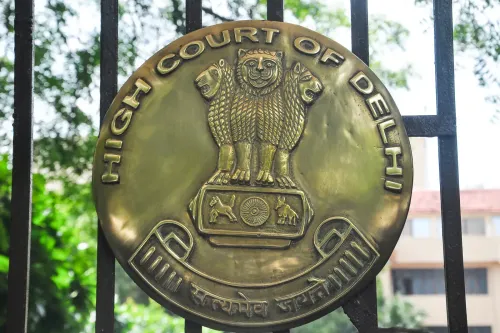
The Delhi High Court had upheld conviction in 7 cheque dishonour cases under the Negotiable Instruments Act , sentencing Yadav to three months' simple imprisonment per case (concurrent).
The Supreme Court had on 7 October warned it was inclined to enhance the sentence from three months to two years over non-compliance.
Yadav has been permitted to seek passport release for professional foreign travel, subject to trial court conditions.
Should mediation fail, the conviction challenge will resume before the Supreme Court.
The Supreme Court on Thursday, 15 October 2026, referred cheque dishonour cases against actor-comedian Rajpal Yadav and his wife Radha Yadav to mediation, directing both parties to explore an amicable settlement over the outstanding dues owed to complainant Murli Projects Private Limited. The order came after Yadav's counsel confirmed that the remaining ₹85 lakh had been deposited with the apex court's registry on 13 October, bringing the total deposit to ₹2 crore.
Key Developments in Court
A bench comprising Chief Justice of India (CJI) Sanjiv Khanna and Justice Joymalya Bagchi passed the mediation order after both sides — counsel for Yadav and for Murli Projects Private Limited — agreed to the proposal. The bench recorded: 'It seems that the matter can be amicably resolved through mediation and consequently, the parties are referred to mediation before the Supreme Court Mediation Centre.'
The court also permitted Yadav to seek the release of his passport for professional travel abroad, subject to conditions previously imposed by the trial court.
Background: How the Case Reached This Stage
The Supreme Court is hearing petitions filed by Yadav and his wife challenging a Delhi High Court judgment dated 10 July, which upheld their conviction in seven cheque dishonour cases under the Negotiable Instruments Act. The High Court had reduced Yadav's sentence from six months to three months' simple imprisonment in each of the seven cases, directing the sentences to run concurrently. It also reduced the fine from ₹1.60 crore to ₹1.05 crore per case, taking into account payments already made during the pendency of proceedings.
Before the Supreme Court, Yadav and his wife have argued that a subsequent consent agreement between the parties was not adequately considered by the lower courts. They have relied on the apex court's ruling in M/s Gimpex Private Limited v. Manoj Goel, contending that such a subsequent agreement should have extinguished the original complaint proceedings.
The October 7 Order and Rising Pressure
The latest referral follows an order dated 7 October, in which the CJI-led bench had directed Yadav to deposit ₹1.15 crore immediately, with the remaining ₹85 lakh to be arranged through the prospective sale of his ancestral property. At that hearing, the bench had expressed displeasure over Yadav's repeated failure to comply with earlier directions and indicated it was inclined to enhance his three-month imprisonment sentence to two years. That stern warning appeared to catalyse compliance — the full ₹2 crore was deposited within the week. The court had also noted that Yadav had earlier agreed to sell his ancestral property to arrange funds, and emphasised that an amicable resolution should be attempted before the matter was taken to its logical legal conclusion.
What Happens Next
Both parties are now required to approach the Supreme Court Mediation Centre with an open mind and make a genuine effort to settle the outstanding dispute. Notably, mediation at this stage does not suspend the underlying conviction; it seeks to resolve the financial dimension of the case. Should mediation fail, the Supreme Court proceedings on the conviction challenge will resume. The outcome of the mediation could significantly influence the final sentencing and fine that Yadav and his wife ultimately face.
Point of View
Not an acquittal — Yadav's conviction stands and the sentence clock is very much ticking. What the Supreme Court has done is create a structured off-ramp that protects the complainant's financial recovery while sparing the judiciary a protracted sentencing battle over a public figure. The more instructive detail is the October 7 warning: the bench was prepared to quadruple the sentence for non-compliance, and it was only that credible threat that unlocked the ₹2 crore deposit. That sequence — leniency, repeated non-compliance, escalation, sudden compliance — is a pattern the courts are increasingly reluctant to reward. If mediation fails, Yadav's room to manoeuvre will be substantially narrower the next time he appears before the bench.
NationPress
15 Oct 2026
Frequently Asked Questions
What is the Rajpal Yadav cheque bounce case about?
Rajpal Yadav and his wife Radha Yadav were convicted in seven cheque dishonour cases filed by Murli Projects Private Limited under the Negotiable Instruments Act. The Delhi High Court upheld the conviction on 10 July, reducing Yadav's sentence to three months' simple imprisonment per case (to run concurrently) and the fine to ₹1.05 crore per case.
Why did the Supreme Court refer the case to mediation?
The Supreme Court referred the matter to mediation after Yadav completed a ₹2 crore deposit with the court registry and both parties agreed to explore an amicable settlement. The court noted the matter could be resolved without further adjudication and directed both sides to approach the Supreme Court Mediation Centre with an open mind.
What happens if mediation fails?
If mediation does not produce a settlement, the Supreme Court will resume hearing Yadav's petition challenging the Delhi High Court conviction. The court had earlier warned it was inclined to enhance his three-month sentence to two years for repeated non-compliance, so the stakes remain high.
How much money has Rajpal Yadav deposited so far?
Yadav has deposited a total of ₹2 crore with the Supreme Court registry. The final instalment of ₹85 lakh was deposited on 13 October 2026, completing the amount directed by the court on 7 October.
Can Rajpal Yadav travel abroad during the case?
Yes. The Supreme Court has permitted Yadav to seek the release of his passport for professional travel abroad, subject to the conditions imposed by the trial court. This is a conditional relief and does not reflect a stay or suspension of his conviction.