SC redirects TMC's Chattopadhyay to Calcutta HC on 10 rebel MLAs' disqualification
Synopsis
The Supreme Court has refused — for the second time — to directly intervene in the TMC's bid to disqualify 10 rebel MLAs, pushing the case to the Calcutta High Court after West Bengal's Speaker missed a court-indicated three-month deadline without acting. The pattern of Speaker inaction and repeated judicial referrals is fast becoming a constitutional flashpoint.
Key Takeaways
The Supreme Court on 5 November 2026 declined to entertain Sovandeb Chattopadhyay's plea for disqualification of 10 rebel TMC MLAs .
The court directed Chattopadhyay to approach the Calcutta High Court and requested the Chief Justice there to place the matter before a Division Bench for expeditious hearing.
Disqualification petitions were filed on 8 July ; nearly five months have passed without a decision by Speaker Rathindra Bose .
This is Chattopadhyay's second approach to the apex court — the first, on 28 September , had asked the Speaker to decide within three months .
The 10 rebel MLAs named include Ritabrata Banerjee , Firhad Hakim , Sandipan Saha , Arup Roy , and six others.
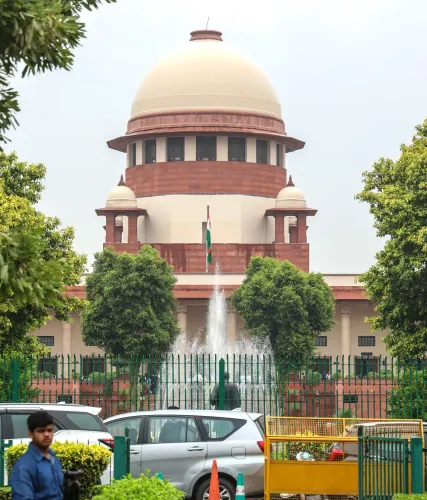
The Supreme Court on Thursday, 5 November 2026, declined to entertain a fresh petition filed by senior All India Trinamool Congress (TMC) leader Sovandeb Chattopadhyay seeking the disqualification of 10 rebel party MLAs — including Leader of Opposition Ritabrata Banerjee — under the anti-defection law, and directed him to approach the Calcutta High Court instead. The bench also requested the Chief Justice of the Calcutta High Court to place the matter before a Division Bench for expeditious consideration.
What the Supreme Court Said
A bench comprising Chief Justice of India (CJI) Surya Kant and Justice Joymalya Bagchi observed that the appropriate remedy at this stage lay before the Calcutta High Court, granting liberty to Chattopadhyay to file an appropriate petition before it. Disposing of the writ petition, the bench recorded that the matter required consideration by a Division Bench of the High Court to avoid further rounds of intra-court appeals.
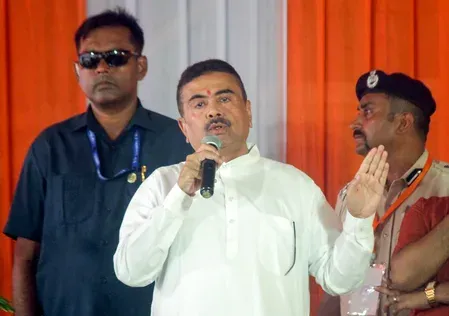
During the hearing, counsel for Chattopadhyay pointed out that the disqualification petitions had originally been filed on 8 July and that nearly five months had passed without any decision from the Speaker of the West Bengal Legislative Assembly, Rathindra Bose.
The Petition and the MLAs Named
The writ petition, filed by veteran TMC legislator Sovandeb Chattopadhyay, sought directions under the Tenth Schedule of the Constitution for the disqualification of 10 rebel MLAs. Besides Ritabrata Banerjee, the petition named former Kolkata Municipal Corporation (KMC) Mayor Firhad Hakim along with Sandipan Saha, Arup Roy, Seuli Saha, Akhruzzaman, Sabina Yeasmin, Rathin Ghosh, Biplab Mitra, and Javed Ahmed Khan.
The petition also sought directions against Speaker Rathindra Bose for failing to decide the disqualification petitions within the timeframe previously indicated by the Supreme Court.
Background: A Second Knock on the Apex Court's Door
This marks the second time Chattopadhyay has approached the Supreme Court on the same issue. In September, he had moved the apex court after the Speaker failed to act on the petitions submitted by the Mamata Banerjee-led faction. On 28 September, a bench of CJI Surya Kant, Justice Joymalya Bagchi, and Justice V. Mohana disposed of that earlier petition, expressing confidence that the Speaker would decide the disqualification proceedings within three months — a period the court noted was due to expire on 8 October.
With no decision communicated by that deadline, Chattopadhyay returned to the Supreme Court, prompting Thursday's order redirecting him to the High Court. The case stems from a deepening intra-party dispute within the TMC, with the Mamata Banerjee-led faction seeking action against the 10 legislators under anti-defection provisions — a legal route that places the Speaker as the primary adjudicating authority.
What Happens Next
The ball is now in the Calcutta High Court's court, with the Supreme Court's request for a Division Bench hearing signalling the apex court's expectation of swift disposal. Legal observers note that the Speaker's prolonged inaction itself may become a focal point before the High Court. The case will be watched closely as it touches on the broader question of accountability of legislative speakers under the anti-defection law — a matter that has repeatedly reached constitutional courts across India.
Point of View
The bench has bought the Speaker more time — but the High Court's response will test whether judicial urgency translates into actual expedition. If Firhad Hakim's inclusion in the disqualification list reflects the depth of the TMC's internal rupture, the political stakes for West Bengal heading toward the next assembly cycle are significant.
NationPress
5 Nov 2026
Frequently Asked Questions
Why did the Supreme Court refuse to hear Sovandeb Chattopadhyay's petition?
The Supreme Court held that the appropriate remedy at this stage was to approach the Calcutta High Court, not the apex court directly. The bench of CJI Surya Kant and Justice Joymalya Bagchi disposed of the petition and granted Chattopadhyay liberty to file an appropriate petition before the High Court.
Who are the 10 rebel TMC MLAs facing disqualification?
The 10 MLAs named in the disqualification petition are Ritabrata Banerjee, Firhad Hakim, Sandipan Saha, Arup Roy, Seuli Saha, Akhruzzaman, Sabina Yeasmin, Rathin Ghosh, Biplab Mitra, and Javed Ahmed Khan. The petition was filed by TMC leader Sovandeb Chattopadhyay under the Tenth Schedule of the Constitution.
Why has the disqualification case been pending for so long?
The disqualification petitions were filed on 8 July and West Bengal Assembly Speaker Rathindra Bose has not taken a decision in nearly five months. The Supreme Court had earlier asked the Speaker to decide within three months by 8 October, but no decision was communicated by that deadline.
What happens next in the TMC rebel MLA disqualification case?
Chattopadhyay is expected to file a fresh petition before the Calcutta High Court. The Supreme Court has requested the Chief Justice of the Calcutta High Court to place the matter before a Division Bench for expeditious consideration, signalling that the court expects swift disposal.
What is the anti-defection law and how does it apply here?
The anti-defection law, contained in the Tenth Schedule of the Constitution, allows for disqualification of legislators who defy their party whip or voluntarily give up party membership. In this case, the Mamata Banerjee-led TMC faction has sought action against 10 of its own MLAs, with the Speaker of the West Bengal Assembly acting as the primary adjudicating authority.