TMC moves Supreme Court over delay in disqualification of 20 rebel MPs

Synopsis
With 20 rebel MPs seated separately in the Lok Sabha and the Speaker yet to rule on disqualification petitions, the TMC has taken its fight to the Supreme Court. The case now sits at the intersection of two constitutional questions: how long a Speaker can delay anti-defection proceedings, and whether the Tenth Schedule's merger clause can be used to legitimise large-scale legislative defections.
Key Takeaways
TMC has filed W.P.(C) No.
1033/2026 in the Supreme Court challenging Lok Sabha Speaker Om Birla 's delay in deciding disqualification of 20 rebel MPs .
The petition is listed for hearing on 25 August 2026 before a Bench of CJI Surya Kant , Justice Joymalya Bagchi , and Justice V.
The 20 rebel MPs broke away from TMC and joined the Nationalist Citizens Party of India (NCPI) , claiming support of more than two-thirds of the party's Lok Sabha strength.
The TMC argues that voluntarily joining another party attracts disqualification regardless of the two-thirds threshold under Paragraph 4 of the Tenth Schedule .
Senior advocate Kapil Sibal has separately challenged the merger interpretation of the Tenth Schedule in the Supreme Court .
Abhishek Banerjee wrote to the Speaker as recently as 27 July seeking expeditious disposal of the disqualification petitions.
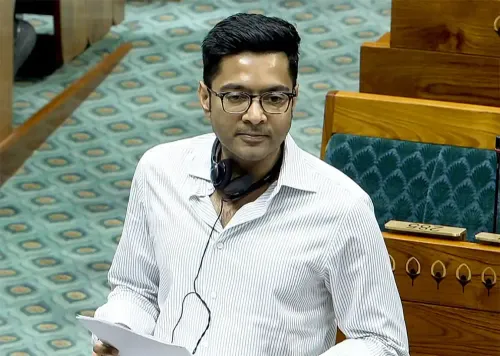
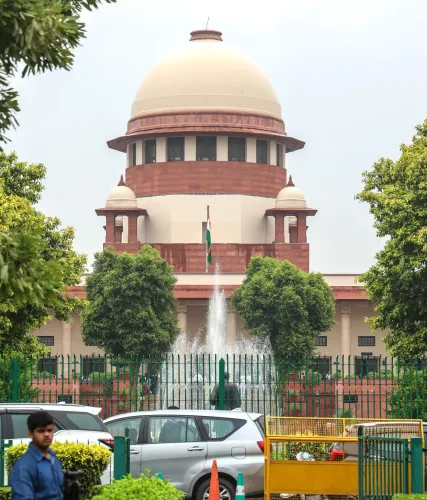
Trinamool Congress (TMC), led by Mamata Banerjee, has moved the Supreme Court challenging Lok Sabha Speaker Om Birla's inaction on disqualification petitions filed against 20 rebel party MPs. The writ petition, filed through TMC national general secretary and Diamond Harbour Lok Sabha member Abhishek Banerjee, is listed for hearing on 25 August 2026 before a Bench headed by Chief Justice of India (CJI) Surya Kant, along with Justices Joymalya Bagchi and V. Mohana.
What the Petition Argues
The writ petition, registered as W.P.(C) No. 1033/2026, challenges the prolonged delay in deciding disqualification proceedings initiated under the anti-defection law. The TMC contends that the 20 MPs were elected on the party's symbol and their subsequent decision to join another political formation — the Nationalist Citizens Party of India (NCPI) — squarely attracts disqualification under the Tenth Schedule of the Constitution.
The respondents named in the petition include the Speaker of the Lok Sabha, the Secretary General of the Lok Sabha, and the 20 rebel MPs: Kakoli Ghosh Dastidar, Sudip Bandyopadhyay, Satabdi Roy, Prasun Banerjee, Rachana Banerjee, Jagadish Chandra Barma Basunia, Partha Bhowmick, Arup Chakraborty, Adhikari Deepak Dev, Sayani Ghosh, Bapi Haldar, Md Abu Taher Khan, Kalipada Saren Kherwal, Asit Kumar Mal, June Maliah, Mitali Bag, Khalilur Rahaman, Mala Roy, Sharmila Sarkar, and Pathan Yusuf.
Background: How the Split Unfolded
The crisis within the TMC's parliamentary unit escalated after the 20 MPs broke away and joined the NCPI, claiming recognition as a separate parliamentary group. The rebel faction asserted it had the support of more than two-thirds of TMC's Lok Sabha MPs — a threshold that, under Paragraph 4 of the Tenth Schedule, could potentially shield them from disqualification through the merger provision.
The TMC, however, has argued that crossing the two-thirds threshold alone does not satisfy the merger provision's requirements, and that voluntarily relinquishing party membership to join another formation still invites disqualification. Notably, separate seating arrangements were allotted to the rebel MPs in the Lok Sabha even as the Speaker had not formally ruled on the disqualification petitions — a development the TMC viewed as premature recognition.
Jagadish Chandra Barma Basunia, one of the rebel MPs, had stated that the group sought to stake a claim as the 'real Trinamool Congress' and secure independent recognition in the lower house.
Repeated Attempts to Expedite Action
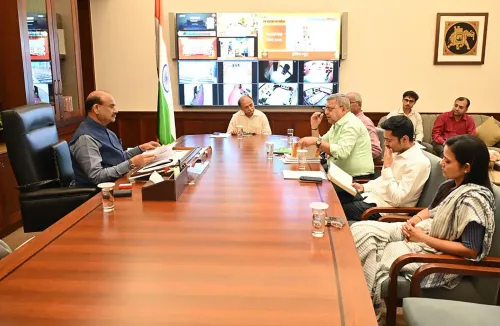
Abhishek Banerjee had previously filed separate disqualification petitions before Speaker Om Birla and repeatedly pressed for their swift disposal. On 27 July, he again wrote to the Speaker urging expeditious action. TMC leaders including Mahua Moitra and Kalyan Banerjee had also met the Speaker to demand immediate proceedings.
In July, West Bengal Chief Minister Suvendu Adhikari travelled to New Delhi to meet the rebel MPs, who had aligned with the NCPI and declared support for the ruling National Democratic Alliance (NDA) at the Centre — adding a distinct political dimension to what was already a fraught constitutional dispute.
The Larger Constitutional Question
The Supreme Court is separately seized of a broader constitutional question on the interpretation of the anti-defection law. Senior advocate Kapil Sibal has moved the court as a party-in-person, challenging the interpretation of Paragraph 4 of the Tenth Schedule, which governs party mergers. Sibal has argued that the existing legal position allows splinter groups to evade disqualification by routing defections through mergers, thereby diluting the very purpose of the anti-defection framework.
The outcome of the disqualification proceedings is expected to carry significant political and constitutional implications — not only for the TMC and its rebel MPs, but for the broader question of how the anti-defection law applies to large-scale legislative splits.
Point of View
Secure separate seating, and align publicly with the NDA. The TMC's recourse to the Supreme Court underscores a structural flaw: the Tenth Schedule places the disqualification decision with the Speaker, who is constitutionally bound to act but faces no enforceable deadline. Kapil Sibal's parallel challenge to the merger clause adds a second front — if the court narrows the Paragraph 4 escape route, it could reshape how future legislative splits are managed across all parties, not just the TMC. The case is less about 20 MPs and more about whether India's anti-defection architecture still has teeth.
NationPress
9 Oct 2026
Frequently Asked Questions
Why has the TMC moved the Supreme Court over the rebel MPs?
The TMC has petitioned the Supreme Court because Lok Sabha Speaker Om Birla has not decided on disqualification petitions filed against 20 rebel MPs who left the party and joined the NCPI. The party argues the delay is allowing the rebels to operate as a separate group without facing the legal consequences of defection.
Who are the 20 rebel TMC MPs named in the petition?
The 20 rebel MPs named as respondents include Kakoli Ghosh Dastidar, Sudip Bandyopadhyay, Satabdi Roy, Prasun Banerjee, Rachana Banerjee, Jagadish Chandra Barma Basunia, Partha Bhowmick, Arup Chakraborty, Adhikari Deepak Dev, Sayani Ghosh, Bapi Haldar, Md Abu Taher Khan, Kalipada Saren Kherwal, Asit Kumar Mal, June Maliah, Mitali Bag, Khalilur Rahaman, Mala Roy, Sharmila Sarkar, and Pathan Yusuf.
What is the anti-defection law and how does it apply here?
The anti-defection law, enshrined in the Tenth Schedule of the Constitution, disqualifies legislators who voluntarily give up party membership or vote against party directions. The TMC argues the 20 MPs triggered this by joining the NCPI, while the rebels contend the Paragraph 4 merger provision shields them since they represent more than two-thirds of the party's Lok Sabha strength.
When will the Supreme Court hear the TMC's petition?
The petition, registered as W.P.(C) No. 1033/2026, is listed for hearing on 25 August 2026 before a Bench comprising CJI Surya Kant, Justice Joymalya Bagchi, and Justice V. Mohana.
What is Kapil Sibal's separate Supreme Court challenge about?
Senior advocate Kapil Sibal has filed a separate writ petition challenging the interpretation of Paragraph 4 of the Tenth Schedule, which governs party mergers. He argues the current legal position allows splinter groups to escape disqualification by routing defections through mergers, weakening the anti-defection framework.