17 TMC rebel MPs joining BJP? Legal and political walls block defection
Synopsis
A rebel Trinamool MP's bold claim that 17 colleagues will join the BJP before Durga Puja has collapsed under scrutiny — the BJP has said no, rebel ranks are openly divided, and the Tenth Schedule's two-thirds merger rule cannot be invoked until the Lok Sabha Speaker recognises a group that currently exists only on paper.
Key Takeaways
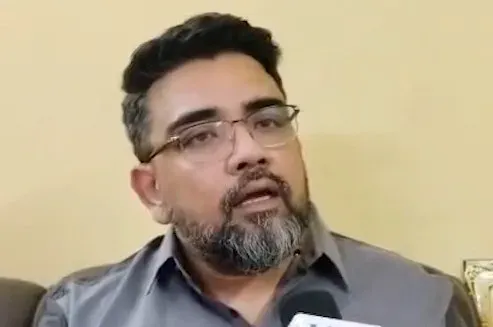
Jagadish Chandra Barma Basunia , Lok Sabha MP from Cooch Behar , claims 17 rebel TMC MPs will join the BJP before Durga Puja in October.
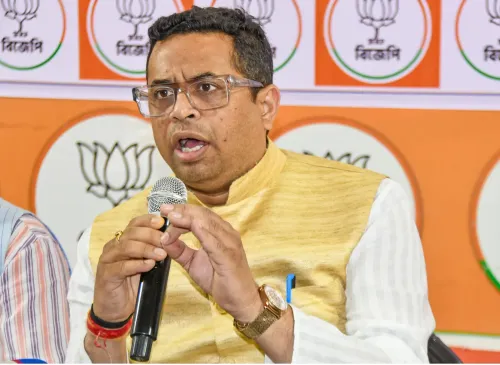
BJP West Bengal president Samik Bhattacharya has denied any talks are underway for a mass induction.
The Lok Sabha Speaker has not recognised the NCPI — the party rebels joined — as a separate parliamentary group; official records still list 28 Trinamool MPs .
Under the Tenth Schedule , a valid merger requires recognition by the Speaker and support of at least two-thirds of the breakaway group — neither condition is currently met.
The Trinamool Congress has petitioned the Supreme Court for disqualification of the 20 rebel MPs ; the case is pending.
Three Murshidabad MPs — Abu Taher Khan , Khalilur Rahman , and Yusuf Pathan — have openly refused to join the BJP, citing Muslim-majority constituencies.
A claim by Jagadish Chandra Barma Basunia, a first-time Lok Sabha member from Cooch Behar, that 17 rebel Trinamool Congress (TMC) parliamentarians are set to join the Bharatiya Janata Party (BJP) before Durga Puja next month has triggered a sharp political debate in West Bengal. The claim, made on 15 September 2026, has been swiftly repudiated by BJP state leaders and contradicted by several of the rebel MPs themselves, exposing it as legally fraught and politically premature.
Background: How the Rebels Reached This Limbo
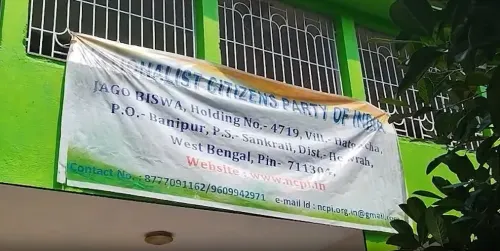
Earlier this year, Basunia and 19 other Trinamool MPs broke from the party following its defeat in the West Bengal state assembly elections. When the victorious BJP declined to induct them immediately, the rebels aligned with the little-known Nationalist Citizens Party of India (NCPI) — a party registered only in 2023 and virtually invisible in Bengal politics. Political observers widely interpreted the move as a tactical manoeuvre to sidestep immediate disqualification under the anti-defection law.
However, the Lok Sabha Speaker has not recognised the NCPI as a separate parliamentary group. As of 15 September 2026, the official Lok Sabha website continues to list 28 Trinamool MPs, all elected under the party's symbol in the 2024 general election. This leaves the rebels in a constitutional grey zone — neither fully part of the Trinamool nor formally acknowledged as members of the NCPI.
The Anti-Defection Barrier
Under the Tenth Schedule of the Constitution, a group of legislators can avoid disqualification only if at least two-thirds of them formally merge with another party — and that merger must be recognised by the Speaker. Without that recognition, the rebels' claim to legal immunity remains fragile. The Trinamool Congress has already petitioned the Supreme Court seeking the removal of the 20 MPs, and the matter is currently under judicial consideration, adding another layer of uncertainty to any talk of a mass defection.
Notably, the longer the Speaker defers recognition, the more precarious the rebels' position becomes. Even if all 17 MPs cited by Basunia were willing to move, the constitutional and procedural hurdles would remain formidable. The Speaker's discretion is paramount, and until a ruling is issued, the rebels cannot invoke the protection of the two-thirds merger clause.
BJP Distances Itself; Rebel Ranks Divided
BJP West Bengal unit president Samik Bhattacharya moved quickly to reject Basunia's claim, asserting that the party was not in talks to induct the rebels en masse. Bhattacharya stressed that the BJP would not admit leaders simply because they wished to join, signalling both political and organisational reservations. Other BJP leaders have reportedly expressed resentment at the prospect of welcoming defectors from the Trinamool.
The rebel camp itself appears far from unified. Senior MPs including Satabdi Roy and Abu Taher Khan have publicly contradicted Basunia, stating he was speaking in a personal capacity. Three MPs from Murshidabad district — Abu Taher Khan, Khalilur Rahman, and Yusuf Pathan — have consistently refused to consider joining the BJP, citing the religious and political composition of their constituencies, where Muslims reportedly comprise nearly 70% of the population. While they have chosen to support the ruling National Democratic Alliance (NDA), directly aligning with the BJP risks alienating their voter base.
The 'Aya Ram, Gaya Ram' Echo
Basunia's claim has revived comparisons to the notorious 'Aya Ram, Gaya Ram' phenomenon, an expression traced to 1967 in Haryana, when then state legislator Gaya Lal switched party allegiances three times in two weeks. The Tenth Schedule was itself introduced decades later precisely to curb such opportunistic floor-crossing. Critics argue the current episode — with rebels parked in a paper party, awaiting a Speaker's nod — represents a more sophisticated, legally hedged version of the same political instinct.
What Happens Next
The immediate future of the 20 Trinamool rebel MPs hinges on two decisions beyond their control: the Lok Sabha Speaker's ruling on NCPI recognition and the Supreme Court's pending judgment on the Trinamool's disqualification petition. Until both are resolved, any talk of a 'second exodus' into the BJP remains speculative. Basunia's announcement, analysts suggest, may be less a statement of fact and more a pressure tactic — aimed at keeping the rebels in the news cycle and nudging the Speaker toward a decision.
Point of View
Could trigger anti-defection proceedings, and represent constituencies — particularly in Murshidabad — where a BJP label is an electoral liability. The rebels are not negotiating from strength; they are caught between a Supreme Court petition, a Speaker who will not be rushed, and a party that does not particularly want them. Basunia's announcement looks less like a political move and more like a plea for relevance.
NationPress
15 Sept 2026
Frequently Asked Questions
What did Trinamool rebel MP Basunia claim about joining the BJP?
Jagadish Chandra Barma Basunia, a first-time Lok Sabha MP from Cooch Behar, claimed on 15 September 2026 that 17 rebel Trinamool Congress parliamentarians are set to join the BJP before Durga Puja next month. The claim has been denied by BJP leadership and contradicted by several of the rebel MPs themselves.
Why can't the TMC rebel MPs simply defect to the BJP?
Under the Tenth Schedule of the Constitution, MPs can avoid disqualification only if at least two-thirds of a group formally merge with another party and the merger is recognised by the Lok Sabha Speaker. The Speaker has not recognised the NCPI — the party the rebels joined — as a separate parliamentary group, making any merger claim legally fragile. The Trinamool's Supreme Court petition seeking their disqualification adds further uncertainty.
What is the Nationalist Citizens Party of India (NCPI)?
The NCPI is a minor party registered only in 2023 with virtually no presence in West Bengal politics. The 20 rebel Trinamool MPs aligned with it after the BJP initially refused to induct them, in what political observers describe as a tactical move to avoid immediate disqualification under the anti-defection law.
Are all the rebel TMC MPs willing to join the BJP?
No. Several rebel MPs have publicly contradicted Basunia's claim, including Satabdi Roy and Abu Taher Khan, who said he was speaking in a personal capacity. Three Murshidabad MPs — Abu Taher Khan, Khalilur Rahman, and Yusuf Pathan — have consistently refused to join the BJP, citing their Muslim-majority constituencies where such an alignment could cost them their voter base.
What is the BJP's official position on inducting the rebel TMC MPs?
BJP West Bengal unit president Samik Bhattacharya has rejected Basunia's claim, stating the party is not in talks for a mass induction. He stressed that the BJP would not admit leaders simply because they wished to join. Other BJP leaders have also reportedly expressed reluctance to welcome Trinamool defectors.