Trinamool Congress split exposes grey zone in India's anti-defection law
Synopsis
Two rival factions of the Trinamool Congress — one in Parliament, one in the West Bengal Assembly — are each claiming to be the 'real TMC', and the legal question of whether their mass defection qualifies as a protected 'merger' under the Tenth Schedule has no clear answer yet. The Supreme Court's next ruling could rewrite the rules of political defection for every party in India.
Key Takeaways
20 of TMC's 28 Lok Sabha MPs have defected to the Nationalist Citizens Party of India (NCPI) ; close to 60 of its 80 West Bengal MLAs have also broken ranks.
Both rebel factions claim to be the 'real Trinamool Congress', invoking Paragraph 4 of the Tenth Schedule to avoid disqualification.
Legal experts are divided: some argue the merger clause requires the political party itself to merge, not just its legislators.
Rebels cite a 2022 Bombay High Court (Goa bench) ruling that upheld a two-thirds legislative defection as a valid merger.
The Supreme Court's forthcoming judgment on the Goa case is expected to set a binding precedent on the 'two-thirds merger' clause.
The crisis mirrors the Shiv Sena and NCP splits in Maharashtra , where the apex court held that a Legislature Party cannot act independently of the political party.
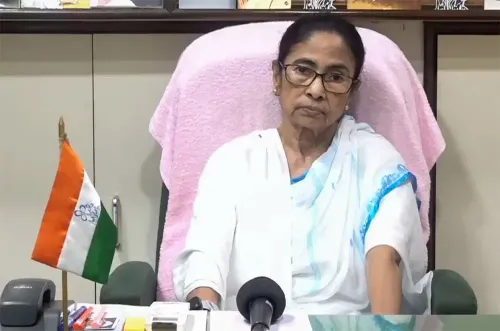
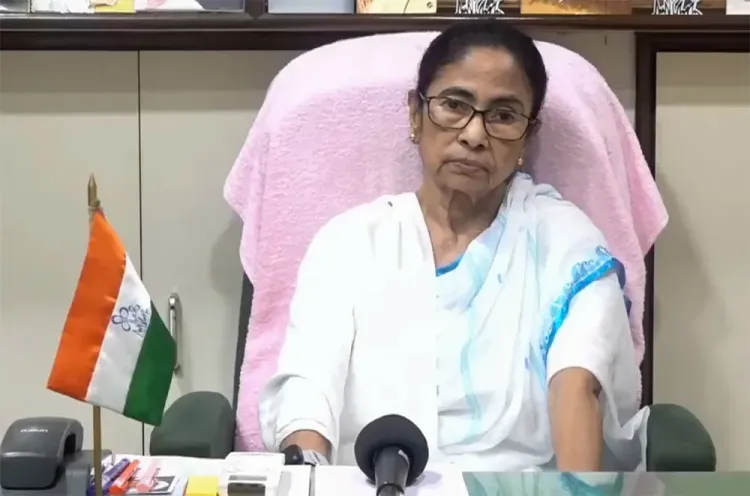
The Trinamool Congress (TMC) is navigating its gravest internal crisis since its founding in 1998, with rival factions — each claiming to be the 'real Trinamool' — pulling the party in opposite directions and forcing a fresh reckoning with the ambiguities embedded in India's anti-defection law. The rebellion, unfolding simultaneously in Parliament and the West Bengal Assembly, has put Mamata Banerjee, the party's founder and chairperson, on the defensive as she attempts to hold together an organisation fractured from within.
Scale of the Rebellion
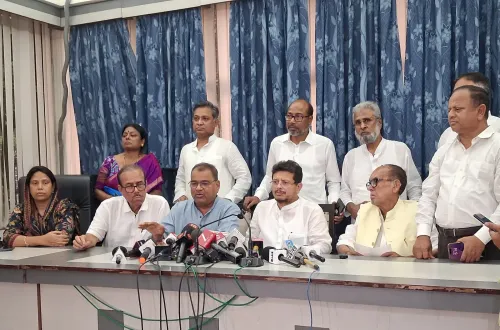
20 of the TMC's 28 Lok Sabha MPs have defected to the little-known Nationalist Citizens Party of India (NCPI), while close to 60 of its 80 MLAs in the West Bengal Assembly have broken ranks. The unrest is reportedly rooted in leadership disputes — particularly against the growing influence of Abhishek Banerjee, Mamata Banerjee's nephew, within the party's power structure.
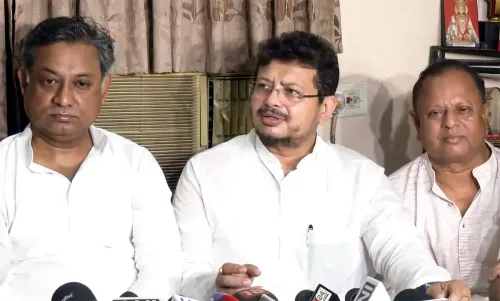
In the West Bengal Assembly, a significant majority of dissident TMC MLAs have backed expelled leader Ritabrata Banerjee as Leader of the Opposition, deepening the schism between the party's organisational and legislative wings. Ritabrata Banerjee has maintained that his faction is the 'real Trinamool' and will not merge with any other party.
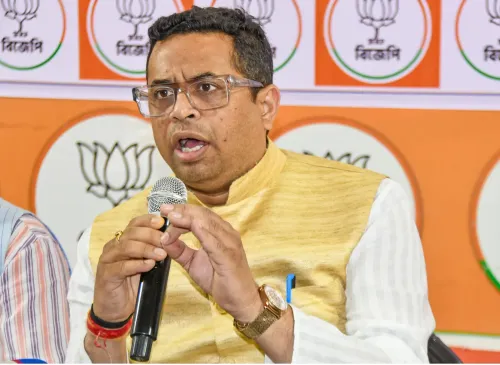
Prominent rebel MP Sudip Bandyopadhyay, meanwhile, has announced that while his group is merging with the NCPI, they intend to represent the 'real Trinamool' in Parliament beginning with the upcoming Monsoon session.
The Anti-Defection Law: Where the Grey Zone Lies
At the heart of the legal dispute is Paragraph 4 of the Tenth Schedule of the Constitution, which exempts legislators from disqualification if two-thirds of a party's lawmakers agree to a merger. The rebel MPs invoke this provision as their shield against disqualification.
Legal experts, however, are sharply divided. Several eminent jurists contend that the word 'party' in Paragraph 4 refers to the political organisation itself — not merely its legislators — and that the law requires the original political party to merge, not just a bloc of its elected members. Under this reading, the rebels' move would not qualify as a protected merger.
The rebels, for their part, cite a 2022 ruling by the Goa bench of the Bombay High Court, which upheld a Speaker's decision not to disqualify Congress MLAs who crossed over to the Bharatiya Janata Party (BJP). The court reasoned that since more than two-thirds of the Congress Legislature Party had defected, the move constituted a valid 'merger' under Paragraph 4. The Supreme Court, while disposing of earlier petitions as infructuous, has allowed fresh challenges but has not yet delivered a definitive ruling on this interpretation.
The Maharashtra Precedent
The current controversy closely mirrors the Shiv Sena and Nationalist Congress Party (NCP) splits in Maharashtra a few years ago. Critics note that the Supreme Court's observations in the 2023 Shiv Sena split case made it clear that a Legislature Party cannot act independently of the political party — a principle that, if applied strictly, would undercut the rebels' merger argument.
In that episode, the disqualification process was simultaneously handled by Maharashtra Assembly Speaker Rahul Narwekar, the Election Commission of India (ECI) — which adjudicated on party name and election symbol — and the Supreme Court, where certain matters remain pending. The Trinamool rebellion now risks a similar three-front legal battle.
What Happens Next
The Supreme Court's forthcoming judgment on the Goa defection case is expected to be pivotal — not just for the rebel legislators in Goa, but for reshaping how India's anti-defection jurisprudence handles mass defections dressed as mergers. The Trinamool crisis could become the next definitive test case.
Eminent jurists suggest the apex court may need to deliver a landmark ruling to resolve two core ambiguities: whether the merger exception applies when legislators join a party with no prior parliamentary representation, and whether expelled members can still claim legitimacy through numerical strength alone. Until that judgment arrives, Mamata Banerjee faces the twin challenge of salvaging her party's organisational integrity while navigating a legal minefield that may ultimately redefine the contours of Indian democratic law.
Point of View
Not to provide a numerical escape hatch for mass defections. Yet the law's silence on what constitutes a 'party' versus a 'legislature party' has been exploited repeatedly — from Goa to Maharashtra to now West Bengal. The Supreme Court has ducked a clean ruling each time. If it continues to do so, the anti-defection law risks becoming a procedural formality that determined majorities can game at will, hollowing out the very floor-crossing deterrent the Tenth Schedule was meant to create.
NationPress
15 Sept 2026
Frequently Asked Questions
What is the Trinamool Congress split about?
The Trinamool Congress is facing its worst-ever internal rebellion, with 20 of its 28 Lok Sabha MPs defecting to the Nationalist Citizens Party of India and close to 60 of its 80 West Bengal MLAs breaking ranks. The unrest is reportedly driven by leadership disputes, particularly over the growing influence of Abhishek Banerjee within the party.
What is the anti-defection law and why is it relevant here?
India's anti-defection law, enshrined in the Tenth Schedule of the Constitution, disqualifies legislators who voluntarily give up party membership or vote against party direction. Paragraph 4 provides an exemption if two-thirds of a party's lawmakers agree to a merger — the provision the TMC rebels are invoking to avoid disqualification.
Can the TMC rebels avoid disqualification under the merger clause?
Legal opinion is divided. The rebels argue their two-thirds strength qualifies as a protected merger under Paragraph 4. However, several jurists contend the law requires the original political party — not just its legislators — to merge, meaning the rebels' move may not meet the legal threshold. The Supreme Court has not yet delivered a definitive ruling.
How does the Maharashtra Shiv Sena case apply to the TMC crisis?
The Supreme Court's 2023 observations in the Shiv Sena split case stated that a Legislature Party cannot act independently of the political party — a principle that, if applied to the TMC situation, would weaken the rebels' merger argument. The Maharashtra precedent is being closely watched as a potential template.
What will the Supreme Court's upcoming judgment decide?
The apex court's forthcoming ruling on the Goa defection case is expected to clarify whether the two-thirds merger exception applies when legislators join a party with no prior parliamentary representation. The verdict could set a binding precedent that directly determines the fate of the TMC rebels and shapes anti-defection jurisprudence across India.