Trinamool split a sign of deeper rot, says rebel MP Satabdi Roy

Synopsis
Rebel TMC MP Satabdi Roy has done what few insiders dare: named the four forces she believes are breaking the Trinamool Congress apart — corruption, overconfidence, over-reliance on IPAC, and Mamata Banerjee’s decision to delegate too much authority to Abhishek Banerjee. Her remarks reframe the party’s crisis not as a string of personal defections but as a structural collapse years in the making.
Key Takeaways
Rebel TMC MP Satabdi Roy on 10 June publicly blamed the party leadership for the wave of departures, calling it a sign of deeper organisational failure.
Roy cited four root causes : corruption, overconfidence, dominance of political consultancy IPAC , and neglect of veteran workers.
She said Mamata Banerjee should not have delegated key decisions to nephew Abhishek Banerjee , and Abhishek should not have deferred to outside consultants.
Roy alleged the party never held serious post-defeat reviews, leaving it unable to correct course.
On her own political future, Roy said no final decisions have been taken and discussions among dissident groups are ongoing.
She offered conditional praise for the BJP -led state administration, noting early delivery on schemes such as free bus services and the Annapurna programme.
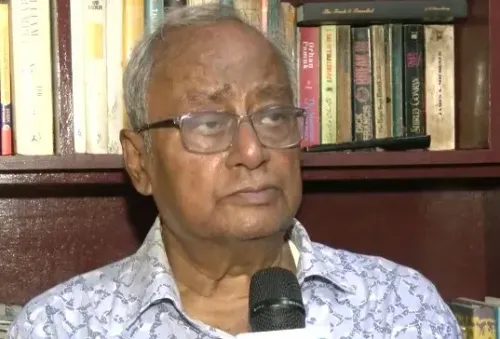
Rebel All India Trinamool Congress (TMC) MP Satabdi Roy on Wednesday, 10 June delivered one of the sharpest internal critiques of the party in recent memory, alleging that corruption, overconfidence, and the sidelining of veteran workers had hollowed out the organisation from within. Speaking from Kolkata, Roy argued that the wave of leaders distancing themselves from the TMC was not a series of individual rebellions but a symptom of structural failure at the top.
A Pattern of Departures, Not Isolated Incidents
Roy was unambiguous in placing collective responsibility on the party leadership for the exodus of leaders. “So many people have left or revolted. One may say it is their personal agenda or their fault, but when such a large number of people become dissatisfied, the responsibility also lies with the party,” she said. She insisted the TMC could not continue to dismiss every departure as an individual failing, arguing that the sheer scale of dissatisfaction pointed to a systemic breakdown in how the party managed its workers and leaders over the years.
No Post-Defeat Introspection, No Path to Recovery
One of Roy’s most pointed criticisms was the party’s alleged refusal to analyse its electoral losses. “Even after electoral losses, there was no serious discussion about why we lost. If you do not discuss your defeats, how will you prepare to win in the future?” she said. She drew a comparison to the media industry, noting that even television channels hold internal reviews when ratings fall. “If there is no introspection, others will continue moving ahead while you remain complacent,” she added. This comes amid a broader pattern of post-poll soul-searching that the TMC has, by her account, repeatedly deferred.
Corruption, Overconfidence, and the IPAC Factor
Roy listed four factors she believed were primarily responsible for the party’s difficulties: corruption, overconfidence, the growing dominance of political consultancy firm IPAC, and the neglect of long-serving party workers. “Corruption is one reason. Overconfidence is another. There was a belief that people would vote for us regardless of what happened,” she said. She was particularly critical of the increasing reliance on data-driven decision-making by outside consultants, arguing that grassroots workers who had spent decades in a constituency understood local realities far better than any algorithm. “They may be highly educated and skilled with data and computers, but politics is not only about statistics,” she said.
Mamata Should Not Have Delegated So Much, Says Roy
In a remark that is likely to draw the most attention, Roy said former West Bengal Chief Minister and TMC supremo Mamata Banerjee should have retained greater control over key political decisions rather than delegating authority to her nephew and party General Secretary Abhishek Banerjee. “Mamata Banerjee is one of the most experienced politicians in the country. She should not have delegated everything to Abhishek Banerjee. Similarly, Abhishek should not have left everything to consultants. In the process, valuable time, trust and organisational strength were lost,” she said. Roy also questioned whether the leadership was genuinely unaware of the corruption that had allegedly taken root, suggesting that either ignorance or inaction on the part of the administration amounted to a serious failure of governance.
On the Road Ahead
Roy said no final decisions had been taken about her political future or the direction of the dissident grouping. “Different groups are working separately at present, and discussions will continue. Nobody has made any final decision about the road ahead,” she said. She also offered measured praise for the current BJP-led administration in the state, noting that schemes such as free bus services and the Annapurna programme had already been set in motion. “If governments fail to deliver, they eventually face the consequences from voters,” she added, signalling that her assessment of the new dispensation remained conditional on continued delivery.
Point of View
Abhishek Banerjee, and the absence of post-defeat reviews as distinct, separable failures — not a single personalised grievance. That granularity makes her critique harder to dismiss as factional score-settling. The deeper question her remarks raise is whether the TMC’s centralisation of power — first in Mamata, then partially in Abhishek, then partially in a consultancy — has left the party without any second-tier leadership capable of self-correction. A party that outsources both strategy and accountability has, in effect, no internal feedback loop. Roy’s conditional praise for the BJP administration is also a signal worth watching: it suggests the dissident bloc is not simply threatening exit but is already auditing the alternative.
NationPress
26 Oct 2026
Frequently Asked Questions
What has Satabdi Roy said about the Trinamool Congress split?
Satabdi Roy has said the TMC’s wave of departures is not a series of individual rebellions but a sign of deeper organisational failure. She blamed corruption, overconfidence, over-reliance on political consultancy IPAC, and the neglect of long-serving party workers for the crisis.
Why did Satabdi Roy criticise Mamata Banerjee and Abhishek Banerjee?
Roy argued that Mamata Banerjee, despite being one of India’s most experienced politicians, should not have delegated key political decisions to her nephew Abhishek Banerjee. She further said Abhishek compounded the problem by deferring too much to outside consultants, resulting in a loss of time, trust, and organisational strength.
What is IPAC and why is it controversial within the TMC?
IPAC (Indian Political Action Committee) is a political consultancy that has worked closely with the TMC on electoral strategy. Roy and other dissident leaders have alleged that the firm’s growing influence sidelined experienced grassroots workers who had a better understanding of local political realities than data-driven outsiders.
Has Satabdi Roy decided to leave the Trinamool Congress?
Roy has not announced a final decision about her political future. She said different dissident groups are working separately and discussions are ongoing, but no definitive road ahead has been determined as of 10 June.
What did Satabdi Roy say about the current BJP-led government in West Bengal?
Roy offered cautious praise, noting that schemes such as free bus services and the Annapurna programme had already been launched within a short period. She added that governments that fail to deliver eventually face voter consequences, suggesting her assessment remains contingent on continued performance.