Why Does the SC Emphasize Timely Decisions on High Court Interim Reliefs?
Click to start listening
Synopsis
In a significant ruling, the Supreme Court stressed the need for High Courts to resolve applications for vacating interim orders within two weeks, highlighting the balance between interim relief and fairness. This decision underscores the urgency for timely judicial processes.
Key Takeaways
- The Supreme Court insists on timely resolution of interim orders by High Courts.
- Article 226(3) requires applications for vacation to be resolved within two weeks.
- The ruling aims to prevent indefinite interim orders and protect procedural fairness.
- Judicial efficiency is essential for maintaining justice in legal proceedings.
- The apex court's reminder reinforces constitutional obligations of High Courts.
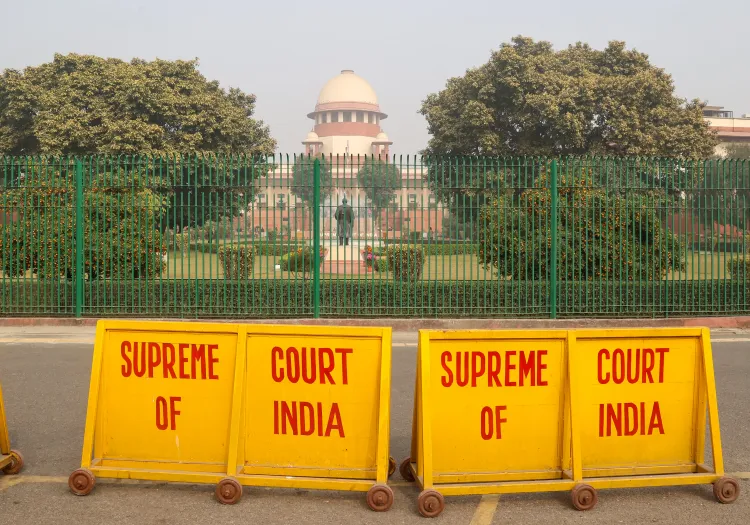
New Delhi, Jan 20 (NationPress) The Supreme Court has highlighted that interim directives issued by High Courts should not be permitted to remain in effect indefinitely. It stressed that applications for their termination must be handled swiftly, adhering to Article 226(3) of the Constitution.
A Bench headed by Justices Aravind Kumar and Prasanna B. Varale made this remark while resolving a Special Leave Petition (SLP) contesting an interim status quo order from the Allahabad High Court in a writ petition.
In its ruling, the Justice Kumar-led Bench observed that an application for lifting the interim status quo order had already been submitted to the Allahabad High Court but has remained unresolved since January 2025.
Considering the extended delay, the apex court referenced the constitutional provision in Article 226(3), which aims to balance the provision of interim relief with procedural fairness for the opposing party.
“At this juncture, it is pertinent to highlight Sub-Article (3) of Article 226 of the Constitution of India, which requires that upon the filing of such an application, the High Court is obliged to resolve it within a span of two weeks,” stated the Justice Kumar-led Bench.
Article 226(3) stipulates that if an interim order is issued by a High Court without hearing the opposing party, and a request is made to vacate such an order, the High Court must address the application within a specified time limit.
This provision is intended to prevent the misuse of interim orders and ensure that such reliefs do not persist indefinitely, to the detriment of the opposing party.
Furthermore, the Supreme Court noted the submissions from the advocates representing both parties, indicating that the matter was already scheduled before the Allahabad High Court on January 19, 2026.
Against this backdrop, the Supreme Court opted not to delve into the merits of the dispute, instead reminding the Allahabad High Court of its constitutional duty.
“In light of the aforementioned provision and considering the submissions made by the learned advocates regarding the listing of the matter on 19.01.2026, we urge the High Court to address the application and resolve it based on its merits,” the apex court's order stated.
The Justice Kumar-led Bench clarified that it was not providing any opinion on the competing claims presented by the parties.
“We wish to make it clear that we have not expressed any views on the merits of the opposing claims,” it concluded. Consequently, the SLP was disposed of, along with all outstanding applications.
Point of View
I believe that the Supreme Court's insistence on timely decisions regarding interim reliefs reflects a significant commitment to upholding justice and procedural fairness in our legal system. This directive is essential to prevent prolonged legal uncertainties and ensures that the rights of all parties are respected. The balance between interim relief and timely resolution is a fundamental aspect of our judiciary that must be maintained.
NationPress
20/01/2026
Frequently Asked Questions
What is Article 226(3) of the Constitution?
Article 226(3) mandates that if a High Court issues an interim order without hearing the opposite party, it must resolve any application seeking to vacate that order within two weeks.
Why are interim orders important?
Interim orders provide temporary relief in legal matters, preventing potential harm to parties involved while the case is being resolved.
What happens if a High Court does not comply with Article 226(3)?
Failure to comply can lead to prolonged legal uncertainty and potential misuse of interim reliefs, which the Supreme Court aims to prevent.