Supreme Court to direct CBSE on APAAR ID opt-out, data protection
Synopsis
The Supreme Court has signalled it will force a nationwide fix to the APAAR ID scheme — directing CBSE to make the opt-out option explicit in every consent form. With the Aadhaar-education link under constitutional challenge and the DPDP Act now in play, this case could redraw the boundaries of how India collects and holds children's data.
Key Takeaways
The Supreme Court on 20 July indicated it will direct CBSE to implement the Orissa High Court 's ruling on an explicit opt-out clause in APAAR consent forms, on a pan-India basis.
The Bench, led by Chief Justice Surya Kant , clarified that CBSE circulars must comply with the DPDP Act, 2023 .
Senior advocate Indira Jaising argued that linking APAAR to Aadhaar effectively makes Aadhaar a precondition for Board exam registration, violating the constitutional right to education.
The Orissa High Court in December 2025 had found that the model consent form lacked an express opt-out option, undermining the scheme's voluntary character.
The petition contends APAAR creates a centralised, lifelong digital profile of students and fails the proportionality tests of the K.S.
Puttaswamy privacy judgment.
The Supreme Court on Monday, 20 July indicated it would direct the Central Board of Secondary Education (CBSE) to implement the Orissa High Court's ruling mandating an explicit opt-out option in the consent form for the APAAR (Automated Permanent Academic Account Registry) ID scheme. The apex court also made clear that the scheme must operate within the framework of the Digital Personal Data Protection (DPDP) Act, 2023.
What the Supreme Court Said
A Bench headed by Chief Justice of India Surya Kant, along with Justices Joymalya Bagchi and V. Mohana, said appropriate directions would be passed to ensure the APAAR scheme remains genuinely voluntary and that parental consent forms carry a clear refusal option.
'We will direct CBSE to implement this judgment on a pan-India basis... as the (Orissa) High Court order has been accepted. We are directing CBSE to examine the issues as well,' the Bench observed during the hearing.
The court further clarified that CBSE circulars would remain subject to existing law, including the DPDP Act, 2023, signalling that no administrative directive can override statutory data protection obligations.
The Petition and Core Allegations
The apex court was hearing a writ petition filed by parents of four students challenging the constitutional validity of the APAAR ID scheme and CBSE's decision to require APAAR IDs for Board examination registration.
Senior advocate Indira Jaising, appearing for the petitioners, argued that although the government describes APAAR as voluntary, it is linked to Aadhaar and effectively compels students to obtain Aadhaar to secure an APAAR ID. 'Right to education is not a targeted service. The right to education is a Constitutional right. Therefore, asking a child to get an Aadhaar and an APAAR for being sent up to exams is against the Constitution,' Jaising submitted.
The petition contends that the APAAR framework — an Aadhaar-linked, lifelong academic identifier — creates a centralised digital architecture capable of long-term tracking and profiling of students. It further argues the scheme lacks statutory backing and fails the tests of legality, necessity, and proportionality established in the Supreme Court's landmark K.S. Puttaswamy privacy judgment. The plea also raises concerns over the 'right to be forgotten', arguing that a cradle-to-career digital identity linked with Aadhaar infringes on that right.
The Orissa High Court Ruling
In December 2025, the Orissa High Court held that while authorities consistently described APAAR as voluntary, the model consent form did not reflect that position because it offered no option to refuse consent at the outset.
A single-judge Bench of Justice Sashikanta Mishra observed that the absence of an express opt-out clause undermined the scheme's voluntary nature, noting that 'the model consent form does not appear to have been happily worded.' The High Court directed authorities to amend the form to incorporate an opt-out or refusal clause. That ruling was not challenged, which the Supreme Court noted as the basis for directing its pan-India implementation through CBSE.
Data Protection and Fundamental Rights Concerns
The petition specifically sought strict compliance with the DPDP Act while obtaining parental consent for APAAR enrolment, raising concerns over the collection, storage, and processing of children's personal data. Critics argue that making APAAR mandatory for Board examination registration violates fundamental rights to privacy, education, and decisional autonomy under Articles 21 and 21A of the Constitution.
Notably, this case arrives at a time when India's data protection architecture is still being operationalised, making the court's guidance on children's data particularly significant for future policy.
What Happens Next
The Supreme Court is expected to pass formal directions to CBSE requiring it to revise the model consent form on a pan-India basis and examine broader data protection compliance. The outcome could have significant implications for how the government designs consent mechanisms for Aadhaar-linked education schemes going forward.
Point of View
Coercive in design. The APAAR consent form issue is not an oversight; it reflects a pattern where opt-in is the default and opt-out is buried or absent. With the DPDP Act now in force, the court has a rare opportunity to set enforceable standards for children's data consent before the architecture becomes entrenched. The deeper question — whether a lifelong academic identifier linked to Aadhaar is constitutionally permissible at all — remains unanswered and will likely return to the court.
NationPress
20 Oct 2026
Frequently Asked Questions
What is the APAAR ID scheme and why is it before the Supreme Court?
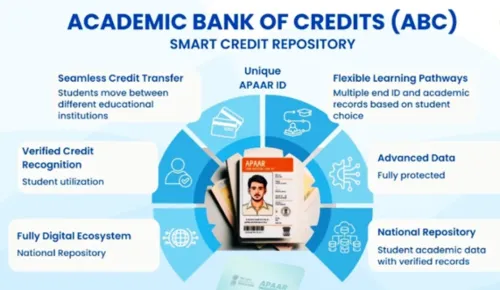
APAAR, or Automated Permanent Academic Account Registry, is a government-issued lifelong academic identifier linked to Aadhaar. It is before the Supreme Court because parents of four students challenged its constitutional validity, arguing it effectively makes Aadhaar mandatory for Board exam registration and violates rights to privacy and education under Articles 21 and 21A.
What did the Supreme Court say about APAAR on 20 July?
The Supreme Court, led by Chief Justice Surya Kant, indicated it would direct CBSE to implement the Orissa High Court's ruling requiring an explicit opt-out clause in the APAAR consent form across the country. The court also clarified that CBSE circulars must comply with the DPDP Act, 2023.
What did the Orissa High Court rule on APAAR?
In December 2025, the Orissa High Court ruled that the model APAAR consent form did not provide parents an option to refuse consent, undermining the scheme's voluntary nature. Justice Sashikanta Mishra directed authorities to amend the form to include an explicit opt-out or refusal clause. That ruling was not challenged.
How does the DPDP Act, 2023 apply to the APAAR scheme?
The Digital Personal Data Protection Act, 2023 governs the collection, storage, and processing of personal data in India, including that of children. The Supreme Court has clarified that CBSE's circulars on APAAR must comply with this law, meaning parental consent must meet the Act's standards before children's data can be enrolled into the scheme.
Who is affected by the Supreme Court's expected directions on APAAR?
The directions will affect all students enrolled in CBSE-affiliated schools across India, as well as their parents, who will be required to receive a clearly worded consent form with an explicit option to refuse APAAR enrolment. Schools and education authorities implementing the scheme will also need to revise their procedures accordingly.