SC refuses to stay Somnath Temple non-veg ban, tells HC to decide in 2 months
Synopsis
The Supreme Court on 6 November declined to lift the Somnath Temple non-veg ban, leaving six eateries without relief and nudging the Gujarat High Court to settle the matter within two months. The bench's pointed remark about a 'middle path' signals the apex court sees the issue as one requiring calibration — not a clean verdict either way.
Key Takeaways
The Supreme Court on 6 November 2026 refused to interfere with the Gujarat High Court's interim order sustaining the non-veg food ban near Somnath Temple .
The bench of Justices M.M.
Sundresh and Prasanna B.
Varale asked the High Court to dispose of the pending appeal within two months .
The ban, issued by Gir Somnath District Magistrate J.N.
Vaghela on 10 August 2026 , covers seven stretches and all areas within 500 metres of the temple.
Six restaurants — including Taj Restaurant and Kismat Restaurant — filed the SLP after the Gujarat High Court's division bench stayed a single-judge order that had set aside the ban.
The Gujarat High Court's next hearing is scheduled for 25 November 2026 .
The court orally observed that authorities may need to take 'a middle path' — a remark that could shape how the High Court frames its final ruling.
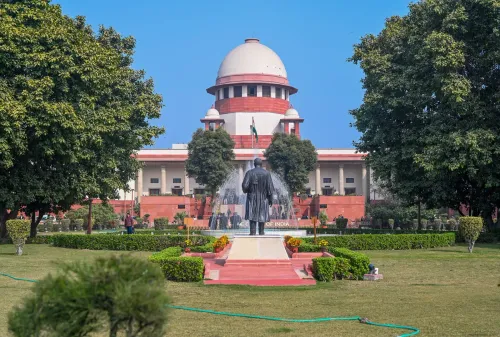
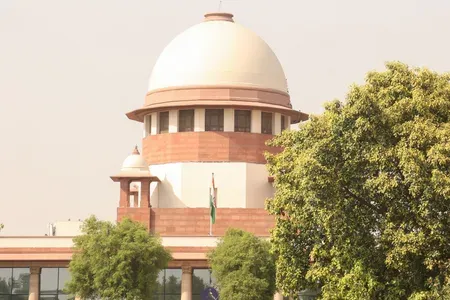
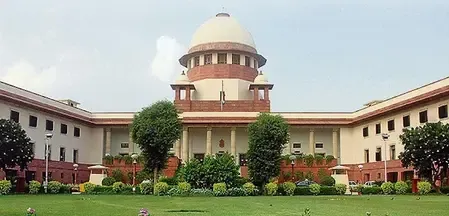
The Supreme Court on Friday, 6 November 2026, declined to interfere with the Gujarat High Court's interim order that keeps alive a prohibition on the preparation, sale, and storage of meat and non-vegetarian food in areas surrounding the Somnath Temple in Gir Somnath district. The apex court simultaneously directed the High Court to make an endeavour to dispose of the pending appeal within two months.
What the Supreme Court Said
A bench of Justices M.M. Sundresh and Prasanna B. Varale passed the order while hearing a special leave petition (SLP) filed by six eateries challenging the Gujarat High Court's 30 October interim order. The bench declined to grant any relief to the petitioners, leaving the High Court's stay on the single-judge order intact.
Before closing the hearing, the bench orally observed that a balanced approach might be required. Justice Sundresh remarked: 'Probably, the authorities need to take a middle path, neither here nor there. We don't want to say anything.' The court stopped short of directing any specific modification to the existing ban.
Background: The Ban and Its Legal Journey
Gir Somnath District Magistrate J.N. Vaghela issued a notification on 10 August 2026 under Section 33(1)(w) of the Gujarat Police Act, 1951, imposing the prohibition on meat, fish, and other non-vegetarian dishes across seven identified stretches near the temple. These include the area from Balaka Temple to Bhidiya Circle, Bhidiya Circle to Shankh Circle, Shankh Circle to Safari Circle, Safari Circle to Prajapati Dharamshala, and all areas within 500 metres of the Somnath Temple. A preliminary notification seeking public objections had been issued on 10 July 2026, a month earlier.
Six restaurant operators — Taj Restaurant, J.M. Restaurant, Hotel New Gulbani, Kismat Restaurant, Gulabi Restaurant, and Khwaja Hindustani Restaurant — challenged the notification before the Gujarat High Court. On 30 October, a single judge allowed their petition and set aside the notification. The Gujarat government immediately moved a division bench, which the same day stayed the single-judge order, restoring the ban pending further orders.
Arguments on Both Sides
Solicitor General Tushar Mehta, appearing for the Gujarat government, defended the restrictions, noting that non-vegetarian food could still be served outside the prohibited areas. Advocate General Kamal Trivedi had earlier argued before the High Court that permitting the preparation and sale of non-vegetarian food in the specified areas could hurt the religious sentiments of devotees and cause inconvenience, annoyance, and potential risks to public safety. The state had pointed to the large footfall of devotees expected during Diwali and the Gujarati New Year as justification.
The restaurant owners, however, contended that Section 33(1)(w) of the Gujarat Police Act did not empower authorities to impose such a prohibition — arguing the provision was limited to regulating places of public amusement, entertainment, or assembly, not food trade.
What Happens Next
The Gujarat High Court has issued notice in the state government's appeal, with the matter scheduled for hearing on 25 November 2026. The hearing will be taken up alongside another pending petition involving some of the same restaurant owners. The Supreme Court's nudge to resolve the matter within two months puts pressure on the High Court to deliver a substantive ruling before the year closes.
The case raises broader questions about the scope of police-act powers to regulate trade near religious sites — a legal debate that is likely to draw attention well beyond Gujarat.
Point of View
The bench has essentially told Gujarat to find a proportionate solution rather than a blanket one. The legal core of the case — whether a police-act provision on 'public assembly' can be stretched to ban food trade — is unresolved and consequential. If Gujarat's reading is upheld, it sets a template for similar restrictions at other pilgrimage sites nationwide. The bench's oral caution also hints that an indefinite or geographically overbroad ban may not survive final scrutiny, even if the court is unwilling to lift it today.
NationPress
6 Nov 2026
Frequently Asked Questions
What did the Supreme Court decide on the Somnath Temple non-veg food ban?
The Supreme Court on 6 November 2026 refused to interfere with the Gujarat High Court's interim order that keeps the non-veg food ban in place around Somnath Temple. It directed the High Court to make an endeavour to decide the pending appeal within two months.
What areas does the Somnath Temple non-veg ban cover?
The ban covers seven identified stretches around Somnath Temple, including routes from Balaka Temple to Bhidiya Circle, Bhidiya Circle to Shankh Circle, Shankh Circle to Safari Circle, and Safari Circle to Prajapati Dharamshala. It also applies to all areas within 500 metres of the temple.
Who challenged the Somnath Temple non-veg ban and why?
Six restaurant operators — Taj Restaurant, J.M. Restaurant, Hotel New Gulbani, Kismat Restaurant, Gulabi Restaurant, and Khwaja Hindustani Restaurant — challenged the ban. They argued that Section 33(1)(w) of the Gujarat Police Act, 1951, which covers regulation of public amusement or assembly venues, does not empower authorities to prohibit food trade.
What is the Gujarat government's justification for the ban?
The Gujarat government argued the ban was necessary given the large number of devotees expected at Somnath Temple during Diwali and the Gujarati New Year. It contended that selling non-vegetarian food in those areas could hurt devotees' religious sentiments and pose risks to public safety, while clarifying that such food remains available outside the prohibited zones.
When will the Gujarat High Court next hear the Somnath Temple food ban case?
The Gujarat High Court has scheduled the next hearing for 25 November 2026, when the state government's appeal will be taken up alongside another pending petition involving some of the same restaurant owners. The Supreme Court has asked the High Court to decide the appeal within two months.