Supreme Court sets aside SARFAESI auction sale over Rule 9 payment breach, heir gets redemption chance

Synopsis
The Supreme Court has voided a 2010 Indian Bank property auction after finding the buyer paid the balance 75% of the bid price four days past the mandatory 15-day deadline — with no written extension on record. The ruling reinforces that SARFAESI auction rules are mandatory, not procedural, and that even a confirmed sale can be undone when the process is legally infirm.
Key Takeaways
The Supreme Court set aside an Indian Bank auction sale from 11 March 2010 under the SARFAESI Act .
The auction purchaser paid the balance 75% of the bid on 31 March 2010 , breaching the 15-day deadline under Rule 9(4) of the Security Interest (Enforcement) Rules.
The property had been purchased for ₹2.11 crore ; the bank must refund the full amount with 7% per annum interest within six weeks .
Vasumathi may redeem the mortgage by paying ₹95.42 lakh plus 5% per annum interest, with a two-week window to approach the bank.
The court left open the question of whether SARFAESI proceedings initiated 12 years after the preliminary decree were time-barred.
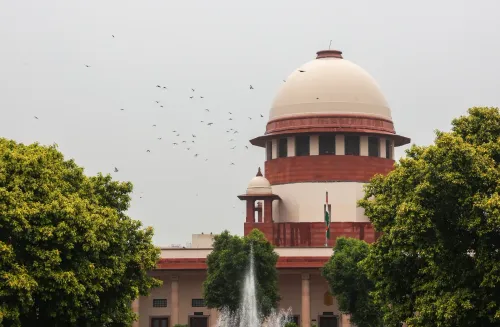
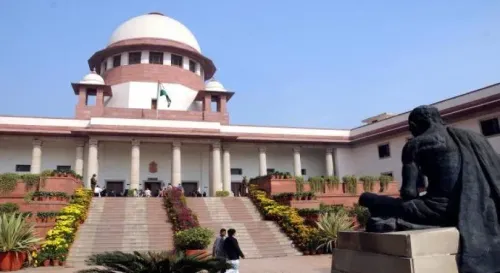
The Supreme Court of India has set aside an auction sale of a mortgaged property conducted by Indian Bank in 2010, ruling that the sale was legally invalid due to non-compliance with mandatory provisions of the Security Interest (Enforcement) Rules, 2002. The court simultaneously granted M.R. Vasumathi, the daughter and legal heir of deceased guarantor G. Ramanujam, a one-time opportunity to redeem the property by paying the outstanding dues.
Background of the Dispute
The case traces its origins to a loan availed by a sole proprietorship in 1984, for which G. Ramanujam had stood as guarantor and mortgaged his immovable property. After the borrower defaulted, Indian Bank secured a preliminary decree in 1997. The bank subsequently initiated proceedings under the Securitisation and Reconstruction of Financial Assets and Enforcement of Security Interest (SARFAESI) Act in 2009, culminating in an auction sale on 11 March 2010, at which the property was purchased for ₹2.11 crore.
The Rule 9 Violation at the Heart of the Case
A Bench of Justices Dipankar Datta and AG Masih found that while the auction purchaser had deposited 25 per cent of the bid amount on the date of sale, the remaining 75 per cent was paid only on 31 March 2010 — beyond the 15-day statutory deadline prescribed under Rule 9(4) of the Security Interest (Enforcement) Rules. Crucially, no written agreement extending the payment period was found on record.
The court was unequivocal: 'Even upon a cursory perusal of Rule 9 of the SARFAESI Rules that existed at the time of the impugned sale, it is clear that these provisions are neither ornamental nor directory; they are couched in mandatory terms and go to the root of the validity of the sale,' the judgment stated.
Court Rejects 'Confirmed Sale' Shield for Bona Fide Purchaser
Indian Bank and the auction purchaser had argued that the sale, having been confirmed, should be protected. The Supreme Court rejected this contention, holding that statutory non-compliance cannot be cured by equitable considerations alone. 'The object of proceedings under the SARFAESI Act is not the mere culmination of a sale in a mechanical manner, but the lawful realisation of the secured asset through a process that is fair, transparent and strictly compliant with the prescribed rules,' the Bench observed.
The court further clarified that while bona fide purchaser protections are ordinarily respected, they are not absolute: 'Such protection is by no means absolute. It must yield where the very process engendering the sale is demonstrated to be legally infirm or to be incongruous with the statutory framework.' Setting aside the earlier rulings of the Madras High Court, the Debts Recovery Appellate Tribunal (DRAT), and the Debts Recovery Tribunal (DRT), the apex court quashed the auction.
Relief Granted: Refund, Redemption, and a Deadline
The Supreme Court directed Indian Bank to refund the entire auction amount to the purchaser with interest at 7 per cent per annum from the respective dates of deposit, within six weeks. Invoking its powers under Article 142 of the Constitution to ensure complete justice, the court granted Vasumathi the opportunity to redeem the mortgage by paying ₹95.42 lakh — the amount specified in the demand notice under Section 13(2) of the SARFAESI Act — along with interest at 5 per cent per annum from the date of the demand notice until payment.
The appellant has been directed to approach the bank within two weeks to ascertain the exact payable amount. If she fails to exercise this one-time option, the bank will be free to auction the property afresh after obtaining a fresh valuation report from a government-empanelled valuer.
Larger Question of Limitation Left Open
Notably, the court declined to rule on the broader question of whether SARFAESI proceedings initiated nearly 12 years after the preliminary decree were barred by limitation, leaving that issue open for future adjudication. This unresolved question could have implications for other cases where banks have invoked SARFAESI enforcement after extended delays.
Point of View
It could expose a substantial volume of legacy enforcement actions to challenge. Lenders would be wise to treat this judgment as a compliance audit prompt, not merely a one-off ruling.
NationPress
26 Oct 2026
Frequently Asked Questions
Why did the Supreme Court set aside the Indian Bank SARFAESI auction sale?
The Supreme Court set aside the auction because the purchaser paid the remaining 75% of the bid price on 31 March 2010, four days after the mandatory 15-day deadline under Rule 9(4) of the Security Interest (Enforcement) Rules, 2002. No written agreement extending the payment period was on record, making the sale legally infirm.
What is Rule 9(4) of the Security Interest (Enforcement) Rules, 2002?
Rule 9(4) requires that in a SARFAESI auction, the successful bidder must pay the balance of the purchase price within 15 days of the sale date. The Supreme Court held these provisions are mandatory — not merely procedural — and go to the root of the sale's validity.
What relief was granted to the legal heir M.R. Vasumathi?
The Supreme Court, invoking Article 142 of the Constitution, granted Vasumathi a one-time opportunity to redeem the mortgaged property by paying ₹95.42 lakh plus 5% per annum interest from the date of the demand notice. She must approach Indian Bank within two weeks to confirm the exact amount payable.
What happens if the heir fails to redeem the property?
If Vasumathi does not exercise the one-time redemption opportunity within the stipulated period, Indian Bank is free to auction the property afresh after obtaining a fresh valuation report from a government-empanelled valuer.
What larger legal question did the Supreme Court leave unresolved?
The court declined to rule on whether SARFAESI enforcement proceedings initiated nearly 12 years after the 1997 preliminary decree were barred by limitation. The judgment explicitly left this question open for future adjudication, which could have broader implications for delayed enforcement actions by lenders.