Supreme Court refuses to ban hanging as execution method, opens door for reform
Synopsis
The Supreme Court refused to ban hanging as India's mode of execution but sent a clear signal: the government is free — and implicitly encouraged — to find a more humane alternative. With the CrPC replaced by the BNSS, the bench's observations on dignity and pain reduction could be the opening move in a long-overdue legislative reckoning with how India carries out its death sentences.
Key Takeaways
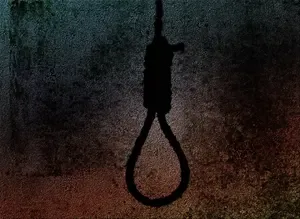
The Supreme Court on 18 August declined to ban hanging till death as India's mode of capital punishment.
A bench of Justice Vikram Nath and Justice Sandeep Mehta refused to override the 1983 Deena Dayal Constitution Bench ruling that upheld hanging as constitutionally valid.
The court said the Union government is free to explore alternatives that preserve the dignity of condemned prisoners and reduce pain.
Petitioner Senior Advocate Rishi Malhotra had challenged Section 354(5) of the CrPC (now the BNSS ), calling hanging cruel and barbaric.
Senior Advocate Meenakshi Arora of Project 39A recommended referring the matter to an expert committee, noting lethal injection has not been consistently successful.
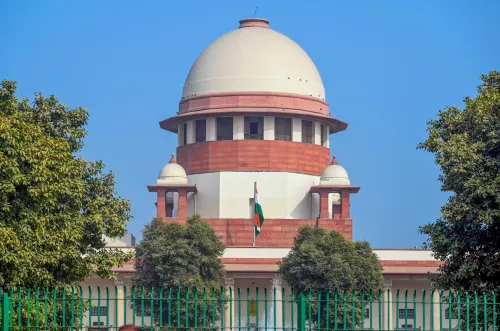
The Supreme Court of India on Tuesday, 18 August declined to ban hanging till death as the country's mode of capital punishment, stopping short of issuing a judicial mandate to replace it while leaving the door open for the Union government and stakeholders to explore scientifically proven, more humane alternatives. The ruling came in a petition that has been pending before the court since 2017.
What the Court Decided
A bench comprising Justice Vikram Nath and Justice Sandeep Mehta refused to reconsider the apex court's landmark 1983 Constitution Bench judgment in Deena Dayal versus Union of India, which had upheld hanging as a constitutionally valid mode of executing a death sentence in the rarest of rare cases. The bench made clear it would not override that precedent through a fresh judicial mandate at this stage.
However, the court stated that the Union government is free, going forward, to consider alternatives to hanging that preserve the dignity of condemned prisoners and minimise pain — a significant signal without amounting to a binding direction.
The Petition and Arguments
The case was brought by Senior Advocate Rishi Malhotra, who challenged the constitutionality of Section 354(5) of the Code of Criminal Procedure (CrPC) — now replaced by the Bharatiya Nagarik Suraksha Sanhita (BNSS). Malhotra argued that hanging is cruel and barbaric, and that the right to die with dignity is an integral part of the right to life guaranteed under the Constitution.
The petitioner urged the court to replace hanging with a more humane alternative — including lethal injection, as adopted in several other countries — and to allow condemned prisoners a choice in the mode of their execution.
Expert Voices in Court
The bench also sought the views of Senior Advocate Meenakshi Arora, associated with Project 39A, a criminal justice programme that provides legal aid and representation to death row prisoners. Arora cautioned against a straightforward shift to lethal injection, noting that the method had not proven consistently successful internationally, and suggested referring the matter to an expert committee for a thorough evaluation.
Context and Significance
India retains capital punishment for the rarest of rare offences, and hanging remains its sole prescribed method of execution — a position unchanged since independence. This petition, filed in 2017, is among the most sustained legal challenges to that practice. Notably, the court's refusal to ban hanging does not foreclose reform; it shifts the onus to the executive to initiate a credible review process. The reference to dignity and pain reduction in the bench's observations could form the basis of future legislative action or a fresh constitutional challenge.
With the BNSS having replaced the CrPC, the statutory framework governing execution methods is now under a new code — making this an opportune moment for Parliament to revisit the question if the government chooses to act on the court's signal.
Point of View
The bench has handed the executive both permission and implicit pressure to act. What the court will not do judicially, it has invited Parliament to do legislatively. The deeper issue is that India has not meaningfully revisited its execution framework since 1983, while global jurisprudence on the cruel and unusual punishment standard has moved considerably. The shift from CrPC to BNSS was a legislative moment that could have addressed this — it did not. The next window is now with the government, and the court has made clear it is watching.
NationPress
3 Oct 2026
Frequently Asked Questions
What did the Supreme Court decide about hanging as a mode of execution?
The Supreme Court on 18 August declined to ban hanging as India's prescribed mode of capital punishment and refused to override the 1983 Constitution Bench ruling that upheld it as constitutionally valid. However, the court said the Union government is free to explore more humane alternatives.
What was the 1983 Deena Dayal judgment that the court refused to reconsider?
The Deena Dayal versus Union of India case was decided by a Constitution Bench of the Supreme Court in 1983, which upheld hanging till death as a constitutionally valid method of executing capital sentences in the rarest of rare cases. Tuesday's bench declined to reopen that precedent.
Who filed the petition challenging hanging, and on what grounds?
Senior Advocate Rishi Malhotra filed the petition in 2017, challenging Section 354(5) of the CrPC — now replaced by the BNSS. He argued that hanging is cruel and barbaric, and that the right to die with dignity is an integral component of the constitutional right to life.
What alternative to hanging was proposed in court?
The petitioner suggested lethal injection as a more humane alternative, citing its adoption in several other countries. However, Senior Advocate Meenakshi Arora of Project 39A cautioned that lethal injection has not proven consistently successful and recommended an expert committee review before any switch.
What happens next after the Supreme Court's ruling?
The court has left the matter to the Union government and stakeholders to deliberate on scientifically proven alternatives. No binding direction was issued, so any change to India's execution method would require either fresh legislation or a future constitutional challenge.