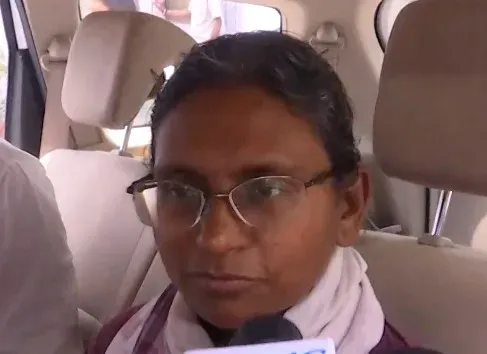
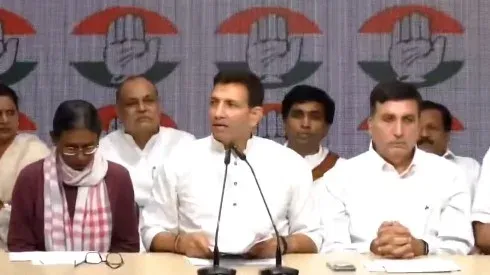
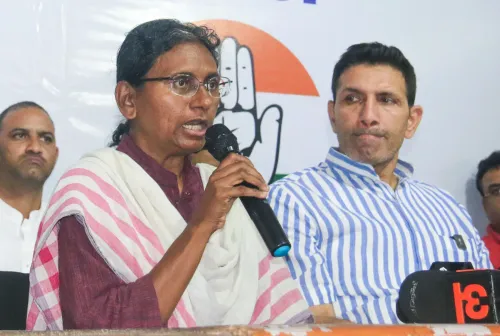
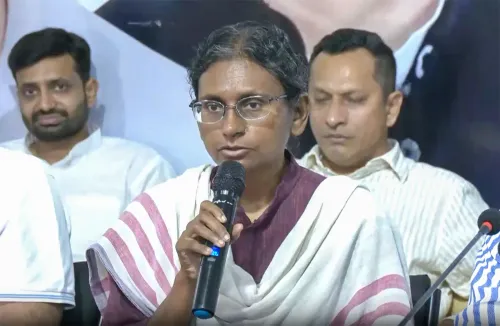
Supreme Court refuses to intervene in Meenakshi Natarajan Rajya Sabha nomination row

Synopsis
The Supreme Court refused to step in after Congress leader Meenakshi Natarajan's Rajya Sabha nomination from Madhya Pradesh was rejected over an undisclosed Telangana criminal case. With three BJP candidates already declared elected unopposed, the court directed her to the Election Commission — an avenue that legal observers say offers little practical relief at this stage.
Key Takeaways
The Supreme Court on 12 June refused to interfere with the rejection of Meenakshi Natarajan's Rajya Sabha nomination from Madhya Pradesh .
The nomination was rejected by the Returning Officer over alleged non-disclosure of a Telangana criminal case.
Senior advocate Abhishek Manu Singhvi argued no court had framed charges or taken cognisance in the Telangana matter, making disclosure legally unnecessary.
The court directed Natarajan to approach the Election Commission of India as the appropriate statutory remedy.
All three BJP candidates from Madhya Pradesh were declared elected unopposed after the withdrawal deadline passed on Thursday .
The Supreme Court on Friday, 12 June declined to interfere with the Returning Officer's decision rejecting the Rajya Sabha nomination of Congress leader Meenakshi Natarajan from Madhya Pradesh, in a significant setback to the opposition. The rejection was based on the alleged non-disclosure of a criminal case in Telangana, and the court held that the statutory remedy available to Natarajan was to approach the Election Commission of India (ECI).
What the Supreme Court Said
The bench observed that once a Returning Officer rejects a nomination paper, the appropriate legal course for the aggrieved candidate is to approach the poll panel — not the courts. "The petitioner is free to approach the Election Commission again," the court noted while disposing of the plea.
The court stopped short of granting any relief, leaving Natarajan's options squarely within the election law framework rather than through judicial intervention at this stage.
Natarajan's Legal Arguments
Senior advocate Abhishek Manu Singhvi, appearing for Natarajan, argued that the rejection was legally unsustainable. He contended that under the Representation of the People Act and Form 26 of the nomination affidavit, disclosure is mandated only in cases where a competent court has framed charges or taken cognisance of an offence.
Singhvi submitted that neither condition had been met in the Telangana matter — describing it as a private complaint in which no court had taken cognisance. He further argued that the incident referenced in the complaint allegedly occurred nearly three years before Natarajan was appointed as the Congress in-charge for Telangana, making any attempt to link her to the matter legally untenable.
Political Fallout in Madhya Pradesh
The nomination dispute has unfolded against a politically charged backdrop in Madhya Pradesh, where the Congress and the Bharatiya Janata Party (BJP) have been locked in a sharp confrontation over the rejection. The opposition alleged procedural irregularities and misuse of electoral processes.
With the deadline for withdrawal of candidatures having passed on Thursday, all three BJP candidates were declared elected unopposed — effectively ending any prospect of a contest for the Rajya Sabha seats from the state.
What Happens Next
The Supreme Court's ruling leaves Natarajan with one remaining avenue: filing a fresh representation before the Election Commission of India. Whether the ECI will revisit the Returning Officer's decision remains to be seen, particularly given that the BJP candidates have already been declared elected. Legal observers note that any ECI intervention at this stage would be extraordinary, given the elections have concluded.
Point of View
With BJP candidates already declared elected. The core legal dispute over what triggers disclosure under Form 26 is unresolved and worth watching: if a private complaint with no cognisance can ground a nomination rejection, it sets a precedent with wide implications for future candidates. The Congress's allegation of procedural misuse deserves scrutiny — the timing and selectivity of the Returning Officer's action, in a state where the BJP holds structural advantage, raises questions that the Election Commission should address transparently.
NationPress
20 Sept 2026
Frequently Asked Questions
Why was Meenakshi Natarajan's Rajya Sabha nomination rejected?
The Returning Officer rejected Natarajan's nomination for the Rajya Sabha election from Madhya Pradesh over the alleged non-disclosure of a criminal case in Telangana. Her legal team argued that the case — a private complaint in which no court had taken cognisance — did not meet the disclosure threshold prescribed under election law.
What did the Supreme Court decide in the Natarajan nomination case?
The Supreme Court declined to interfere with the Returning Officer's rejection order, holding that the appropriate remedy under the election law framework was to approach the Election Commission of India. The court disposed of the plea without granting relief.
What is the legal argument made by Meenakshi Natarajan's side?
Senior advocate Abhishek Manu Singhvi argued that under the Representation of the People Act and Form 26, disclosure is required only when a competent court has framed charges or taken cognisance of an offence. He submitted that neither condition was met in the Telangana matter, making the rejection legally unsustainable.
What happens to the Madhya Pradesh Rajya Sabha seats now?
All three BJP candidates contesting the Rajya Sabha seats from Madhya Pradesh were declared elected unopposed after the deadline for withdrawal of candidatures passed on Thursday. The elections are effectively concluded.
Can Meenakshi Natarajan still challenge the nomination rejection?
The Supreme Court has left it open for Natarajan to approach the Election Commission of India. However, given that the BJP candidates have already been declared elected, any ECI intervention at this stage would be considered extraordinary by legal observers.