Amit Shah backs 11,200-MW Siang project, pledges dialogue and top rehab package
Synopsis
Home Minister Amit Shah flew into Arunachal Pradesh and publicly backed the contested 11,200-MW Siang Upper Multipurpose Project — but with a catch: he promised the country's most generous rehabilitation package and insisted nothing moves without dialogue. Local groups aren't buying it yet, having already demanded the project be scrapped entirely and a judicial probe into October violence.
Key Takeaways
Home Minister Amit Shah on 21 November 2026 urged Siang communities to support the 11,200-MW Siang Upper Multipurpose Project (SUMP) in Arunachal Pradesh .
Shah pledged the 'most attractive rehabilitation package in India' and said the project would only proceed through positive dialogue.
Local bodies ABKU and SIFF submitted a joint memorandum on 20 November demanding the project be scrapped, alleging transparency failures and intimidation.
The organisations also demanded a judicial inquiry into violence in Siang district on 23 October and withdrawal of central security forces.
The opposition Congress called on Shah to provide written, time-bound assurances and address alleged corruption in highway projects.
The SUMP is planned across Siang , East Siang , and Upper Siang districts , and is considered strategically significant given the region's proximity to the China border.
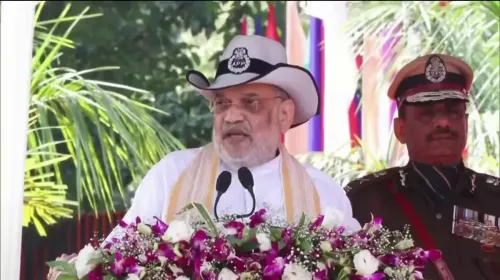
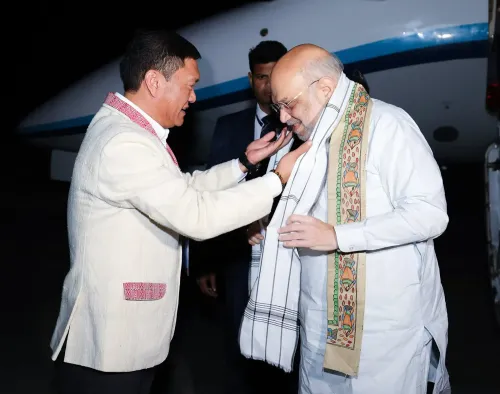
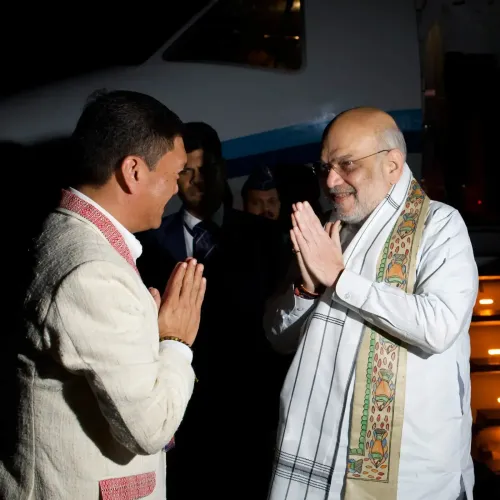
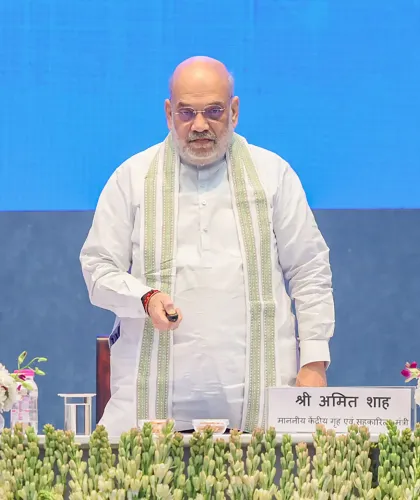
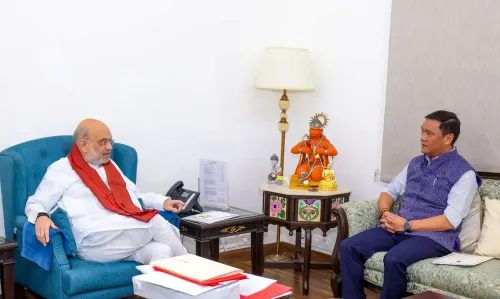
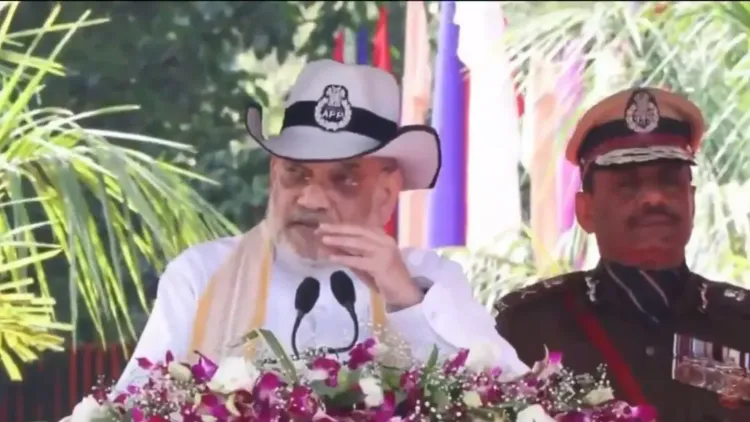
Union Home Minister Amit Shah on Saturday, 21 November 2026, appealed to the people of the Siang region in Arunachal Pradesh to support the proposed Siang Upper Multipurpose Project (SUMP), calling it a matter of immense national importance linked to the country's energy security, the state's revenue generation, and India's strategic interests. Shah made the appeal during an address at the Police Training Academy in Banderdewa, near Itanagar, after presenting the President's Police Colour to the Arunachal Pradesh Police.
Shah's Key Assurances to Siang Communities
The Home Minister assured residents that the Union government would offer what he described as the 'most attractive rehabilitation package in India', while guaranteeing that the traditions, culture, and religion of the region would remain uncompromised. Shah emphasised that the ₹11,200-MW project — planned across Siang, East Siang, and Upper Siang districts — would only move forward through positive dialogue and an effective rehabilitation framework. He added that people should engage with the state government and, through it, with the Ministry of Home Affairs.
'The way forward would be found only through dialogue,' Shah said, reiterating that communities would be kept in confidence at every stage of the project's development. He stressed that the Centre respects local culture and would not proceed in a manner that overrides it.
Local Organisations Demand Project Be Scrapped
Shah's remarks came against a backdrop of sustained opposition. Two prominent local organisations — Adi Bane Kebang United (ABKU) and the Siang Indigenous Farmers' Forum (SIFF) — submitted a joint memorandum to the Home Minister via email on Friday, 20 November, urging him to scrap the SUMP entirely. The memorandum alleged a lack of transparency, inadequate public consultation, and intimidation of people opposing the mega dam project on the Siang river.
The two organisations also demanded an immediate halt to all pre-feasibility report (PFR) activities, the release of detained protesters, withdrawal of central security forces from the area, and a judicial inquiry into violence that broke out in Siang district on 23 October. The proposed project has been a major political and public flashpoint in the state for several months, with local residents and civil society groups voicing concerns over displacement, ecological damage, and the pace of consultation.
Congress Demands Written Assurances, Raises Corruption Allegations
The opposition Indian National Congress (INC) in Arunachal Pradesh urged Shah to guarantee that the 11,200-MW hydropower project would not be imposed on indigenous communities. The party also called on the Home Minister to address alleged corruption in highway projects in the state, arguing that his visit should go beyond ceremonial engagements and result in concrete, written, time-bound commitments.
Notably, Shah is also reportedly scheduled to hold discussions with the leading organisations spearheading protests against the project — a signal that the Centre is seeking to contain the political fallout before ground-level opposition hardens further.
Strategic and National Context of the SUMP
The Siang Upper Multipurpose Project is among India's most ambitious hydropower proposals, with an installed capacity of 11,200 MW. Proponents argue it is critical not only for Arunachal's development and revenue but also for India's northeastern energy grid and its broader strategic posture given the region's proximity to the China border. This comes amid India's accelerating push to harness hydropower in the northeast — a region estimated to hold over 40% of the country's hydroelectric potential, much of it untapped.
The Centre's challenge is to balance these national imperatives against the rights and anxieties of indigenous Adi communities, whose livelihoods and cultural identity are closely tied to the Siang river valley. How that balance is struck in the weeks ahead will determine whether dialogue becomes a genuine process or a procedural formality.
Point of View
While keeping the project firmly on track. The promise of India's 'best rehabilitation package' is a rhetorical floor, not a legal commitment, and affected communities know the difference. What's missing is any mention of independent environmental review or a genuine consent mechanism for the Adi people, whose way of life is inseparable from the Siang river. If the Centre's idea of dialogue is a series of consultations that conclude with the project proceeding anyway, the unrest that produced the 23 October violence is likely to resurface — and next time, with sharper political edges.
NationPress
21 Nov 2026
Frequently Asked Questions
What is the Siang Upper Multipurpose Project (SUMP)?
The Siang Upper Multipurpose Project is a proposed 11,200-MW hydropower dam planned across Siang, East Siang, and Upper Siang districts in Arunachal Pradesh. It is considered one of India's largest hydropower proposals, aimed at boosting energy security, state revenues, and India's strategic position in the northeast.
Why are local communities opposing the Siang dam?
Local communities and organisations like ABKU and SIFF have cited a lack of transparency, inadequate public consultation, and alleged intimidation of protesters. They are also concerned about displacement, cultural disruption, and the ecological impact on the Siang river valley.
What did Home Minister Amit Shah promise to Siang residents?
Shah assured residents that the Union government would offer India's most attractive rehabilitation package and that the project would only move forward through positive dialogue, with communities kept in confidence at every stage. He also said the government would not compromise local traditions, culture, or religion.
What are ABKU and SIFF demanding?
The two organisations submitted a joint memorandum on 20 November demanding the project be scrapped, an immediate halt to pre-feasibility report activities, release of detained protesters, withdrawal of central security forces, and a judicial inquiry into violence in Siang district on 23 October.
What has the Congress said about the SUMP?
The opposition Congress in Arunachal Pradesh has sought a guarantee from Shah that the 11,200-MW project will not be imposed on indigenous communities. It has also demanded written, time-bound commitments from the Centre and called for action on alleged corruption in highway projects in the state.