Amit Shah: Congress consistently tried to sideline Sardar Patel
Synopsis
On Sardar Patel's 151st birth anniversary, Home Minister Amit Shah delivered a pointed political broadside — accusing Congress of decades of deliberate erasure — while simultaneously urging a drug-free India by 2029. The twin message: reclaim Patel's legacy for the BJP, and tie national unity to present-day governance goals.
Key Takeaways
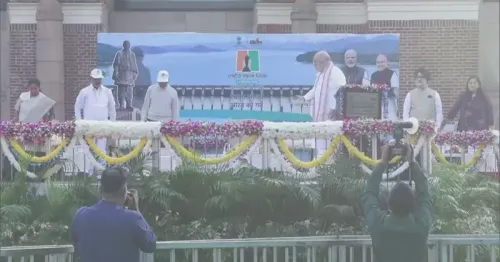
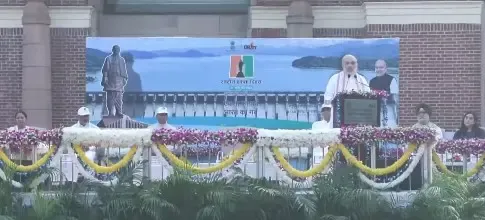
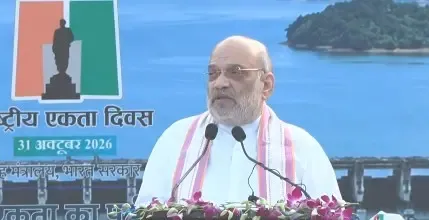
Home Minister Amit Shah addressed the 'Ekta Run' event in New Delhi on 31 October 2026 , marking Sardar Patel's 151st birth anniversary .
Shah accused the Congress of consistently attempting to 'sideline and forget' Sardar Patel during its years in power.
He credited PM Modi with restoring Patel's legacy through the construction of the Statue of Unity , the world's tallest statue.
Sardar Patel unified over 560 princely states in just 1,218 days , according to Shah.
Shah called for a completely drug-free India by 31 December 2029 , linking it to the 'Viksit Bharat' vision.
The abrogation of Article 370 was cited as completing Patel's vision of a fully integrated India.
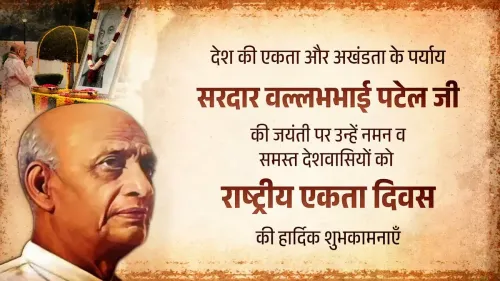
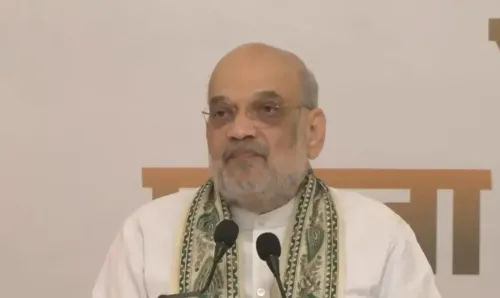
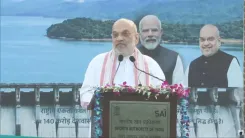
Union Home Minister Amit Shah on Saturday, 31 October 2026, accused the Indian National Congress of deliberately sidelining Sardar Vallabhbhai Patel throughout its years in power, asserting that the country's first Deputy Prime Minister was denied the respect he deserved for decades. Shah made the remarks at the 'Ekta Run' event in New Delhi, held to mark the 151st birth anniversary of Sardar Patel — observed nationally as Rashtriya Ekta Diwas (National Unity Day).
Shah's Charge Against Congress
'For many years, India did not accord Sardar Patel the respect he deserved. The Congress party consistently attempted to sideline and forget Sardar Sahab, but a radiant personality like his can never be erased from the nation's memory,' Shah said at the event. The Home Minister's remarks continue a long-running political contest over Patel's legacy, with the Bharatiya Janata Party (BJP) having positioned itself as the true custodian of Patel's memory since at least 2013, when the Statue of Unity project was announced.
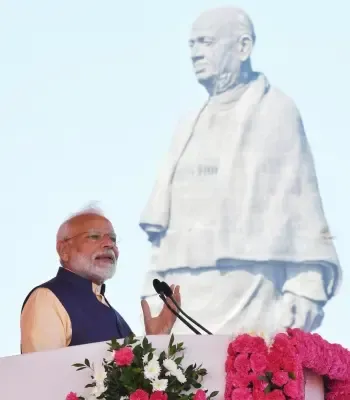
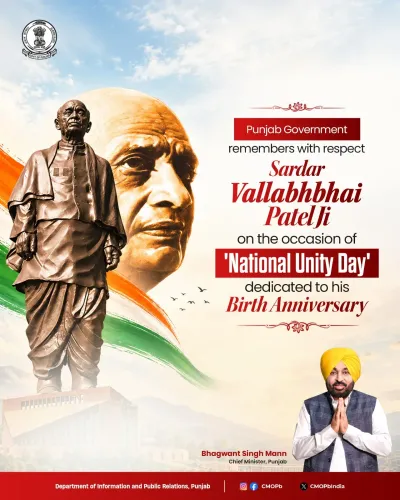
Shah credited Prime Minister Narendra Modi with restoring Patel's stature, pointing to the construction of the Statue of Unity in Gujarat — the world's tallest statue — as a defining tribute. 'Through this monumental tribute, Prime Minister Modi introduced Sardar Patel's towering contribution and remarkable personality to the entire nation,' Shah added.
Patel's Role in National Integration
The Home Minister highlighted Sardar Patel's role in unifying post-independence India, stating that the task of integrating the princely states — work that could have taken an entire lifetime — was accomplished in just 1,218 days. 'Even if several leaders worked together, work that could not be accomplished in an entire lifetime was achieved by Sardar Patel in just 1,218 days, creating an undivided India,' Shah said. This integration, completed under Patel's watch as the first Home Minister, brought together over 560 princely states into the Indian Union after independence in 1947.
Drug-Free India and Naxalism Goals
Shah also used the occasion to reiterate the government's anti-Naxal and anti-drug targets. He said India had moved significantly toward becoming free of Naxalism by 31 March of the current year and appealed to citizens to help achieve a completely drug-free India by 31 December 2029. 'Today, on Sardar Patel's 151st birth anniversary, I appeal to people across the country to achieve our target of making the nation completely drug-free by December 31, 2029,' Shah said.
The Home Minister linked the drug-free goal directly to the broader vision of a 'Viksit Bharat' (Developed India), calling a 'Nasha Mukt Bharat' the first necessary step toward that ambition.
Article 370 and Landmark Decisions
Rounding out his address, Shah cited the abrogation of Article 370 as one of the Modi government's landmark achievements, describing it as completing the full integration of Jammu and Kashmir with India — a process he framed as the fulfilment of Sardar Patel's original vision of a unified nation. The Home Minister has regularly invoked Patel's integration legacy when defending the 2019 constitutional move on Jammu and Kashmir.
What's Next
The government's December 2029 drug-free deadline and the continued anti-Naxal push are expected to remain central themes in BJP's political messaging in the lead-up to several state elections. With Sardar Patel's birth anniversary now institutionalised as National Unity Day, the occasion is likely to remain a recurring platform for the ruling party to contrast its governance record with that of the Congress.
Point of View
Making any claim to him a two-pronged attack. The 'sideline and forget' charge lands harder on National Unity Day because the BJP instituted the day itself, controlling the frame entirely. What gets less scrutiny is whether the Statue of Unity — spectacular as it is — has translated Patel's integrationist legacy into substantive policy, or whether it remains a monument to the politics of memory rather than its substance. The drug-free 2029 target and anti-Naxal claims, dropped into the same speech, signal the government's intent to bundle disparate governance wins under a single nationalist narrative arc ahead of what promises to be a busy electoral calendar.
NationPress
31 Oct 2026
Frequently Asked Questions
What did Amit Shah say about Congress and Sardar Patel?
Home Minister Amit Shah accused the Congress of consistently attempting to sideline and forget Sardar Patel during its years in power, saying the party denied him the respect he deserved for decades. He made these remarks at the 'Ekta Run' event in New Delhi on 31 October 2026.
What is Rashtriya Ekta Diwas and why is it observed on 31 October?
Rashtriya Ekta Diwas, or National Unity Day, is observed on 31 October every year to mark the birth anniversary of Sardar Vallabhbhai Patel, India's first Deputy Prime Minister and Home Minister. The day was instituted by the Modi government to honour Patel's role in unifying post-independence India.
What is the Statue of Unity and what is its significance?
The Statue of Unity is the world's tallest statue, built in Gujarat to honour Sardar Vallabhbhai Patel. It was conceived when Narendra Modi was Chief Minister of Gujarat and is cited by the BJP as a symbol of restoring Patel's rightful place in India's national memory.
What is the government's drug-free India target?
Home Minister Shah appealed on 31 October 2026 for India to be made completely drug-free by 31 December 2029. He framed a 'Nasha Mukt Bharat' as the foundational first step toward achieving the broader 'Viksit Bharat' development vision.
How did Sardar Patel unify India, and what is the 1,218-days figure?
Sardar Patel, as India's first Home Minister, oversaw the integration of over 560 princely states into the Indian Union after independence in 1947. Shah stated that this monumental task — which he said could not have been accomplished by several leaders in a lifetime — was completed by Patel in 1,218 days.