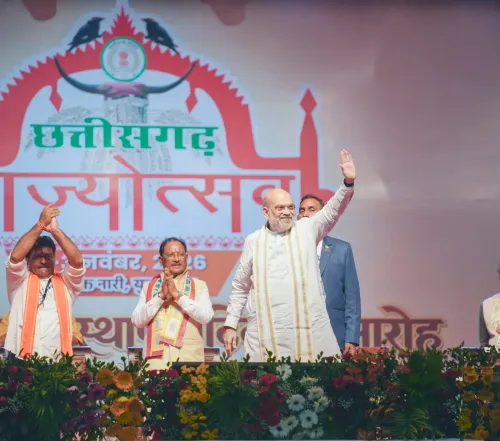
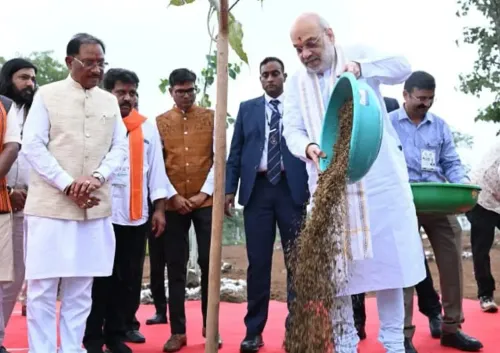
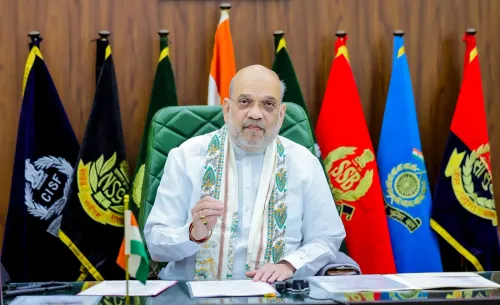
Amit Shah dares critics to visit Chhattisgarh, calls Naxalism over
Synopsis
Union Home Minister Amit Shah challenged critics of anti-Naxal operations to visit Chhattisgarh, declaring the insurgency over and urging commentators to witness development and write about Adivasi welfare firsthand.
Key Takeaways
Amit Shah posted a direct challenge on November 3, 2026 to writers and commentators who have criticised anti-Naxal security actions.
He declared: 'naksalwad samapt ho chuka hai' — Naxalism has been eliminated — in Chhattisgarh .
He urged critics to visit the state and also write about the pain and development of Adivasi communities .
The Union Ministry of Home Affairs has coordinated escalating joint operations in Chhattisgarh for several years, reporting a sustained fall in Left-Wing Extremism incidents.
The government's Aspirational Districts Programme (launched 2018 ) has channelled investment into formerly insurgency-hit districts.
Independent verification of the 'Naxalism ended' claim requires forthcoming official data and ground-level reporting from tribal areas.
Union Home Minister Amit Shah threw down a pointed challenge on Tuesday, November 3, 2026 — aimed squarely at commentators who have written critically about anti-Naxal operations. Visit Chhattisgarh, he said. See it for yourself. The Naxal threat, he declared, is finished.
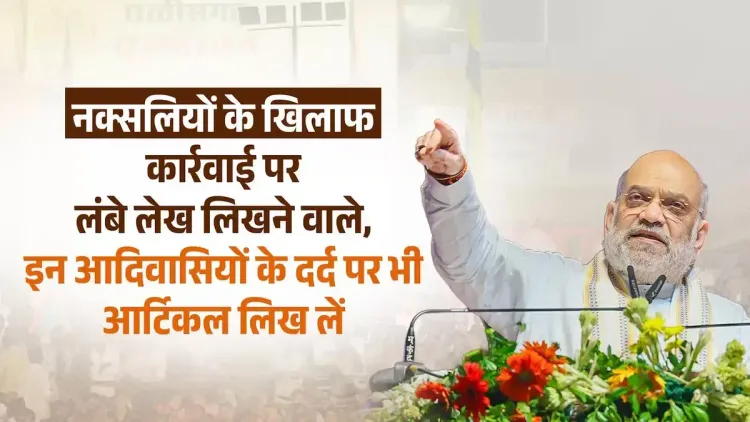
Posting in Hindi on X, Shah addressed those who, in his words, 'write articles giving advice on action taken against Naxalites' — a clear reference to media voices and civil-society commentators who have questioned the conduct and consequences of security operations in the state's tribal heartland. His message: 'Don't be afraid. Come to Chhattisgarh, witness the winds of development, and write articles on the pain of these Adivasis too.'
A direct call-out of armchair critics
The post is combative but calibrated. Shah does not name individuals or publications. Instead he draws a contrast — between those who opine from a distance and the lived reality he says has changed on the ground. The challenge to 'not be afraid' is a rhetorical prod: it inverts the criticism by suggesting the real fear belongs to those unwilling to witness transformation firsthand.
The reference to Adivasi 'dard' — pain — is notable. It signals that the Home Ministry's framing is not purely a security win, but a development and welfare argument: that the same communities who bore the brunt of insurgency violence are now the intended beneficiaries of a post-conflict dividend.
Chhattisgarh's long insurgency and the push for normalcy
Chhattisgarh has been the epicentre of Left-Wing Extremism in India for decades, with its forested southern districts — Bastar, Sukma, Bijapur, Dantewada — once among the most violence-affected zones in the country. The Union Ministry of Home Affairs, under Shah's tenure, has coordinated escalating joint operations between central paramilitary forces and state police, resulting in a reported sustained decline in Naxal-linked violence incidents over recent years.
The government has also leaned on the Aspirational Districts Programme, launched in 2018, to channel infrastructure, health, and education investment into the very districts where insurgency once ran deepest. The dual-track approach — security pressure alongside socio-economic intervention — has been the consistent official playbook. Shah's post is, in effect, a public victory lap on that strategy.
The claim that cannot yet be fully verified
Shah's assertion that 'Naxalism has been eliminated' (naksalwad samapt ho chuka hai) is a strong declarative. Official data on Left-Wing Extremism incidents is published periodically by the Home Ministry, and independent verification of conditions on the ground — especially in remote tribal areas — takes time to accumulate. Critics and civil-society groups have historically raised questions about displacement, encounter deaths, and the pace of genuine development reaching Adivasi communities. Those debates will not end with a single post.
What the post does accomplish is to set a clear political marker: the central government is willing to stake a public claim on a decisive outcome, and it is inviting scrutiny — on its own terms, on its chosen ground.
The next credible test will come from the Ministry of Home Affairs' annual Left-Wing Extremism report and from independent assessments of welfare indicators in Chhattisgarh's tribal districts. Until then, the Home Minister's challenge stands in the open.
Point of View
Then immediately pivot to development and Adivasi welfare to pre-empt the human-rights counter-narrative. By inviting critics onto his chosen terrain — literally and rhetorically — he shifts the burden of proof to those who have questioned operations. The framing is politically astute ahead of any forthcoming MHA report, setting a public benchmark that media scrutiny will now have to engage with directly rather than abstractly.
NationPress
3 Nov 2026
Frequently Asked Questions
Has Naxalism really ended in Chhattisgarh?
Union Home Minister Amit Shah declared on November 3, 2026 that Naxalism has been eliminated in Chhattisgarh. Independent verification requires the Ministry of Home Affairs' latest annual Left-Wing Extremism report and ground assessments; the claim is officially stated but not yet independently confirmed.
What did Amit Shah say about Chhattisgarh critics?
Shah challenged those who write critically about anti-Naxal operations to come to Chhattisgarh, saying they should not be afraid, witness the development, and also write about the pain of Adivasi communities.
What is the Aspirational Districts Programme in Chhattisgarh?
The Aspirational Districts Programme, launched in 2018, targets backward and insurgency-affected districts — including several in Chhattisgarh — with accelerated investment in infrastructure, health, and education to drive socio-economic development.
Which districts in Chhattisgarh were most affected by Naxalism?
The districts of Bastar, Sukma, Bijapur, and Dantewada in southern Chhattisgarh have historically been the most severely affected by Left-Wing Extremism activity in India.
What role does the Home Ministry play in anti-Naxal operations?
The Union Ministry of Home Affairs, led by Amit Shah, coordinates joint operations between central paramilitary forces and state police forces in Left-Wing Extremism-affected states, sets policy, and monitors development interventions in affected districts.