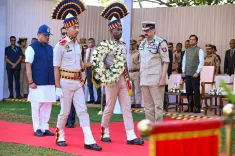
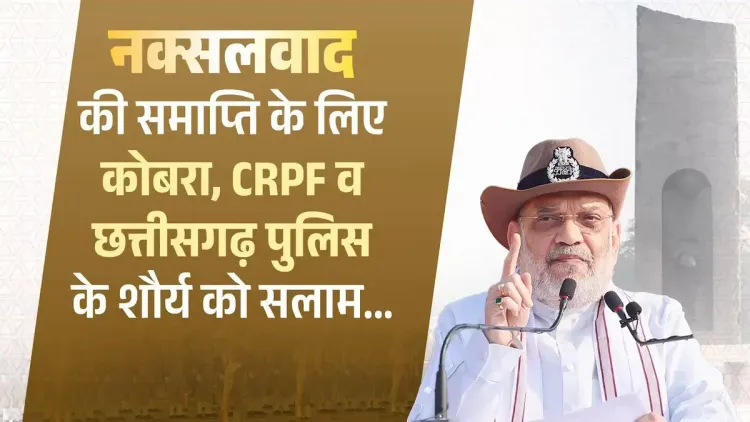
Amit Shah salutes CoBRA, CRPF & Chhattisgarh Police on Naxal fight
Synopsis
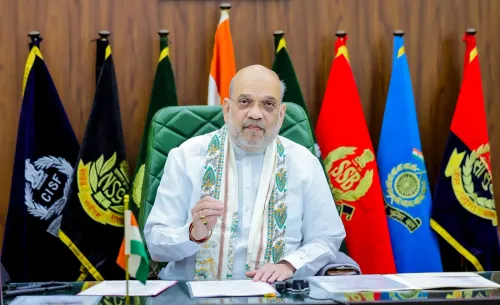
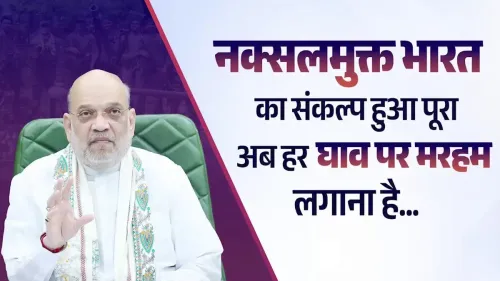
Union Home Minister Amit Shah praised CoBRA commandos, CRPF jawans, and the Chhattisgarh Police on October 21, 2026, honouring their 'indomitable courage' in what he described as the elimination of decades-old Naxalism from India's most contested jungle terrain.
Key Takeaways
Union Home Minister Amit Shah on October 21, 2026 publicly credited CoBRA , CRPF , and Chhattisgarh Police with ending decades-old Naxalism.
CoBRA (Commando Battalion for Resolute Action) is an elite CRPF unit trained specifically for counter-insurgency and jungle warfare in Naxal-affected districts.
The CRPF is India's largest central armed police force and has been the primary central force deployed in the Red Corridor for decades.
Chhattisgarh's Bastar division has historically been the epicentre of Left-Wing Extremism, making the Chhattisgarh Police's role critical in joint operations.
India's anti-Naxal strategy has combined security operations with development and surrender-rehabilitation programmes since at least Operation Green Hunt (2009–2010) .
As Union Home Minister, Shah is the top political authority overseeing central force deployment and anti-Naxal coordination between Centre and states.
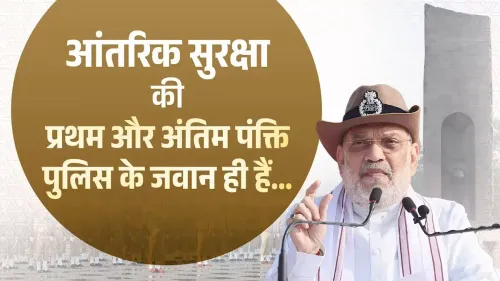
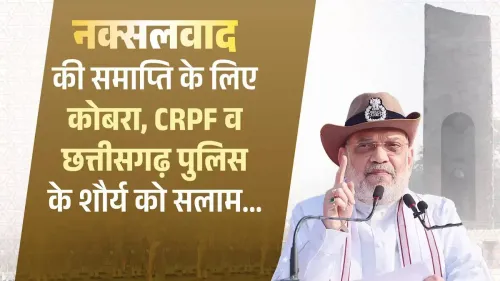
Decades of jungle warfare, ambushes, and grinding counter-insurgency operations — and Union Home Minister Amit Shah on Wednesday, October 21, 2026 marked what he described as the culmination of that long campaign, paying tribute to the soldiers who carried it through. In a post on X, Shah singled out the CoBRA commandos, the CRPF, and the Chhattisgarh Police for what he called 'undaunted courage' in ending decades-old Naxalism.
Shah wrote in Hindi: 'दशकों पुराने नक्सलवाद को समाप्त करने में कोबरा और CRPF के जवानों ने अदम्य साहस का परिचय दिया, और छत्तीसगढ़ पुलिस ने भी इस अभियान में अपना अद्भुत शौर्य दिखाया है।' — ('In eliminating decades-old Naxalism, the CoBRA and CRPF jawans have displayed indomitable courage, and the Chhattisgarh Police too has shown remarkable valour in this campaign.')
Who are CoBRA, and why do they matter in this fight?
CoBRA — the Commando Battalion for Resolute Action — is an elite wing of the Central Reserve Police Force purpose-built for counter-insurgency and jungle warfare in Naxal-affected terrain. Deployed deep into the forested districts of Bastar and surrounding areas, CoBRA units are trained in guerrilla tactics, tracking, and rapid response — skills that conventional policing cannot substitute in dense, booby-trapped jungle corridors.
The CRPF, India's largest central armed police force, has been the backbone of sustained anti-Naxal operations across the so-called 'Red Corridor' — a belt spanning Chhattisgarh, Jharkhand, Odisha, and neighbouring states. Hundreds of its personnel have lost their lives over the decades in some of the most treacherous operational environments in the country.
Chhattisgarh as the primary theatre
Chhattisgarh — and its Bastar division in particular — has been the epicentre of Left-Wing Extremism in India for over four decades. The Chhattisgarh Police's district reserve guards and specialised units have fought alongside central forces through wave after wave of Maoist counterattacks, including some of the deadliest ambushes in the insurgency's history.
Indian security strategy has combined kinetic operations with development outreach and surrender-rehabilitation schemes, a dual approach that successive governments — including the current one at the Centre — have credited with shrinking the geographical footprint of Naxal influence. Operation Green Hunt, launched around 2009–2010, marked the first major coordinated multi-force offensive in this theatre and set the operational template that later campaigns built upon.
Shah's role as the architect of anti-Naxal strategy
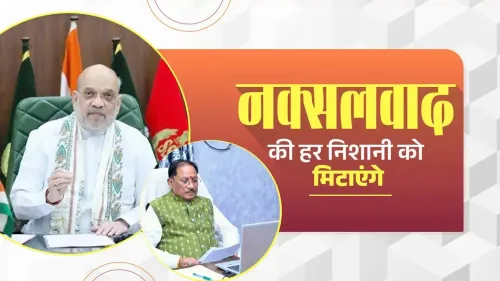
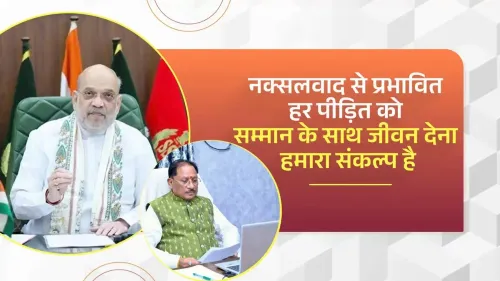
As Union Home Minister, Shah oversees both the Ministry of Home Affairs and, by extension, the central deployment of forces like CRPF and CoBRA. He has repeatedly set public timelines for eliminating Left-Wing Extremism and has presided over high-level coordination meetings between state governments and central security agencies. His tribute today is therefore not merely ceremonial — it is a signal from the top of the security architecture that the campaign has reached a definitive phase.
The men and women of the CRPF, CoBRA, and Chhattisgarh Police who spent years in jungle postings far from their families now hear their efforts acknowledged at the highest political level. That acknowledgement, backed by the weight of the Home Ministry, carries its own operational meaning — the state is watching, and it is counting.
Point of View
Which has been central to the MHA's operational doctrine since the mid-2010s. Coming from the minister who chairs the top-level security coordination mechanism, this post is as much a policy statement as a tribute — it tells the security establishment that the Centre considers this phase complete. The broader arc points toward a pivot: from kinetic dominance to consolidation through development and governance in formerly Naxal-held areas.
NationPress
21 Oct 2026
Frequently Asked Questions
What is CoBRA in the CRPF?
CoBRA, or the Commando Battalion for Resolute Action, is an elite unit within the Central Reserve Police Force (CRPF) specifically trained for counter-insurgency and jungle warfare in Naxal-affected areas such as Bastar in Chhattisgarh.
What did Amit Shah say about Naxalism on October 21 2026?
Union Home Minister Amit Shah posted on X praising CoBRA commandos, CRPF jawans, and the Chhattisgarh Police for their 'indomitable courage' and 'remarkable valour' in what he described as the elimination of decades-old Naxalism.
Is Naxalism over in India?
The Indian government, led by Union Home Minister Amit Shah, has described the campaign as having decisively diminished or ended Naxalism, particularly in Chhattisgarh. The MHA continues to monitor Naxal-affected district counts, and security operations in residual areas may continue.
What is Operation Green Hunt?
Operation Green Hunt was a major coordinated counter-Naxal offensive launched around 2009–2010 involving central forces including CRPF and state police forces. It established the joint operational template used in subsequent anti-Naxal campaigns.
Which district in Chhattisgarh is most affected by Naxalism?
The Bastar division in southern Chhattisgarh has historically been the most intense theatre of Naxal activity in India, making it the focal point of CRPF, CoBRA, and Chhattisgarh Police operations over several decades.