Amit Shah Reviews Amarnath Yatra Security, Orders Multi-Layer Grid
Synopsis
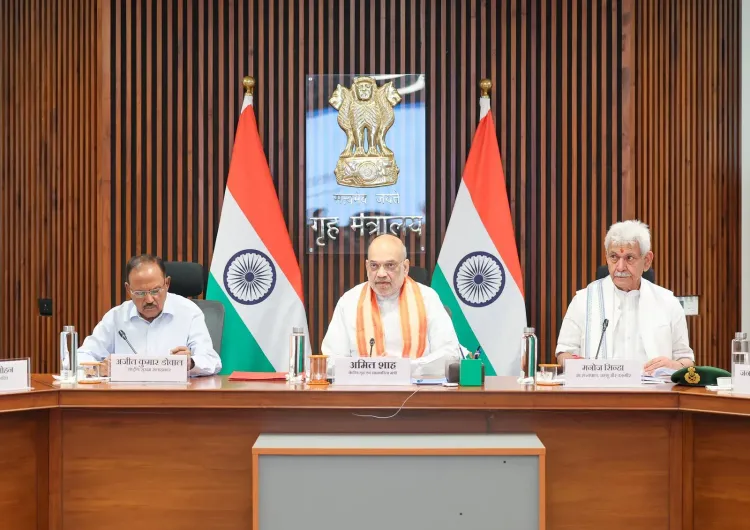
Union Home Minister Amit Shah chaired a pre-yatra security review in New Delhi on June 12, directing a multi-layered security grid by J&K Police and CAPFs for the Amarnath Yatra, and ordering that pilgrim batches move only as weather conditions permit.
Key Takeaways
Amit Shah chaired a security and logistics review for the Shri Amarnath Ji Yatra in New Delhi on June 12, 2026 .
A multi-layered security grid has been ordered across the entire pilgrimage route, to be deployed by J&K Police , CAPFs , and other agencies.
Pilgrim batches are to be moved forward only in accordance with weather conditions and forecasts , embedding meteorological coordination into convoy management.
Arrangements for pilgrim registration, accommodation, health services, and disaster management were specifically reviewed and directed to be ensured.
The review continues the Union Home Ministry's direct coordination role over yatra security, institutionalised after J&K's reorganisation in 2019 .
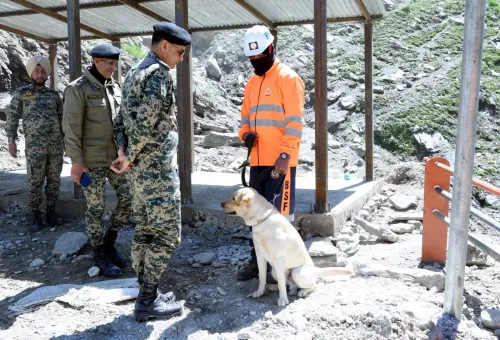
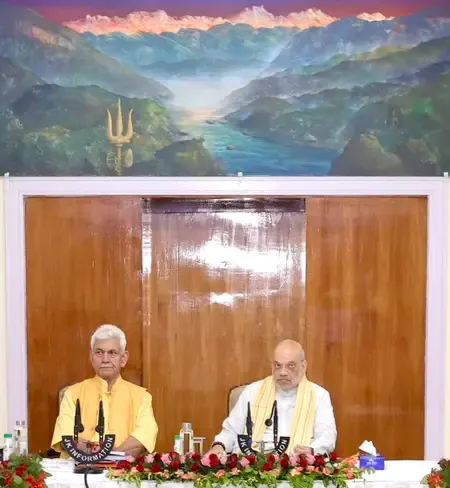
Union Home Minister Amit Shah chaired a high-level review meeting in New Delhi on Friday, June 12, 2026, to assess the security arrangements and logistical preparations for the upcoming Shri Amarnath Ji Yatra. The meeting directed the establishment of a multi-layered security grid across the entire pilgrimage route, with Jammu and Kashmir Police, Central Armed Police Forces (CAPFs), and other security agencies tasked with its deployment.
What the Home Minister Directed
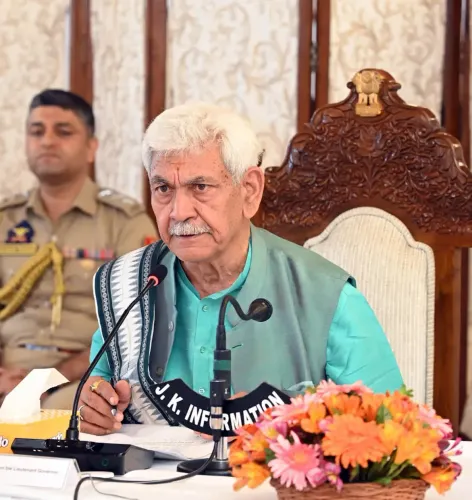
Posting on X after the meeting, Shah stated — translated from Hindi — that he had 'reviewed the preparations and security for the Shri Amarnath Ji Yatra in Delhi today.' He directed that a 'multi-layered security grid be established by Jammu and Kashmir Police, CAPFs, and other security agencies across the entire pilgrimage route.' The minister further instructed that 'batches of pilgrims be allowed to proceed only in accordance with weather conditions and forecasts' — a direction that underscores the administration's focus on real-time meteorological coordination.
On the civilian side, Shah called for ensuring 'proper arrangements for all necessary facilities including pilgrim registration, accommodation, health services, and disaster management.' The four-point directive covers the full arc of yatra administration, from pre-departure registration to on-route emergency response.
Context: Why This Review Matters
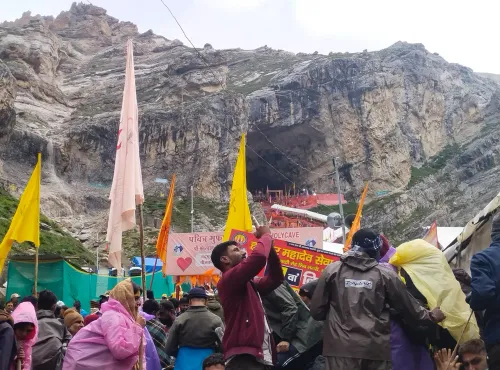
The Amarnath Yatra is one of India's largest annual Hindu pilgrimages, drawing hundreds of thousands of devotees to the ice lingam shrine located in the Anantnag district of Jammu and Kashmir during the summer months. The high-altitude route — traversed via the Baltal and Pahalgam axes — passes through terrain vulnerable to sudden weather changes, flash floods, and, historically, security threats.
Since the reorganisation of Jammu and Kashmir into a Union Territory in 2019, the Union Home Ministry has assumed direct coordination of the yatra's security architecture. Pre-yatra review meetings chaired by the Home Minister in Delhi have been a consistent feature of the annual calendar, reflecting the Centre's hands-on role in managing what is simultaneously a major religious event and a complex security operation.
Policy Backdrop: Multi-Layer Security and Central Oversight
The emphasis on a 'multi-layered security grid' is consistent with the approach adopted by successive Home Ministers, who have combined state police deployment with CAPF battalions and intelligence coordination along both routes. Post-2019, central oversight of convoy movement and inter-agency coordination has been institutionalised more formally than in earlier years.
The specific instruction to link pilgrim batch movement to India Meteorological Department forecasts reflects lessons absorbed from past incidents in which adverse weather — cloudbursts, landslides, and snowfall — disrupted or endangered yatra convoys. Disaster management preparedness, listed explicitly in the Home Minister's directive, sits alongside security as a co-equal administrative priority.
Stakeholders and Impact
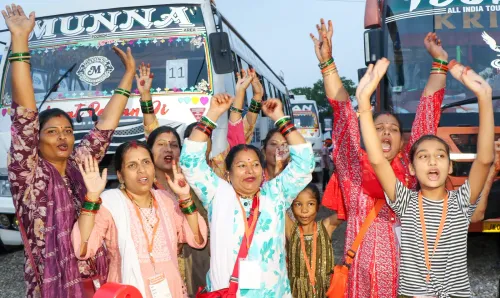
The primary stakeholders are the lakhs of pilgrims who register each year through the Shri Amarnath Shrine Board, along with the security personnel drawn from J&K Police, CRPF, BSF, ITBP, and other CAPFs who are deployed for the duration of the yatra window. Local communities along the Baltal and Pahalgam corridors, who depend on the pilgrimage season for their livelihoods, are also directly affected by the administrative framework put in place.
For the broader security establishment, the review signals that the Ministry of Home Affairs is treating the 2026 yatra with the same level of centralised attention as in previous years, with no relaxation of the multi-agency coordination model.
What's Next
The immediate next steps will involve the Shri Amarnath Shrine Board finalising the registration schedule and the security agencies translating the Home Minister's directives into operational deployment orders. A joint coordination exercise with meteorological authorities is expected before the yatra window formally opens. The degree to which weather-linked convoy management is operationalised in real time will be a key indicator of how the 2026 edition is administered on the ground.
Point of View
The directive institutionalises a lesson learned from past incidents — signalling an administrative maturity beyond purely security-focused optics. The dual emphasis on kinetic security and civilian logistics (health, disaster management, accommodation) reflects the government's effort to frame the yatra as a managed state function, not merely a policed event. How faithfully the weather-linked movement protocol is enforced on the ground will be the real test of this year's preparedness framework.
NationPress
26 Oct 2026
Frequently Asked Questions
When is Amarnath Yatra 2026?
The exact dates for the Amarnath Yatra 2026 window have not been officially announced in this review, but the pilgrimage typically takes place during the summer months, usually between late June and August, as determined by the Shri Amarnath Shrine Board .
What security arrangements are in place for Amarnath Yatra 2026?
Union Home Minister Amit Shah has directed a multi-layered security grid to be established by Jammu and Kashmir Police , CAPFs , and other agencies across the entire pilgrimage route, following a review meeting held in New Delhi on June 12, 2026 .
Why does weather affect Amarnath Yatra pilgrim movement?
The Amarnath Yatra route passes through high-altitude terrain prone to cloudbursts, flash floods, and sudden snowfall. The Home Minister has directed that pilgrim batches be allowed to proceed only when weather conditions and forecasts permit, to prevent casualties from adverse weather events.
What is the role of CAPFs in Amarnath Yatra security?
Central Armed Police Forces (CAPFs) , which include units such as the CRPF , BSF , and ITBP , are deployed alongside J&K Police to form a multi-layered security grid along the Baltal and Pahalgam pilgrimage routes, operating under the coordination of the Union Home Ministry .
How do I register for Amarnath Yatra 2026?
Pilgrim registration for the Amarnath Yatra is managed by the Shri Amarnath Shrine Board . The Home Minister's review specifically directed that proper registration arrangements be ensured for the 2026 edition; prospective pilgrims should check the Shrine Board's official channels for the registration schedule.