Sharmistha Mukherjee hits back at Sonia Gandhi over PM ambition remark in memoir
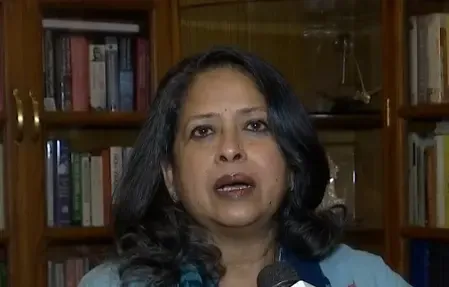
Synopsis
Sonia Gandhi's memoir reveals that Pranab Mukherjee once hinted he wanted to be Prime Minister — and his daughter Sharmistha has fired back, questioning whether the Congress chief was 'shocked' simply because the aspiration came from someone outside the Nehru family. The exchange has reignited one of Indian politics' most enduring what-ifs.
Key Takeaways
Sharmistha Mukherjee rebuked Sonia Gandhi on X on 10 November 2026 over a passage in Gandhi's memoir describing her 'shock' at Pranab Mukherjee's PM hint.
Gandhi's memoir, 'Belonging: A Journey Of Love' , recounts a 2010 exchange in which Mukherjee suggested it may be time for a 'change at the top'.
Sharmistha argued that political ambition backed by 'decades of experience' and 'hard work' is no cause for shock.
She directly invoked the dynastic politics debate, asking whether the shock stemmed from ambition coming from someone 'outside the Nehru family'.
Citing her father's diaries, she confirmed Pranab Mukherjee bore no ill will toward Gandhi over the matter.
Mukherjee, who had serious differences with then Finance Minister P.
Chidambaram at the time, went on to become President of India in 2012 .
Sharmistha Mukherjee, daughter of late former President Pranab Mukherjee, on Tuesday, 10 November sharply rebuked Congress Parliamentary Party (CPP) Chairperson Sonia Gandhi over a passage in Gandhi's memoir in which she describes being 'shocked' by Pranab Mukherjee's apparent suggestion in 2010 that it may be time for a 'change at the top' — which Gandhi interpreted as a hint of his desire to become Prime Minister.
The pushback came hours after excerpts from Gandhi's memoir, titled 'Belonging: A Journey Of Love', began circulating, in which she recounts the working dynamics between the Congress leadership and the government then headed by Prime Minister Manmohan Singh.
Sharmistha's Rebuttal on X
Taking to social media platform X, Sharmistha Mukherjee directly challenged Gandhi's framing of the episode. 'What's there to get 'shocked' about? Is it a crime to be ambitious, especially when that 'ambition' was supported by decades of experience in politics and governance, hard work and a brilliant mind?' she wrote.
She further recalled a candid exchange she had with her father: 'Once, when asked by me whether he wanted to become PM, he very candidly answered that 'any politician worth his salt has this ambition'.'
Sharmistha Mukherjee underlined her father's self-made trajectory, noting that he came from a 'very humble background' and that 'whatever he achieved in his life was through sheer merit and hard work. There was no one to serve him positions, including PM-ship, on a platter due to dynastic entitlements.'
The Dynastic Politics Charge
In arguably the sharpest line of her rebuttal, Sharmistha Mukherjee questioned whether Gandhi's 'shock' stemmed from the idea that 'anyone outside the Nehru family could even dare to nurture such an ambition and furthermore dared to 'hint' it to her.' The remark directly invokes the long-standing criticism of dynastic culture within the Indian National Congress (INC).
She also addressed Gandhi's assertion in the memoir that Pranab Mukherjee 'never held it against her.' Citing her father's diaries and their personal conversations, Sharmistha Mukherjee said: 'I would like to reassure her that he did not hold it against her or anyone else.' She described her father as a 'pragmatic person with deep understanding' who 'understood her reasons and insecurities that all human beings are prone to.'
What Sonia Gandhi Wrote
In her memoir, Gandhi recalls that Pranab Mukherjee — whom she 'always addressed as Pranab ji' — was a regular member of the Strategy Group, constituted to discuss matters scheduled for Parliament. She describes how he would occasionally stay back after these meetings for informal conversation.
Recounting one such exchange in 2010, Gandhi writes that Mukherjee had developed 'serious differences' with then Finance Minister P. Chidambaram. After expressing frustration over the situation, he reportedly made a remark that she found surprising. 'He shocked me with the suggestion that perhaps it was time for a change at the top, which I understood as a hint of his long-held desire to become prime minister,' Gandhi wrote.
Context and Significance
The episode dates to a turbulent period in the United Progressive Alliance (UPA) government's second term, when internal tensions over economic policy — particularly between Mukherjee and Chidambaram — were widely reported. Pranab Mukherjee, who served in senior ministerial roles across multiple Congress governments, was eventually elected the 13th President of India in 2012, ending his active ministerial career.
This is not the first time the question of Pranab Mukherjee's prime ministerial aspirations has been debated. His exclusion from the top post despite decades of seniority was a subject of considerable political commentary during the UPA era. Gandhi's memoir now puts that debate back into the public domain — and Sharmistha Mukherjee's response ensures it will not go unanswered.
The memoir's full release is expected to draw further reactions from political circles, with the Congress navigating a delicate balance between honouring its history and managing intra-party legacy narratives.
Point of View
From the most experienced minister of his generation to President rather than Prime Minister, has long been read as evidence of a glass ceiling the party enforced quietly. That the memoir chose to frame his ambition as something 'shocking' rather than natural only sharpens the irony. For the Congress, navigating this legacy dispute while projecting internal cohesion ahead of state elections will not be straightforward.
NationPress
10 Nov 2026
Frequently Asked Questions
What did Sonia Gandhi write about Pranab Mukherjee in her memoir?
In her memoir 'Belonging: A Journey Of Love', Sonia Gandhi recounts a 2010 conversation in which Pranab Mukherjee, after expressing frustration over his differences with then Finance Minister P. Chidambaram, suggested it may be time for 'a change at the top' — which she interpreted as a hint of his desire to become Prime Minister. She describes the remark as having 'shocked' her.
How did Sharmistha Mukherjee respond to Sonia Gandhi's memoir?
Sharmistha Mukherjee responded via a post on X, arguing that political ambition backed by decades of experience and merit is not a crime. She questioned whether Gandhi's shock stemmed from the idea that someone outside the Nehru family dared to harbour such ambition, and confirmed — citing her father's diaries — that he bore no ill will toward Gandhi.
Did Pranab Mukherjee ever want to become Prime Minister?
According to Sharmistha Mukherjee, her father acknowledged as much privately, telling her that 'any politician worth his salt has this ambition.' His exclusion from the prime ministership despite decades of seniority in the Congress was a subject of significant political commentary during the UPA era.
What was the context of the 2010 exchange between Pranab Mukherjee and Sonia Gandhi?
The exchange occurred during a period of reported tensions within the UPA government, when Pranab Mukherjee had developed 'serious differences' with Finance Minister P. Chidambaram over economic policy. The two were members of the Strategy Group, a body set up to discuss matters ahead of Parliament sessions.
What position did Pranab Mukherjee eventually hold?
Pranab Mukherjee was elected the 13th President of India in 2012, ending his active ministerial career in the Congress-led UPA government. He had previously held several senior portfolios including Finance Minister and External Affairs Minister.