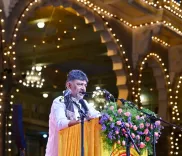
Shekhawat attends AI Medical Hackathon at Dr. S.N. College, Jodhpur

Synopsis
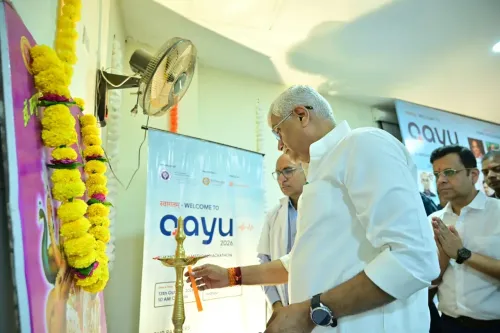
Union Culture and Tourism Minister Gajendra Singh Shekhawat broadcast a live AI Innovation Medical Hackathon at Dr. S.N. Medical College, Jodhpur on October 13, 2026, spotlighting AI-driven healthcare innovation at one of Rajasthan's oldest government medical institutions.
Key Takeaways
Union Minister Gajendra Singh Shekhawat shared a live broadcast of the AI Innovation Medical Hackathon at Dr.
Medical College, Jodhpur on October 13, 2026 .
Medical College was established in 1951 and is affiliated with the Rajasthan University of Health Sciences .
The event reflects a broader national push under NITI Aayog's #AIforAll strategy (released 2018 ) to embed AI in the healthcare sector.
Medical hackathons at government colleges have become a key instrument for promoting student-led digital health innovation across India.
Jodhpur is Shekhawat's Lok Sabha constituency, giving the event added political and regional significance.
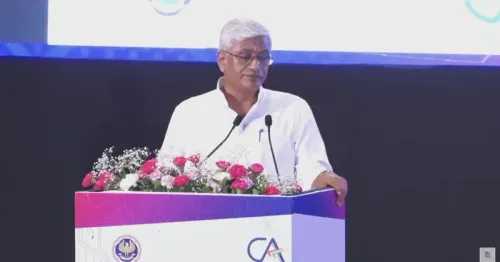
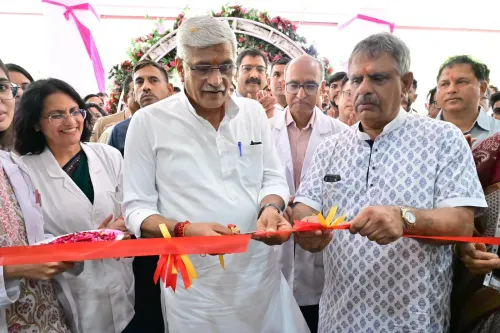
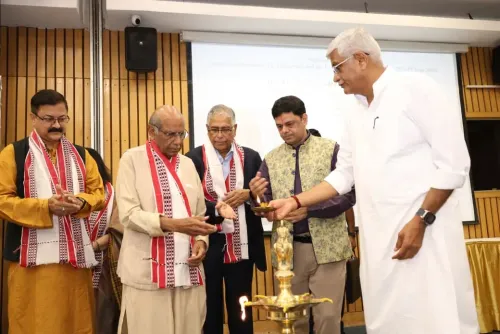
Where medicine meets machine intelligence, a live hackathon is unfolding at one of Rajasthan's oldest government medical institutions. Union Culture and Tourism Minister Gajendra Singh Shekhawat shared a live broadcast on Tuesday, October 13, 2026, of the AI Innovation Medical Hackathon being held at Dr. S.N. Medical College, Jodhpur — signalling ministerial attention to the growing push for AI-driven healthcare innovation in his home constituency.
A 73-year-old institution in the AI age
Dr. S.N. Medical College was established in 1951 and is affiliated with the Rajasthan University of Health Sciences, making it one of the foundational medical education institutions in western Rajasthan. The college has long trained generations of doctors who have served the region's vast, often underserved rural population. Hosting an AI-focused medical hackathon marks a notable pivot — a heritage institution stepping into the frontier of digital health.
The hackathon format, which challenges student teams to build technology solutions under time pressure, has become a favoured vehicle for governments and institutions looking to fast-track grassroots innovation. Medical hackathons in particular have gained traction as India's health sector grapples with scale problems that AI tools — from diagnostic assistance to patient triage — are increasingly being positioned to solve.
Shekhawat's Jodhpur lens on a national AI agenda
Shekhawat's amplification of the event is consistent with a pattern seen across central and state governments: deploying political visibility to elevate technology-focused initiatives at educational institutions. NITI Aayog's National Strategy for AI, released in 2018 under the #AIforAll banner, explicitly identified healthcare as a priority sector, and subsequent years have seen medical colleges from Rajasthan to Tamil Nadu fold AI and digital-health programming into their academic calendars.
For Jodhpur — a Lok Sabha constituency Shekhawat holds — such events carry a dual function: they feed into the national narrative of India as an AI-ready nation, and they spotlight local institutions on a wider stage.
What medical innovators in the room are working towards
While the specific agenda and outcomes of this hackathon are yet to be confirmed publicly, the broader context frames what participants are likely tackling: AI-assisted diagnostics, predictive health analytics, telemedicine tools for rural outreach, and electronic health record optimisation — all areas where Rajasthan's public health infrastructure stands to gain. Any projects to emerge from the event could attract mentorship or funding through national digital-health channels.
The students and healthcare innovators in that hall today are not just competing for a prize — they are auditioning ideas for a healthcare system that must serve hundreds of millions. That is a starting point worth watching.
Point of View
Rather than an engineering or IIT campus, is also deliberate: healthcare AI carries mass-resonance in a state where rural access to quality medicine remains a live issue. That said, ministerial social-media attention is a soft commitment; the real test will be whether any projects from events like this receive sustained institutional backing through national digital-health pipelines.
NationPress
13 Oct 2026
Frequently Asked Questions
What is the AI Innovation Medical Hackathon at Dr. S.N. Medical College Jodhpur?
It is a live hackathon event held at Dr. S.N. Medical College, Jodhpur on October 13, 2026, focused on developing AI-driven solutions for healthcare challenges, which Union Minister Gajendra Singh Shekhawat shared as a live broadcast on X.
What is Dr. S.N. Medical College, Jodhpur?
Dr. S.N. Medical College is a government medical college in Jodhpur, Rajasthan, established in 1951 and affiliated with the Rajasthan University of Health Sciences. It is one of the oldest and most prominent medical institutions in western Rajasthan.
What is India's national AI strategy for healthcare?
NITI Aayog released the National Strategy for Artificial Intelligence under the #AIforAll banner in 2018, identifying healthcare as a priority sector for AI adoption alongside agriculture, education, smart cities, and smart mobility.
Why is Gajendra Singh Shekhawat associated with Jodhpur events?
Gajendra Singh Shekhawat is the Lok Sabha Member of Parliament from Jodhpur, Rajasthan, and a senior BJP leader. He frequently highlights events in Jodhpur as part of his constituency engagement.
What kind of projects do medical AI hackathons in India typically focus on?
Medical AI hackathons in India typically focus on areas such as AI-assisted diagnostics, predictive health analytics, telemedicine tools for rural outreach, and electronic health record management — all aligned with national digital health priorities.