Shekhawat backs exam reform bill to end paper leaks
Synopsis
Union Minister Gajendra Singh Shekhawat has endorsed the Public Examination (Prevention of Unfair Means) Amendment Bill, 2026, tabled in Lok Sabha under PM Modi's leadership. The bill proposes fast trials and strict penalties to eliminate paper leaks and exam fraud, aiming to restore credibility for crores of student aspirants.
Key Takeaways
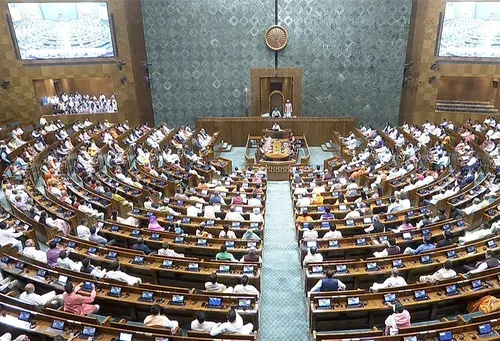
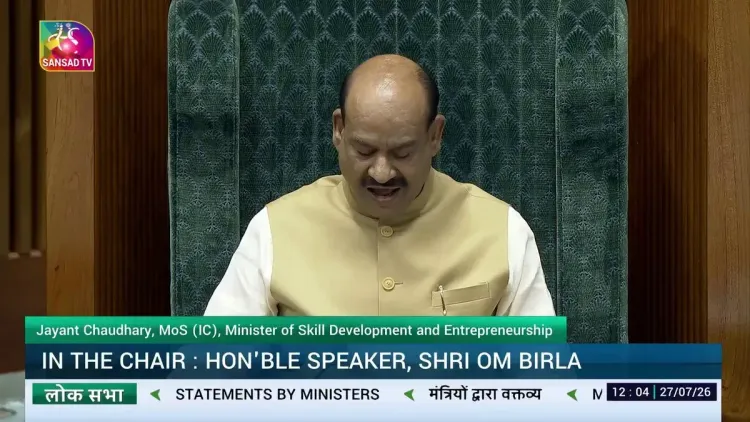
The Public Examination (Prevention of Unfair Means) Amendment Bill, 2026 was introduced in Lok Sabha on 27 July 2026 .
The bill proposes fast-track trials and stringent punishment for paper leaks, exam mafias, and related malpractices.
It amends the Public Examinations (Prevention of Unfair Means) Act, 2024 , which was Parliament's first legislative response to exam fraud.
The legislation is aimed at protecting crores of competitive examination aspirants whose futures are at risk from systemic fraud.
Minister Gajendra Singh Shekhawat described the bill as a historic step toward a 'transparent, fair and trustworthy' examination system.
Parliamentary passage and implementation rules for exam bodies like the NTA remain the key next steps to watch.
Union Culture and Tourism Minister Gajendra Singh Shekhawat on Monday, 27 July 2026, welcomed the introduction of the Public Examination (Prevention of Unfair Means) Amendment Bill, 2026 in Lok Sabha, calling it a historic step toward making India's examination system 'transparent, fair and trustworthy.'
Context
Posting on X, Shekhawat described the bill — presented by the central government under the leadership of Prime Minister Narendra Modi — as a landmark legislative move. In his words, the amendment aims to place a 'very strict ban' on paper leaks, exam mafias, and all forms of malpractice in public examinations. He stressed that provisions for 'fast trials' and stringent punishment would protect the rights and futures of millions of honest, hard-working youth.
The minister wrote: 'ट्रांसपेरेंट, फेयर और ट्रस्टवर्दी!' ('Transparent, fair and trustworthy!') — framing the bill as a guarantee that no student's hard work, talent, or dreams would be compromised by systemic fraud.
Policy Backdrop
The 2026 amendment builds on the Public Examinations (Prevention of Unfair Means) Act, 2024, which Parliament enacted to address a wave of leaks and irregularities in national competitive examinations. High-profile controversies surrounding exams such as NEET and UGC-NET had severely dented public confidence in the examination infrastructure managed by bodies including the National Testing Agency (NTA).
The 2024 law was itself a response to mounting pressure from aspirants, civil society, and opposition parties demanding accountability. The 2026 amendment signals the government's intent to further tighten that legislative framework with faster judicial mechanisms and harsher deterrents.
Stakeholders and Impact
The bill's primary beneficiaries are the crores of young Indians who appear annually for competitive examinations — from civil services and medical entrance tests to recruitment drives for central government posts. For many from smaller towns and rural backgrounds, a single examination represents years of preparation and a defining life opportunity.
Shekhawat underlined the government's commitment to building a system where 'hard work and merit alone are the basis of success,' assuring aspirants that those who tamper with their futures will face strict legal consequences. The fast-trial provision is particularly significant, as delayed justice in exam-fraud cases has historically emboldened criminal networks operating around high-stakes examinations.
What's Next
The bill's passage through both Houses of Parliament and subsequent notification of implementation rules will determine how swiftly the new provisions take effect. Attention will also focus on any structural changes to the NTA and other examination bodies in the wake of the legislation.
If enacted and enforced effectively, the amendment could mark a turning point in restoring institutional credibility — and in ensuring that India's vast pool of examination aspirants can compete on a genuinely level playing field.
Point of View
Senior ministers like Shekhawat are helping the BJP reclaim political ground lost during the NEET and UGC-NET controversies, which had galvanised student protests ahead of recent elections. The fast-trial provision is the bill's sharpest political edge: it promises swift visible justice in a domain where delayed proceedings have long shielded accused operators. Whether the reform translates into on-ground deterrence will ultimately depend on enforcement capacity and judicial bandwidth — factors that legislation alone cannot guarantee.
NationPress
27 Jul 2026
Frequently Asked Questions
What is the Public Examination Amendment Bill 2026?
The Public Examination (Prevention of Unfair Means) Amendment Bill, 2026 is a proposed law introduced in Lok Sabha on 27 July 2026 that seeks to strengthen penalties and introduce fast-track trials to combat paper leaks, exam mafias, and malpractices in national competitive examinations.
What was the original Public Examinations Act 2024?
The Public Examinations (Prevention of Unfair Means) Act, 2024 was enacted by Parliament to curb paper leaks and unfair practices in national-level competitive exams. The 2026 amendment bill seeks to further tighten its provisions.
Why is the government bringing a new exam law in 2026?
The government introduced the 2026 amendment following persistent concerns about paper leaks and fraud in high-stakes examinations such as NEET and UGC-NET, aiming to add faster judicial mechanisms and harsher deterrents beyond what the 2024 law provided.
What does the fast-trial provision in the bill mean for students?
The fast-trial provision means that cases of exam fraud and paper leaks will be adjudicated more quickly, reducing the window for accused individuals to evade accountability and sending a stronger deterrent signal to criminal networks that exploit competitive examinations.
What did Minister Gajendra Singh Shekhawat say about the bill?
Minister Shekhawat called the bill a 'historic step' toward making India's examination system transparent, fair, and trustworthy. He said the government wants every young person to sit exams with full confidence, assuring them that their hard work will never be wasted.