Shekhawat backs rainwater harvesting in 75 Delhi schools

Synopsis
Union Minister Gajendra Singh Shekhawat has spotlighted a Delhi initiative installing rainwater harvesting systems in 75 CM-SHRI schools, each projected to recharge 2 lakh litres of groundwater annually, with plans to scale to 800 schools under PM Modi's Catch the Rain vision.
Key Takeaways
75 CM-SHRI schools in Delhi are being fitted with Rainwater Harvesting Systems as part of PM Modi's Catch the Rain campaign.
Each school is projected to recharge approximately 2 lakh litres of groundwater per year.
The programme is planned for expansion from 75 to 800 schools , a roughly 10-fold scale-up .
At full scale, the network could recharge upward of 16 crore litres annually across Delhi.
The initiative aligns with central schemes including the Jal Shakti Abhiyan , Jal Jeevan Mission , and Atal Bhujal Yojana .
Union Minister Gajendra Singh Shekhawat framed the drive as building 'water security for future generations.'
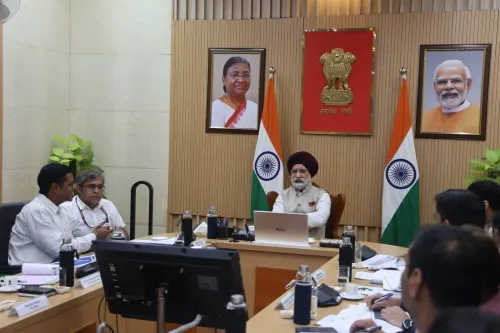
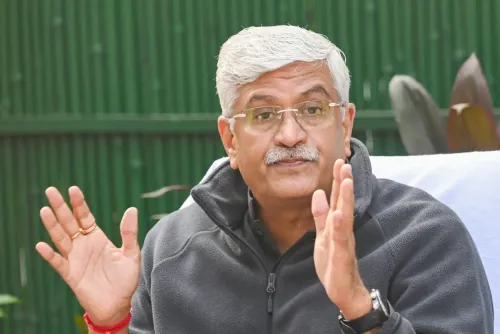
Union Culture and Tourism Minister Gajendra Singh Shekhawat on Wednesday, 15 July 2026, highlighted a rainwater harvesting initiative being rolled out across 75 CM-SHRI schools in Delhi, framing it as an extension of Prime Minister Narendra Modi's 'Catch the Rain' (Catch the Rain) vision for national water security.
In his post, Shekhawat wrote: 'बारिश की हर बूंद, कल की जल सुरक्षा' — 'Every drop of rain is tomorrow's water security' — announcing that Rainwater Harvesting Systems are being installed in the selected schools. Each school is projected to recharge approximately 2 lakh litres of groundwater annually. The initiative, starting with 75 schools, is slated for eventual expansion to 800 schools across the capital.
Context
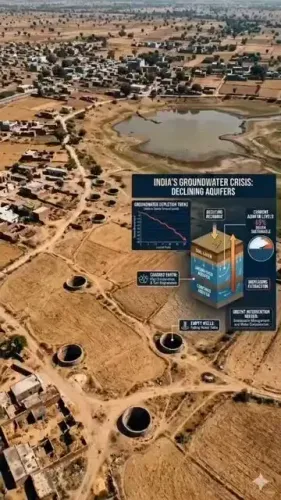
PM Modi launched the Catch the Rain campaign in 2021 under the Jal Shakti Abhiyan, calling on states and urban bodies to create rainwater harvesting structures — from rooftop systems to check dams and ponds — to arrest rapid groundwater depletion. The campaign set a national tone for treating every monsoon as an opportunity to recharge aquifers rather than let runoff go to waste.
The CM-SHRI (Chief Minister Schools of Rising India) programme in Delhi was designed to upgrade select government schools with improved infrastructure. Integrating water conservation infrastructure into these schools layers an environmental mandate onto an education-focused scheme, aligning two policy priorities in a single intervention.
Policy Backdrop
India's water security architecture rests on several interlocking central schemes. The Jal Jeevan Mission (launched 2019) targets household tap-water connectivity, while the Atal Bhujal Yojana (also 2019) focuses on sustainable groundwater management in water-stressed regions. Together with Catch the Rain, these schemes form a multi-layered national response to falling urban and rural water tables.
Mandatory rainwater harvesting in public buildings and schools has been a recurring theme in both central guidelines and state-level building codes. Delhi, with its dense urban footprint and high groundwater demand, is a critical theatre for such interventions. The projected combined recharge from 75 schools alone — roughly 1.5 crore litres per year — illustrates the cumulative potential when public infrastructure is systematically retrofitted.
Stakeholders and Impact
The most immediate beneficiaries are Delhi's school students, who gain improved water infrastructure on campus, and the broader urban groundwater ecosystem that draws from the same depleted aquifers. Residents, municipal water utilities, and farmers on the city's periphery all depend on stable groundwater levels, making recharge initiatives a shared urban-rural concern.
Shekhawat's amplification of a Delhi government scheme is notable given the layered intergovernmental context of the capital. The post signals a BJP alignment of messaging between central leadership and the city's administration on water security, projecting a unified front on an issue that resonates strongly with urban voters and environmental advocates alike.
What's Next
The stated roadmap points to scaling the programme from 75 to 800 schools, a roughly 10-fold expansion that would represent one of the larger school-level rainwater harvesting drives in any Indian city. Watchers will track rollout milestones, central funding flows under the National Water Mission, and how the initiative integrates with Delhi's broader urban master plan water targets.
If the recharge volumes hold at scale, an 800-school network could collectively recharge upward of 16 crore litres of groundwater annually — a meaningful, if partial, contribution to stabilising the capital's stressed aquifers for future generations.
Point of View
Groundwater, and climate resilience simultaneously, the BJP is staking a claim on environmental governance in a city where it has historically competed fiercely for voter trust. The scale-up target of 800 schools gives the initiative a measurable, trackable benchmark that can be revisited at election time. Broader pattern: water security has become a durable BJP communication plank, threading together rural (Jal Jeevan Mission) and urban (Catch the Rain, Atal Bhujal Yojana) narratives into a single governance story.
NationPress
15 Jul 2026
Frequently Asked Questions
What is the Catch the Rain campaign?
Catch the Rain is a central government initiative launched in 2021 under the Jal Shakti Abhiyan to promote rainwater harvesting through structures like rooftop systems, check dams, and ponds, aimed at recharging groundwater across India.
How many Delhi schools will get rainwater harvesting systems?
The initiative begins with 75 CM-SHRI schools in Delhi, with plans to expand to 800 schools in the next phase.
How much groundwater will each school recharge?
According to the announcement highlighted by Minister Shekhawat, each school is projected to recharge approximately 2 lakh litres of groundwater annually.
What are CM-SHRI schools in Delhi?
CM-SHRI (Chief Minister Schools of Rising India) is a Delhi government programme that upgrades select government schools with improved infrastructure and facilities to enhance the quality of education.
Why is rainwater harvesting important for Delhi?
Delhi faces significant groundwater depletion due to its dense urban population and high water demand. Rainwater harvesting in public buildings and schools helps recharge aquifers and contributes to long-term urban water security.