How have over 39.6 lakh rain harvesting projects been built to recharge groundwater in India?
Synopsis
Over 39.6 lakh artificial groundwater recharge projects have been implemented across India, aiming to enhance water security and sustainability. This comprehensive initiative combines community participation and advanced techniques to address the escalating groundwater crisis that threatens agriculture and ecosystems.
Key Takeaways
Over 39.6 lakh groundwater recharge projects completed.
Catch-the-Rain initiative aims for sustainable water management.
Groundwater essential for agriculture and drinking water.
Community involvement is crucial for success.
Government actively monitors groundwater resources.
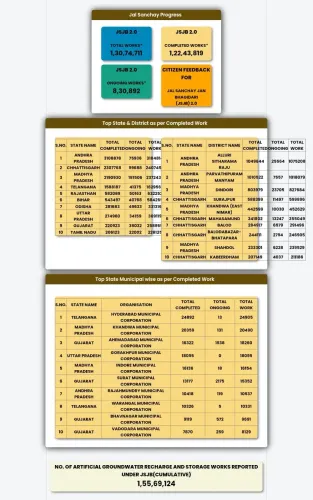
New Delhi, Jan 22 (NationPress) More than 39.6 lakh artificial groundwater recharge and storage projects have been finalized (as of January 22) under the Catch-the-Rain Jal Sanchay Jan Bhagidari (JSJB) initiative, which was inaugurated in September 2024, as per an official announcement made on Thursday.
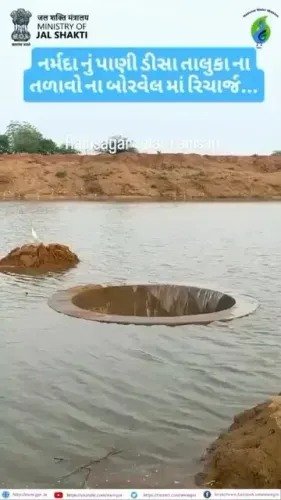
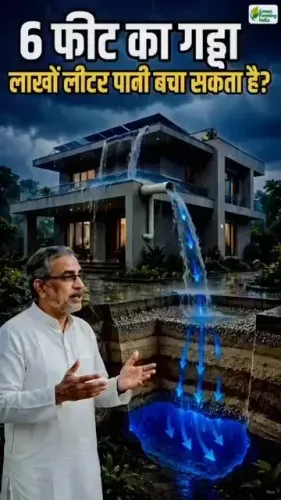
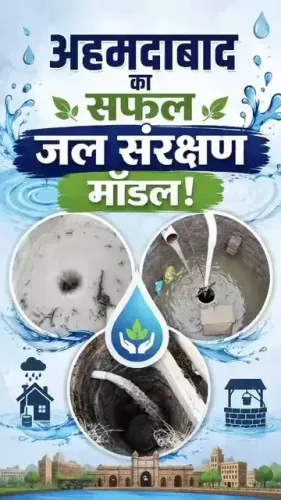
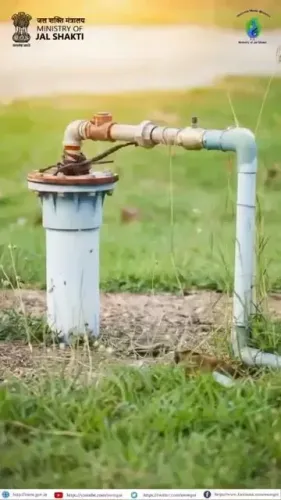
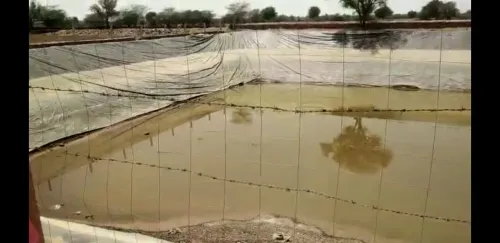
The program aims to enhance groundwater recharge through various methods including rainwater harvesting, aquifer recharge, borewell recharge, and recharge shafts.
The Master Plan for Artificial Recharge to Groundwater advocates for site-specific recharge strategies determined by water availability and aquifer storage capacity. It outlines plans for around 1.42 crore rainwater harvesting and artificial recharge facilities across the nation to facilitate 185 BCM (billion cubic meters) of groundwater recharge.
Groundwater plays a crucial role in India’s water security, supporting agriculture, drinking water provisions, ecosystems, and farming activities. However, increasing pressures from over-extraction, quality deterioration, and climate change have underscored the necessity for sustainable groundwater management.
To address this, India has adopted a holistic and multi-faceted approach that integrates policy reforms, scientific evaluations, infrastructure development, and community involvement, spearheaded by the Ministry of Jal Shakti. The country boasts a network of 43,228 groundwater level monitoring stations, 712 Jal Shakti Kendras, and 53,264 Atal Jal Water Quality Monitoring Stations, all of which are vital for executing policy initiatives.
The Atal Bhujal Yojana (Atal Jal) is also dedicated to fostering community-oriented sustainable groundwater management in water-scarce areas across seven states: Gujarat, Haryana, Karnataka, Madhya Pradesh, Maharashtra, Rajasthan, and Uttar Pradesh. As of January this year, it has facilitated efficient use across more than 6.68 lakh hectares, the statement noted.
Initiated on December 25, 2019, this scheme underpins water source sustainability for the Jal Jeevan Mission. The five-year Project Implementation Plan encompasses a total financial allocation of Rs 6,000 crore, divided into Component A (Rs 1,400 crore) for institutional enhancement and Component B (Rs 4,600 crore) for incentive-driven outcomes, demonstrating a strong results-oriented framework.
Additionally, Mission Amrit Sarovar, launched in April 2022, supports the establishment of Amrit Sarovars (ponds) in every district across the country. Each pond is designed to have a minimum area of one acre (0.4 hectare) and a water storage capacity of approximately 10,000 cubic meters. To date, more than 68,000 ponds have been completed under this initiative, the statement confirmed.
Key initiatives, including the Model Bill on Groundwater, Jal Shakti Abhiyan: Catch the Rain, Jal Sanchay Jan Bhagidari, Master Plan for Artificial Recharge to Groundwater 2020, Atal Bhujal Yojana, and Mission Amrit Sarovar, collectively enhance recharge, monitoring, regulation, and demand management.
The Model Bill has been distributed to all States and Union Territories, with 21 of them, including Bihar, Punjab, Haryana, and Himachal Pradesh, adopting it so far.
The Central Government actively collaborates with state administrations to foster responsible regulation and sustainable management of groundwater resources, facilitated by regular communication, seminars, and conferences among State Water Ministers and Chief Secretaries, as well as discussions under the National Interdepartmental Steering Committee (NISC) on Groundwater, chaired by the Secretary of the Department of Water Resources.
The escalating groundwater crisis has intensified the government’s dedication to effective management, reaffirmed by India’s commitment at COP 21 towards climate resilience and long-term sustainability. Effective groundwater management is essential for fulfilling the Sustainable Development Goals, the official announcement concluded.
Point of View
I believe the government's initiatives for groundwater recharge are crucial for India's sustainable future. These programs, which encourage community involvement and efficient resource management, are vital for addressing the growing water crisis. We must continue to support and promote these efforts to safeguard our water resources for generations to come.
NationPress
24 Sept 2026
Frequently Asked Questions
What is the Catch-the-Rain initiative?
The Catch-the-Rain initiative focuses on enhancing groundwater recharge through various methods like rainwater harvesting and aquifer recharge, with over 39.6 lakh projects completed.
Why is groundwater management important in India?
Groundwater is essential for agriculture, drinking water supply, and ecosystem health, but over-extraction and climate change threaten its sustainability.
How does the Atal Bhujal Yojana contribute to groundwater management?
The Atal Bhujal Yojana promotes community-led sustainable groundwater management in water-stressed areas, helping improve water efficiency across millions of hectares.
What role does the government play in groundwater monitoring?
The government operates a network of groundwater monitoring stations and engages with states to implement effective groundwater management policies.
What is the significance of the Model Bill on Groundwater?
The Model Bill aims to provide a framework for groundwater regulation, with 21 states adopting it to promote sustainable water resource management.