'Jal Sanchay Abhiyan': PM Modi Applauds Grassroots Water Conservation Initiatives
Synopsis
In his recent broadcast of 'Mann Ki Baat', PM Modi commended community-driven water conservation efforts across India, especially as summer approaches, showcasing inspiring examples from various villages.
Key Takeaways
Jal Sanchay Abhiyan promotes water conservation across India.
Over 50 lakh artificial water structures created.
Community efforts crucial in tackling water crises.
Amrit Sarovar Abhiyan established 70,000 water bodies.
Grassroots initiatives showcase successful water management.
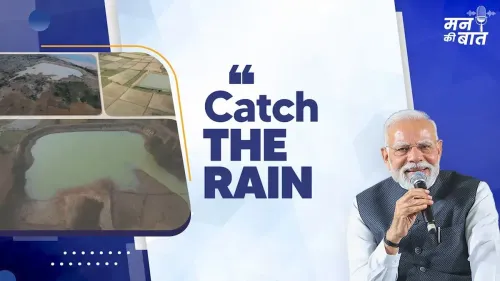
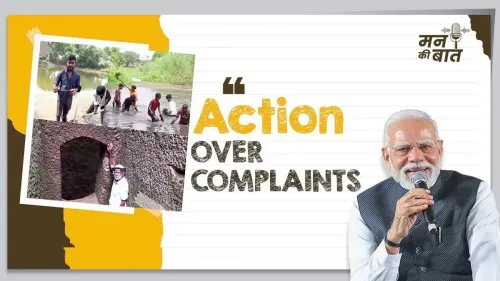
New Delhi, March 29 (NationPress) In his latest monthly radio broadcast 'Mann Ki Baat,' Prime Minister Narendra Modi emphasized the various initiatives taken by communities nationwide to promote water conservation as the summer season sets in.
During the 132nd episode of 'Mann Ki Baat', PM Modi remarked, "With summer arriving in several regions, it's time to reaffirm our dedication to preserving water resources."
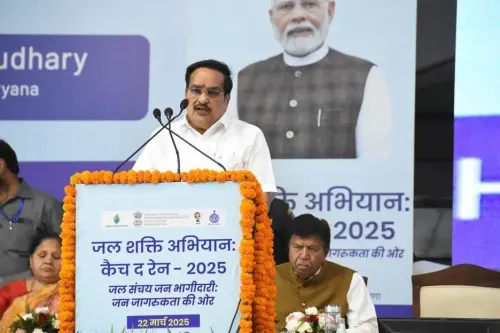
He noted that over the past 11 years, the 'Jal Sanchay Abhiyan' has significantly increased awareness among citizens.
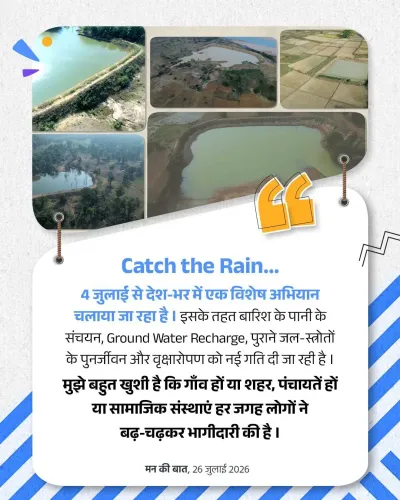
"This initiative has led to the establishment of almost 50 lakh Artificial Water Harvesting Structures throughout the nation. I am pleased to observe that community-driven projects are now active in every village to combat the water crisis," he stated.
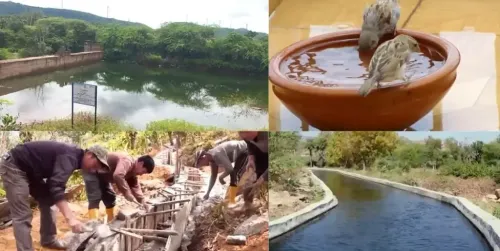
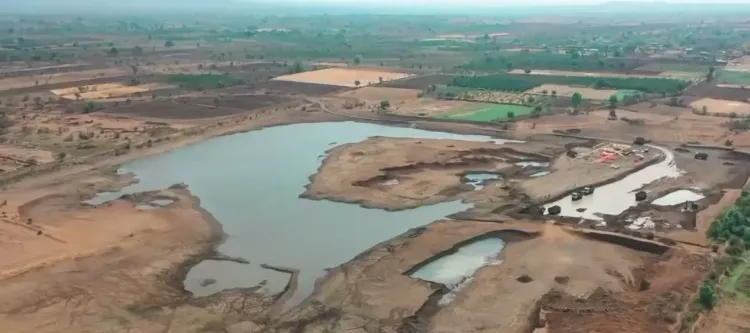
"In various locations, old ponds are being revitalized, while efforts are also being made to conserve rainwater. Moreover, the Amrit Sarovar Abhiyan has resulted in the creation of around 70,000 Amrit Sarovars across the country, with cleaning activities commencing ahead of the rainy season," he added.
Sharing "motivating instances," the Prime Minister illustrated how extensive water preservation can be achieved with public involvement.
He cited Wangmun village in the Jampui Hills of Tripura, located at an elevation of 3,000 feet, which has faced a significant water shortage, compelling residents to trek long distances for water during the summer. To address this issue, the villagers committed to conserving every drop of rain.
According to PM Modi, nearly every household in Wangmun village has installed a rooftop rainwater harvesting system.
"Once plagued by water scarcity, this village has transformed into a beacon of water conservation," he expressed.
Highlighting an innovative project in the Korea district of Chhattisgarh, PM Modi remarked, "Farmers there implemented a straightforward yet effective strategy. They constructed small recharge ponds and soak pits in their fields, enabling rainwater to remain in the soil and gradually percolate underground. Currently, over 1,200 farmers in this region have embraced this approach, leading to a significant rise in the village's groundwater levels."
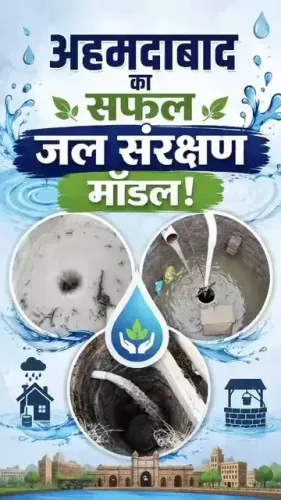
In Mudhigunta village, situated in Telangana's Mancherial district, residents have united to solve the water crisis. Four hundred families have built soak pits at their homes, fostering a community movement for water preservation.
"This initiative has increased the village's groundwater levels and notably diminished illnesses linked to contaminated water," he noted.
Point of View
PM Modi's address underscores the importance of community engagement in tackling the pressing issue of water scarcity. The initiatives shared serve as a reminder of how collective action can lead to sustainable solutions for essential resources.
NationPress
3 Oct 2026
Frequently Asked Questions
What is the 'Jal Sanchay Abhiyan'?
The 'Jal Sanchay Abhiyan' is a national initiative aimed at raising awareness and promoting water conservation efforts across India.
How many artificial water harvesting structures have been created under this campaign?
Nearly 50 lakh Artificial Water Harvesting Structures have been established throughout the country under the 'Jal Sanchay Abhiyan.'
What is the significance of the Amrit Sarovar Abhiyan?
The Amrit Sarovar Abhiyan has led to the creation of around 70,000 Amrit Sarovars, which are crucial for water conservation and management.
How have communities responded to water scarcity challenges?
Communities have implemented various grassroots initiatives, such as rainwater harvesting systems and recharge ponds to combat water scarcity.
What examples did PM Modi share about water conservation?
PM Modi shared examples from Wangmun village in Tripura and Mudhigunta village in Telangana, highlighting their innovative water conservation strategies.