Shekhawat Campaigns in Jaisalmer for BJP Panchayat Candidates
Synopsis
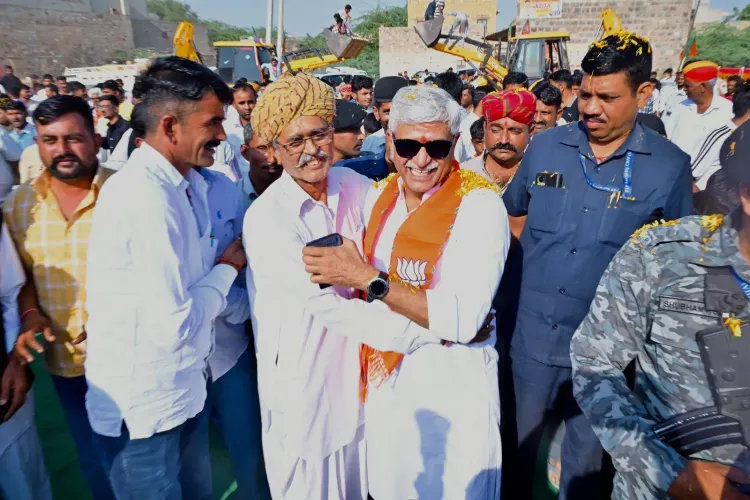
Union Minister Gajendra Singh Shekhawat campaigned at Rajmathai in Jaisalmer on 12 November 2026, rallying rural voters to elect BJP's Panchayati Raj candidates and carrying the 'double engine government' message to western Rajasthan's village level.
Key Takeaways
Gajendra Singh Shekhawat , Union Culture and Tourism Minister, addressed a Jan Sabha at Rajmathai, Jaisalmer on 12 November 2026 .
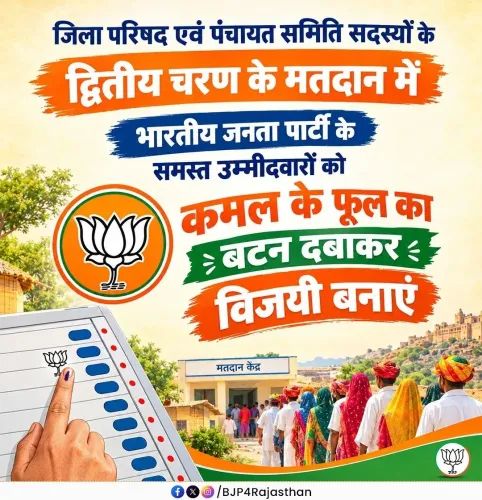
He appealed for votes for BJP's Jila Parishad and Panchayat Samiti candidates in the Rajasthan Panchayati Raj elections.
The 'double engine government' pitch framed a BJP panchayat vote as the final link in delivering central development schemes to villages and hamlets.
Pokhran MLA Mahant Pratappuri Maharaj and District President Dalpat Hingra shared the stage, signalling coordinated state-to-block party presence.
India's Panchayati Raj system was constitutionalised by the 73rd Constitutional Amendment of 1992 , making local body elections the last mile of national governance.
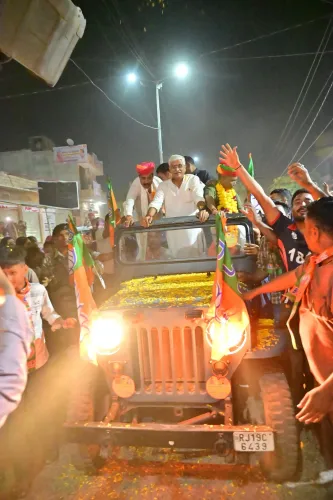
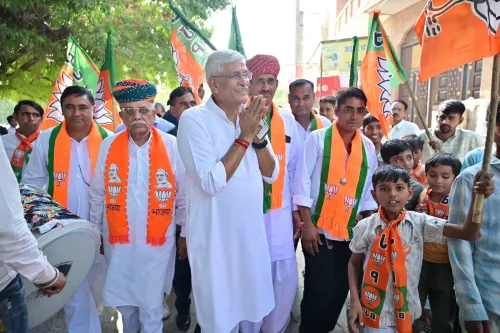
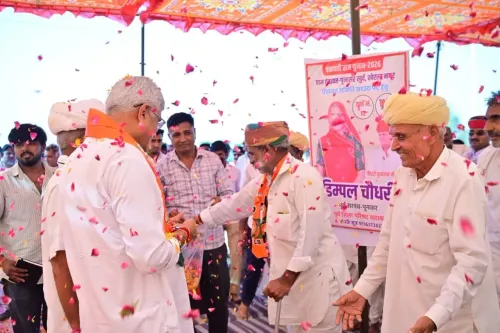
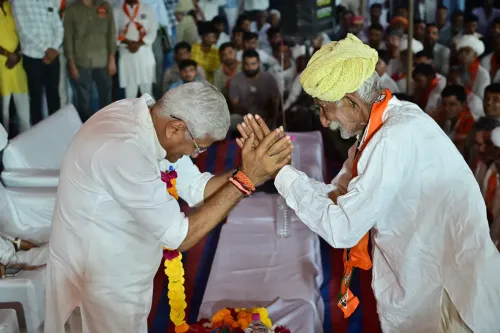
In the sun-baked heartland of Jaisalmer, Rajasthan, Union Culture and Tourism Minister Gajendra Singh Shekhawat took to the ground on Thursday, 12 November 2026 — rallying villagers at Rajmathai and urging them to back BJP's district council and panchayat committee candidates in the ongoing Panchayati Raj elections. The message was direct: strengthen the party at the grassroots so that the development dividends of a 'double engine' government actually reach every village and hamlet.
What Shekhawat Told Rajmathai's Voters
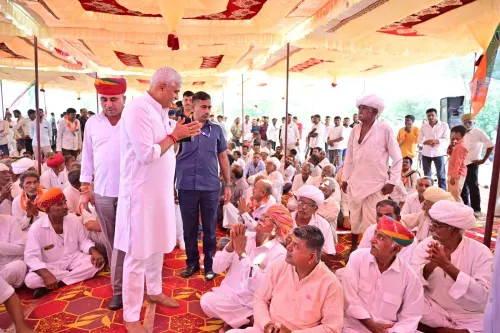
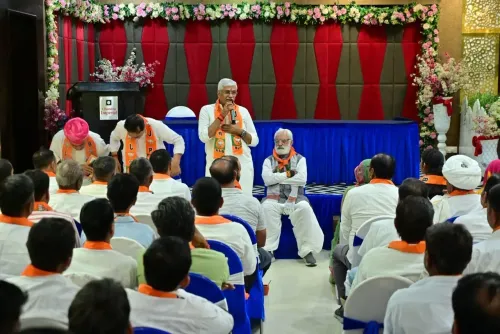
Addressing the Jan Sabha, Shekhawat appealed for votes in favour of BJP's Jila Parishad and Panchayat Samiti candidates, framing the local polls as a direct extension of Prime Minister Narendra Modi's national governance agenda. 'डबल इंजन सरकार की विकासपरक नीतियों को गांव-ढाणी तक पहुंचाने के लिए भाजपा को मजबूत बनाना होगा' — 'To carry the development-oriented policies of the double engine government to every village and hamlet, BJP must be strengthened,' he said. The crowd, he noted, responded with vocal declarations of faith in Modi's leadership and in the party.
Joining him on the dais were Pokhran MLA Mahant Pratappuri Maharaj and District President Dalpat Hingra, along with several other local elected representatives — a show of coordinated party machinery from state legislature to block level.
The 'Double Engine' Pitch at Village Level
The 'double engine' argument — that an aligned central and state government delivers faster, deeper development — has become BJP's standard electoral currency for local body contests across India. The logic runs like this: central schemes flow through state machinery and finally terminate at the panchayat; a BJP panchayat, the argument goes, removes the last friction in that chain. Rajasthan, where BJP returned to power at the state level in December 2023, is now the proving ground for that thesis at every tier of government.
India's Panchayati Raj architecture — constitutionalised by the 73rd Constitutional Amendment of 1992 — mandates three-tier rural self-governance down to the gram panchayat. Control of these bodies shapes who actually implements flagship central programmes on the ground: housing, sanitation, roads, water, and welfare transfers. That is precisely why senior Union ministers like Shekhawat are deployed to campaign even at this level. It is not incidental. It is structural.
Jaisalmer: A Constituency Within a Constituency
Jaisalmer district sits in the far west of Rajasthan, bordering Pakistan — strategically sensitive and historically underserved in infrastructure terms. For BJP, locking in strong panchayat-level representation here means both a symbolic win in a prestige geography and a practical grip on how central funds flow into one of India's most remote terrains. Shekhawat's own Lok Sabha constituency of Jodhpur lies in the same western Rajasthan belt, making this campaign turf he knows intimately.
The results of Rajasthan's Panchayati Raj elections will offer an early verdict on whether the 'double engine' brand has filtered all the way down to the village booth — and whether the state government's first three years have translated into the kind of local trust that wins a gram panchayat seat.
Point of View
Winning panchayats in the December 2023 state-election afterglow would validate the claim that the party's renewal is deep, not just legislative. How these results land will also shape the internal standing of district-level party structures ahead of the next Lok Sabha cycle.
NationPress
12 Nov 2026
Frequently Asked Questions
What is Gajendra Singh Shekhawat's role in the BJP?
Gajendra Singh Shekhawat is a senior BJP leader, Union Minister of Culture and Tourism, and Lok Sabha MP from Jodhpur, Rajasthan.
What is the 'double engine government' argument in Indian politics?
The 'double engine government' phrase refers to BJP's claim that having the same party in power at both the central and state levels accelerates development delivery, as both engines pull in the same direction without political friction.
When are Rajasthan Panchayati Raj elections being held?
Rajasthan's Panchayati Raj elections are ongoing as of November 2026; specific phase dates have not been confirmed in independently verifiable public data available here.
What is a Jila Parishad and a Panchayat Samiti?
A Jila Parishad (district council) and a Panchayat Samiti (block-level council) are the second and third tiers of India's three-tier Panchayati Raj system, constitutionalised by the 73rd Constitutional Amendment of 1992.
Why do Union ministers campaign in local body elections in India?
BJP Union ministers address local body rallies to reinforce the 'double engine' narrative — linking the party's national governance record directly to panchayat-level candidates to boost voter turnout and party loyalty at the grassroots.