Shekhawat flags crowd control as key tourism priority

Synopsis
Union Tourism Minister Gajendra Singh Shekhawat has declared that controlling overcrowding at tourist destinations is a central government priority, alongside balanced and sustainable development — reinforcing a policy framework rooted in the Swadesh Darshan and PRASAD schemes launched in 2014-15.
Key Takeaways
Gajendra Singh Shekhawat , Union Culture and Tourism Minister, publicly identified crowd control at tourist sites as a central government priority on 29 May 2026 .
The minister placed visitor management on equal footing with balanced and sustainable development in his statement.
The policy position builds on the Swadesh Darshan and PRASAD schemes, both launched in 2014-15 , which incorporate carrying-capacity assessments for heritage and pilgrimage sites.
Key stakeholders include the tourism industry, local communities near high-footfall destinations, and heritage site managers including the Archaeological Survey of India .
Concrete follow-through — revised norms, state-level guidelines, or budget allocations — is yet to be announced and will be the measure of implementation.
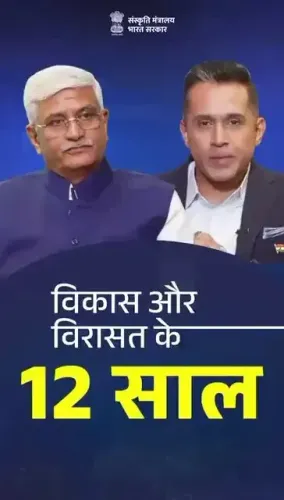
Union Culture and Tourism Minister Gajendra Singh Shekhawat on Friday, 29 May 2026 stated that managing overcrowding at tourist destinations, alongside balanced and sustainable development, is a priority of the central government. The minister shared the message on X, signalling renewed focus on visitor management as part of India's broader tourism policy framework.
Context
In his post, Shekhawat wrote: 'संतुलित और सतत विकास के साथ पर्यटन स्थलों में भीड़ को नियंत्रित करना भी केंद्र सरकार की प्राथमिकता है' — translating to: 'Controlling crowds at tourist destinations, along with balanced and sustainable development, is also a priority of the central government.' The statement places crowd regulation on an equal footing with infrastructure growth, a notable emphasis from the ministry's top official.
India's major heritage, pilgrimage, and natural sites have faced mounting visitor pressure in recent years. Locations such as Kedarnath, Varanasi, Hampi, and Ajanta-Ellora have periodically seen footfall exceed manageable limits, raising concerns among conservationists, local communities, and site managers alike.
Policy Backdrop
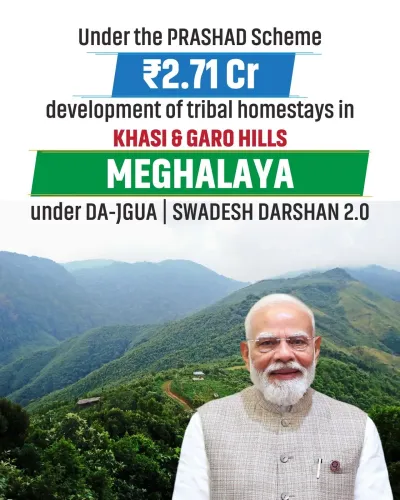
The ministry's stance builds on a policy lineage stretching back to 2014-15, when the central government launched two flagship schemes. The Swadesh Darshan scheme was introduced to develop sustainable, theme-based tourist circuits across states, with emphasis on infrastructure and local community participation. Simultaneously, the PRASAD (Pilgrimage Rejuvenation and Spiritual Augmentation Drive) scheme was initiated to upgrade heritage and pilgrimage destinations with explicit attention to carrying-capacity planning.
Both schemes reflect a long-standing government position that economic gains from tourism must be balanced against ecological integrity and cultural preservation. Carrying-capacity assessments — formal evaluations of how many visitors a site can absorb without degradation — have been a stated component of this framework since its inception.
The Ministry of Tourism serves as the nodal central body responsible for translating these policies into operational guidelines for state governments and site authorities. Regulated entry systems, timed ticketing, and visitor-flow management have been recommended tools under this architecture.
Stakeholders and Impact
The tourism industry, which encompasses hotel operators, travel agents, and transport providers clustered around major sites, has a direct stake in how crowd-management rules are framed. Overly restrictive caps can reduce revenue for local economies, while insufficient regulation risks physical damage to irreplaceable monuments and natural landscapes.
Local communities living near high-footfall destinations are among the most affected stakeholders. Unmanaged tourism can strain civic infrastructure — water supply, waste management, road capacity — while well-regulated visitor flows can sustain livelihoods over longer horizons. Heritage site managers and the Archaeological Survey of India are key implementation partners in any crowd-regulation framework.
What's Next
Observers will watch for concrete follow-through: revised carrying-capacity norms for specific sites, operational guidelines issued to state tourism departments, or fresh budgetary allocations for sustainable tourism infrastructure in the next Union Budget or the ministry's annual report. Shekhawat's public statement raises the political salience of the issue and may signal forthcoming policy announcements. The broader challenge for the ministry is converting a stated priority into measurable, site-specific action that satisfies both conservation mandates and the economic aspirations of tourism-dependent communities across India.
Point of View
The minister is attempting to pre-empt criticism that infrastructure spending under Swadesh Darshan and PRASAD has simply funnelled more visitors into fragile sites without adequate safeguards. The statement also positions the BJP-led government ahead of any high-profile site-damage controversy, building a proactive policy narrative. Whether the rhetoric translates into binding carrying-capacity caps — which can antagonise local traders and state governments dependent on pilgrimage revenue — will be the real test of political will.
NationPress
13 Oct 2026
Frequently Asked Questions
What did Tourism Minister Shekhawat say about crowd control at tourist sites?
Minister Gajendra Singh Shekhawat stated on 29 May 2026 that controlling crowds at tourist destinations, along with balanced and sustainable development, is a priority of the central government.
What is the Swadesh Darshan scheme?
Swadesh Darshan is a central government scheme launched in 2014-15 to develop sustainable, theme-based tourist circuits across Indian states, with a focus on infrastructure and local community participation.
What is the PRASAD scheme in India?
PRASAD stands for Pilgrimage Rejuvenation and Spiritual Augmentation Drive, launched in 2014-15 to upgrade heritage and pilgrimage sites while promoting responsible tourism and carrying-capacity planning.
How does the Indian government manage overcrowding at heritage sites?
The Ministry of Tourism promotes carrying-capacity assessments, regulated entry systems, and timed ticketing as tools to manage visitor flow at major heritage and pilgrimage locations under schemes like Swadesh Darshan and PRASAD.
Who is Gajendra Singh Shekhawat?
Gajendra Singh Shekhawat is the Union Minister of Culture and Tourism, a senior BJP leader, and a Lok Sabha MP representing Jodhpur in Rajasthan.