Shekhawat: Ginnorgarh Fort joins UNESCO Tentative List
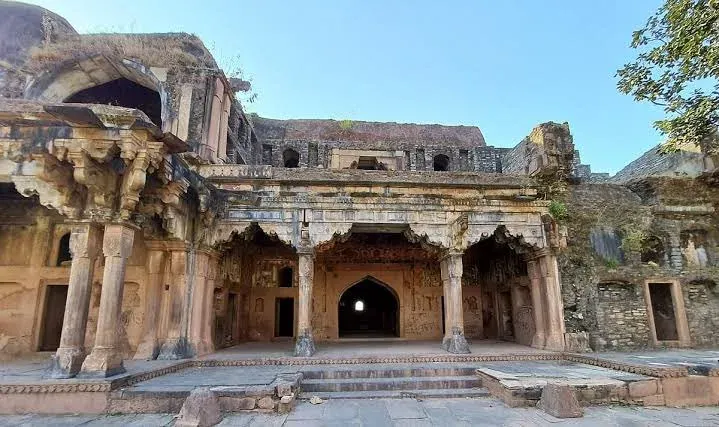
Synopsis
Ginnorgarh Fort, the fortified Gond dynastic capital in Madhya Pradesh known for its massive walls, palaces, stepwells and reservoirs, has been added to India's UNESCO Tentative List — a key step toward World Heritage nomination — Union Culture Minister Gajendra Singh Shekhawat announced on 29 September 2026.
Key Takeaways
Ginnorgarh Fort in Madhya Pradesh has been added to India's UNESCO Tentative List as of 29 September 2026 .
The fort was the fortified capital of the Gond rulers , a tribal dynasty with distinct traditions of governance, defence, and water management.
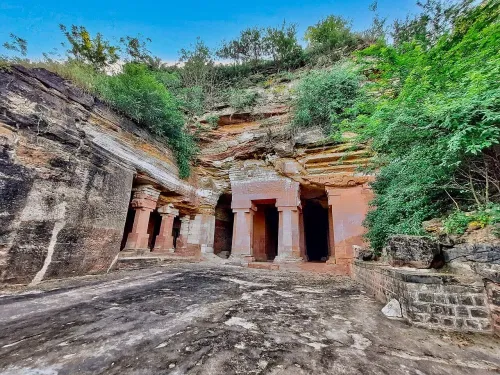
Key features include massive fortification walls, palatial remains, stepwells, and reservoirs — an integrated landscape of tribal statecraft.
Inclusion on the Tentative List is the mandatory first stage before a full UNESCO World Heritage nomination dossier can be submitted via the Archaeological Survey of India .
The addition reflects India's policy of broadening its heritage pipeline beyond classical monuments to include tribal, regional, and vernacular traditions.
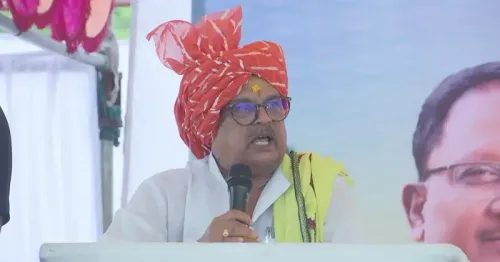
Union Culture and Tourism Minister Gajendra Singh Shekhawat framed the inclusion as recognition that every community and tradition has a place in India's heritage story.
A medieval tribal citadel in the heart of India just earned its place on the world heritage map. Union Culture and Tourism Minister Gajendra Singh Shekhawat announced on 29 September 2026 that Ginnorgarh Fort in Madhya Pradesh has been added to India's UNESCO Tentative List — a formal step toward eventual World Heritage status for one of the subcontinent's most significant Gond dynastic monuments.
A Gond capital carved in stone
Ginnorgarh Fort was the fortified capital of the Gond rulers, a tribal dynasty that governed large parts of central India and developed their own distinct systems of administration, defence, and water management. The site is not a single structure — it is an entire landscape of massive fortification walls, palatial remains, stepwells, and reservoirs that together encode centuries of indigenous governance. As Shekhawat wrote, 'its massive fortifications, palatial remains, stepwells and reservoirs tell the story of a distinctive and important chapter of India's tribal heritage.'
The Gond kingdom's architectural vocabulary — blending defensive pragmatism with sophisticated hydraulic engineering — represents a tradition long underrepresented in mainstream heritage discourse. Ginnorgarh's inclusion on the Tentative List signals a deliberate effort to correct that imbalance.
What the UNESCO Tentative List actually means
The UNESCO Tentative List is not a final award — it is the mandatory first stage of the World Heritage nomination pipeline. India submits sites through the Archaeological Survey of India (ASI), and only sites that appear on the Tentative List can advance to a full nomination dossier. The clock, in effect, starts here.
India has been deliberately widening this pipeline beyond classical temple complexes and Mughal monuments to capture tribal, vernacular, and regional traditions. Ginnorgarh fits squarely into that strategic push — a site that speaks to indigenous statecraft rather than imperial grandeur.
Why Gond heritage matters to the broader story
The Gond rulers governed one of the largest territorial formations in pre-Mughal central India, yet their architectural legacy has received a fraction of the scholarly and conservation attention afforded to contemporaneous dynasties. Ginnorgarh's water management infrastructure alone — stepwells and reservoirs designed to sustain a fortified urban population — represents engineering knowledge worth preserving and studying.
Shekhawat's closing line carries the political as well as the cultural weight of the announcement: 'Every community, every region and every tradition has a place in India's heritage story.' It is a direct articulation of the government's inclusive heritage mandate — one that tribal advocacy groups and conservation bodies have long pushed for.
The road from Tentative List to World Heritage Site
The next milestone will be ASI preparing a full nomination dossier — a detailed document covering the site's outstanding universal value, its integrity, its conservation state, and a management plan. That process typically takes several years. Parallel attention to other Gond and tribal sites across Madhya Pradesh and neighbouring states may follow, as the government builds a more representative portfolio of central Indian heritage on the world stage.
For the communities whose ancestors built and lived within Ginnorgarh's walls, today's announcement is more than bureaucratic progress. It is an acknowledgement — long overdue — that their history belongs on the world's most prestigious heritage register.
Point of View
Championing Gond tribal heritage carries both cultural and political resonance — asserting an indigenous, pre-colonial civilisational identity that aligns with its broader narrative of 'inclusive heritage.' The real test will come at the ASI dossier stage: whether the conservation infrastructure and community management plans at Ginnorgarh are robust enough to survive UNESCO's rigorous outstanding-universal-value scrutiny. If they are, this could open a new chapter in how central India's tribal architectural traditions are valued globally.
NationPress
29 Sept 2026
Frequently Asked Questions
What is Ginnorgarh Fort and where is it located?
Ginnorgarh Fort is a historic fortified capital associated with the Gond tribal rulers, located in Madhya Pradesh, central India. It features massive fortification walls, palatial remains, stepwells, and reservoirs that reflect indigenous traditions of governance, defence, and water management.
What does it mean for Ginnorgarh Fort to be on the UNESCO Tentative List?
Being on the UNESCO Tentative List means Ginnorgarh Fort has formally entered the nomination pipeline for World Heritage status. It is a mandatory prerequisite — only sites on this list can proceed to a full nomination dossier, which is assessed by UNESCO for inscription on the World Heritage List.
Who are the Gond rulers associated with Ginnorgarh Fort?
The Gond rulers were a tribal dynasty that governed large parts of central India and developed distinct systems of administration, architecture, and water management. Ginnorgarh served as their fortified capital, and their heritage is considered an important but underrepresented chapter in Indian history.
What is India's process for nominating sites to UNESCO World Heritage status?
India nominates sites through the Archaeological Survey of India. The process begins with adding a site to the UNESCO Tentative List, after which a detailed nomination dossier — covering outstanding universal value, integrity, conservation status, and a management plan — is prepared and submitted to UNESCO for evaluation.
Why is Ginnorgarh Fort's addition significant for tribal heritage in India?
Ginnorgarh's Tentative List inclusion is significant because it brings a tribal dynastic site into India's world heritage pipeline, which has historically been dominated by classical and Mughal monuments. It acknowledges the Gond dynasty's sophisticated architectural and hydraulic engineering traditions and sets a precedent for recognising indigenous governance systems in global heritage frameworks.