Shekhawat hails Pichhwai gift to Trump as India's soft-power moment
Synopsis
Union Culture Minister Gajendra Singh Shekhawat hailed PM Modi's presentation of a golden Pichhwai painting from Nathdwara, Rajasthan, to US President Trump in Manila as a proud showcase of India's artistic heritage and soft-power diplomacy.
Key Takeaways
Union Culture Minister Gajendra Singh Shekhawat publicly celebrated PM Modi 's gift of a golden Pichhwai painting to US President Trump in Manila .
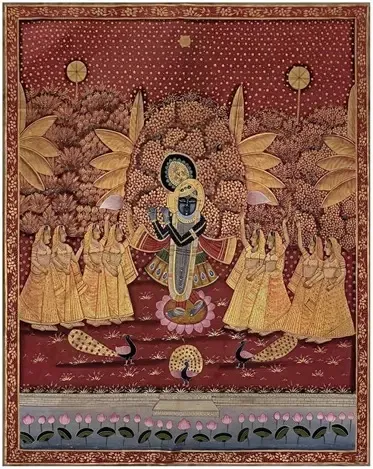
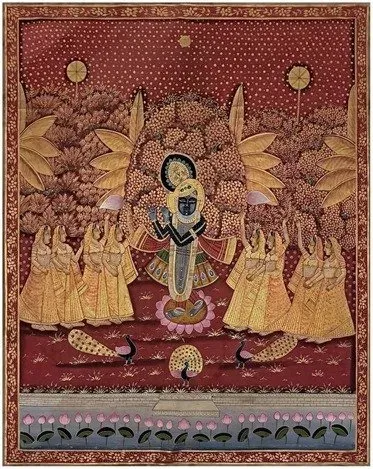
The artwork is a 'swarna Pichhwai' — a gilded devotional painting — originating from Nathdwara , Rajasthan's Rajsamand district .
Pichhwai is a centuries-old art form rooted in the Shrinathji temple tradition, known for intricate devotional imagery.
Shekhawat described it as a symbol of Rajasthan's distinct painting style and the creativity of Indian artisans.
The gesture reflects India's established diplomatic practice of deploying regional art forms as instruments of soft power during bilateral summits.
The Ministry of Culture's public amplification signals institutional backing for Pichhwai's global promotion.
A golden painting from a small Rajasthani town just made it onto the world's biggest diplomatic stage. Union Culture and Tourism Minister Gajendra Singh Shekhawat on Wednesday, 18 November 2026, celebrated Prime Minister Narendra Modi's decision to present US President Donald Trump with a 'swarna Pichhwai' — a gilded traditional painting from Nathdwara, Rajasthan — during their meeting in Manila, calling it a 'beautiful introduction' to India's rich artistic and cultural heritage.
Shekhawat wrote on X: 'मनीला में माननीय प्रधानमंत्री श्री @narendramodi जी द्वारा... राजस्थान के नाथद्वारा की स्वर्णिम पिछवाई चित्रकला भेंट करना भारत की समृद्ध कला एवं सांस्कृतिक विरासत का सुंदर परिचय है।' — ('Gifting the golden Pichhwai painting of Nathdwara, Rajasthan, to the honourable US President by PM Modi in Manila is a beautiful introduction to India's rich art and cultural heritage.')
What is Pichhwai — and why Nathdwara?
Nathdwara, a temple town in Rajasthan's Rajsamand district, is the living capital of Pichhwai art. The word Pichhwai (literally 'that which hangs behind') refers to large devotional cloth paintings originally created as backdrops for the idol of Shrinathji — a form of Lord Krishna venerated at the famous temple there. The tradition stretches back several centuries, with artisans developing an intricate visual language of lotus ponds, peacocks, gopas, and gopis rendered in natural pigments and, in gilded variants, in gold leaf.
Shekhawat specifically described the art form as a 'symbol of the Shrinathji devotional tradition, Rajasthan's distinctive painting style, and the extraordinary creative genius of our artisans.' The 'swarna' — golden — variant gifted to Trump belongs to the more elaborate, ceremonially significant tier of the tradition.
India's art-as-diplomacy playbook
This is not an isolated gesture. India has consistently woven regional art forms and heritage objects into the fabric of its bilateral diplomacy. Traditional textiles, bronzes, miniature paintings, and handcrafted objects have accompanied high-level state visits across administrations — a deliberate soft-power calculus that pairs tangible cultural pride with the hard arithmetic of geopolitics.
The Ministry of Culture, which Shekhawat heads, sits at the institutional heart of this strategy — tasked with both preserving such art forms domestically and projecting them onto global platforms. By amplifying the Manila gift publicly, the minister signals that the act is not merely ceremonial; it is policy made visible.
For the artisan community of Nathdwara — whose livelihoods depend on the sustained prestige and demand for Pichhwai — a gift at this level of visibility is an unambiguous endorsement. When a painting travels to a sitting US president, every workshop in the town's narrow lanes feels the ripple.
Pride, heritage, and the global stage
Shekhawat framed the moment in explicitly nationalistic — and unambiguously warm — terms: 'भारतीय संस्कृति, आस्था और परंपरा की ऐसी अमूल्य धरोहरों का वैश्विक मंच पर प्रतिनिधित्व गौरव का विषय है।' ('The representation of such priceless treasures of Indian culture, faith, and tradition on the global stage is a matter of pride.')
It is a compact thesis: that soft power and civilisational identity are not separate from diplomacy but are, in fact, its finest instruments. A painting from a town of a few thousand artisans now hangs — metaphorically, at least — in the conversation between the world's largest democracy and its most powerful nation.
The question now is whether Manila becomes a launchpad — for a Ministry of Culture–backed international Pichhwai exhibition, a GI-tag promotion push, or a formal India-US cultural exchange programme that the artisans of Nathdwara can actually feel in their order books.
Point of View
Reinforcing the ministry's relevance at a moment when soft power is a live foreign-policy debate. For Rajasthan's artisan economy, a gift of this visibility can function as the most effective GI-tag campaign the state never had to pay for. The pattern also invites scrutiny — genuine follow-through in the form of international exhibitions or cultural exchange programmes will determine whether Manila is a milestone or a memorable photo moment.
NationPress
18 Nov 2026
Frequently Asked Questions
What is a Pichhwai painting?
A Pichhwai is a large traditional devotional painting, originally made as a backdrop for the idol of Shrinathji at the famous temple in Nathdwara, Rajasthan. The word means 'that which hangs behind,' and the art form is known for intricate depictions of Krishna's life using natural pigments and, in gilded versions, gold leaf.
Where is Nathdwara and why is it significant for Indian art?
Nathdwara is a temple town in Rajasthan's Rajsamand district. It is the traditional home of Pichhwai painting and houses the celebrated Shrinathji temple, making it both the spiritual and artistic capital of this centuries-old art form.
What did PM Modi gift to Donald Trump in Manila?
PM Narendra Modi presented US President Donald Trump with a 'swarna Pichhwai' — a golden Pichhwai painting from Nathdwara, Rajasthan — during their meeting in Manila, as celebrated by Culture Minister Gajendra Singh Shekhawat on X.
Why does India give traditional artworks as diplomatic gifts?
India has long used regional art forms and heritage objects in bilateral diplomacy as an instrument of soft power — pairing cultural identity with geopolitical engagement. The practice showcases India's artistic traditions and can boost the global profile of the artisans who create them.
What is Gajendra Singh Shekhawat's role in Indian culture policy?
Gajendra Singh Shekhawat is the Union Minister of Culture and Tourism in the Indian government, a senior BJP leader and Lok Sabha MP from Jodhpur, Rajasthan. His ministry is responsible for preserving Indian art forms and projecting them on global platforms.