Shekhawat hails Lúčnica's 'Vande Mataram' for Modi in Bratislava
Synopsis
Slovak folk ensemble Lúčnica performed 'Vande Mataram' in Bratislava to welcome PM Modi, prompting Culture Minister Gajendra Singh Shekhawat to hail the gesture as a symbol of deepening India-Slovakia friendship and mutual respect.
Key Takeaways
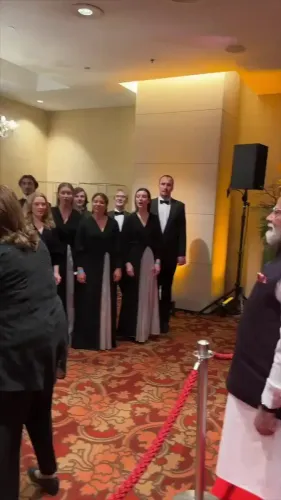
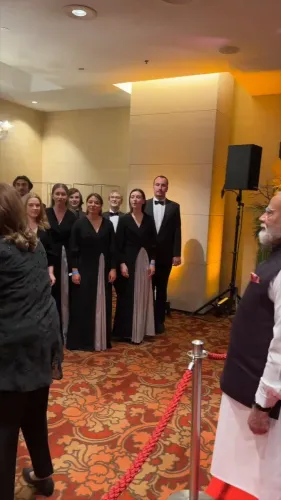
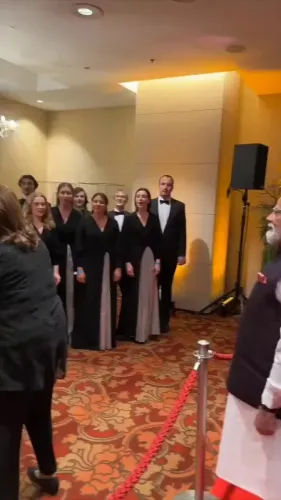
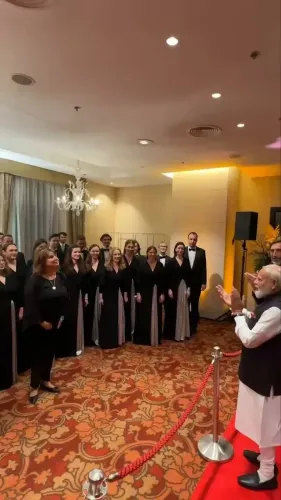
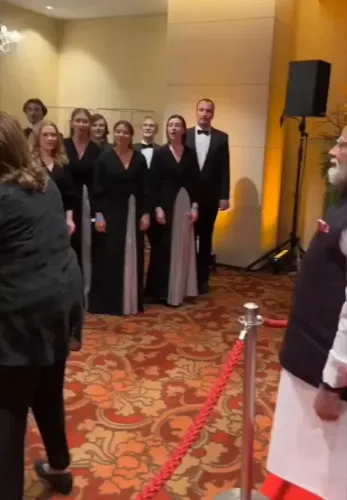
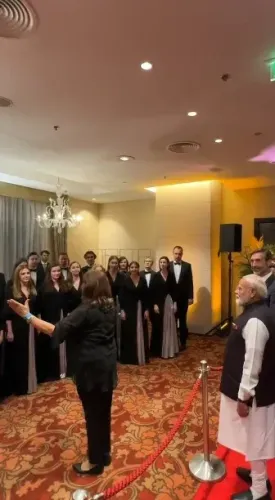
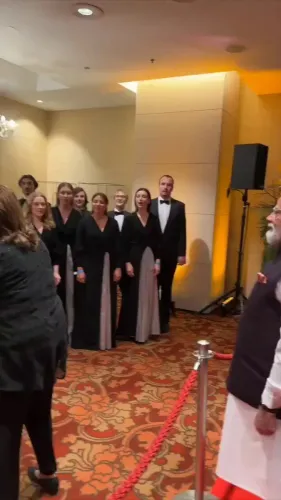
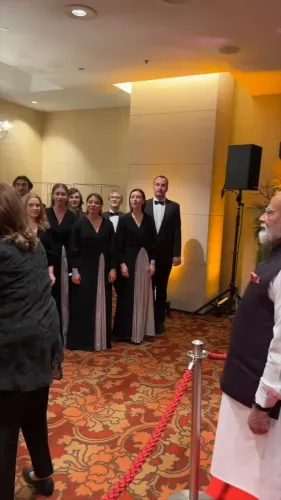
Culture Minister Gajendra Singh Shekhawat shared a video of Slovak ensemble Lúčnica performing 'Vande Mataram' in Bratislava on June 15, 2026 .
Lúčnica , founded in 1948 , is Slovakia's premier professional folk ensemble and performed as part of the welcome programme for PM Narendra Modi .
India and Slovakia have maintained diplomatic relations since 1993 , building on ties with Czechoslovakia dating to 1947 .
The Ministry of Culture uses musical exchanges during high-level visits as a core element of India's soft power strategy.
Observers are watching for possible reciprocal cultural festival announcements or fresh bilateral consultations between the two countries.
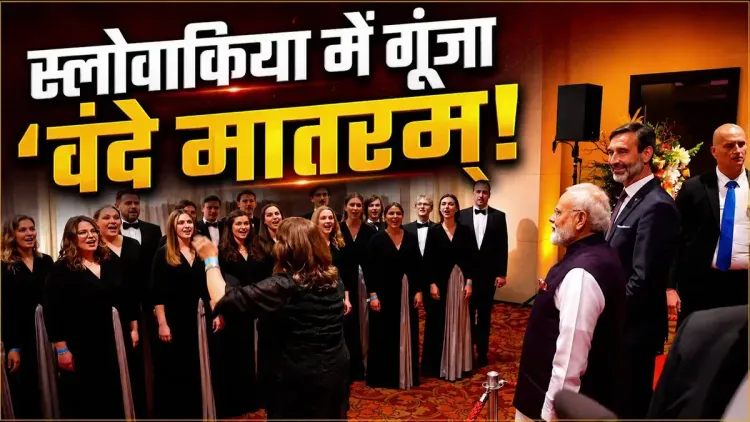
Union Culture and Tourism Minister Gajendra Singh Shekhawat on Monday, June 15, 2026, celebrated a cultural moment from Bratislava, Slovakia, where Slovakia's renowned folk ensemble Lúčnica performed 'Vande Mataram' as part of the welcome programme for Prime Minister Narendra Modi, calling the gesture a symbol of deepening bilateral ties and mutual respect.
Context
Shekhawat shared a video of the performance on X, writing that when 'Vande Mataram' resonated through Bratislava, 'the melody united the hearts of two nations.' He described Lúčnica's presentation as elevating India-Slovakia friendship to new heights. The post was tagged #PMModiInSlovakia and #IndiaSlovakiaFriendship, signalling the government's intent to amplify the cultural dimension of the Prime Minister's visit.
The performance carries particular weight given that 'Vande Mataram' — India's national song — was rendered by a foreign ensemble before a visiting Indian head of government, a rare and symbolically potent gesture in diplomatic protocol.
Policy Backdrop
India and Slovakia have maintained diplomatic relations since 1993, when Slovakia became an independent republic following the dissolution of Czechoslovakia. India's ties with the region date further back — formal diplomatic relations with Czechoslovakia were established as early as 1947, providing a long foundation of cultural and political engagement.
Lúčnica, founded in 1948, is Slovakia's leading professional folk ensemble, specialising in traditional Slovak songs and dances. Its selection to perform for the Indian Prime Minister underscores the diplomatic significance accorded to the visit by the Slovak side.
India has consistently used musical and folk-art exchanges during high-level diplomatic visits as instruments of soft power. The Ministry of Culture, which Shekhawat heads, plays a central coordinating role in curating such cultural programmes that complement formal diplomatic and trade agendas.
Stakeholders and Impact
The performance is being read by cultural diplomacy observers as part of India's broader push to deepen people-to-people links with Central and Eastern European nations — a region that has gained strategic relevance alongside India's traditional engagement with Western Europe. Cultural ensembles and diplomatic missions on both sides stand to benefit from the goodwill generated.
For the Ministry of Culture and Tourism, the moment offers a tangible example of heritage diplomacy in action — where artistic exchange reinforces what formal communiqués articulate. Shekhawat's amplification of the moment through social media also signals the ministry's role in shaping the public narrative around PM Modi's foreign visits.
What's Next
Diplomatic observers will watch for possible announcements of reciprocal cultural festivals between India and Slovakia, or a fresh round of bilateral consultations between the two foreign ministries in the wake of the Bratislava visit. Such visits have historically seeded longer-term cultural exchange agreements and joint tourism promotion initiatives.
As India continues to engage European partners on multiple tracks — trade, technology, and culture — moments like Lúčnica's 'Vande Mataram' serve as soft-power anchors that can outlast the formal duration of any single diplomatic visit.
Point of View
Positioning India's soft power as a parallel track to economic and strategic engagement. The choice of 'Vande Mataram' by a Slovak ensemble is a potent symbol, and the Minister's quick public endorsement signals that the Culture Ministry sees itself as an active participant in, not merely a backdrop to, India's foreign policy narrative. Central and Eastern Europe is an increasingly important theatre for this approach as India diversifies its European partnerships.
NationPress
14 Sept 2026
Frequently Asked Questions
Why did a Slovak group perform Vande Mataram for PM Modi?
Slovakia's folk ensemble Lúčnica performed 'Vande Mataram' as part of the official cultural welcome programme for Prime Minister Narendra Modi during his visit to Bratislava, a gesture seen as a mark of respect and a symbol of India-Slovakia friendship.
What is Lúčnica, the Slovak ensemble?
Lúčnica is Slovakia's leading professional folk ensemble, founded in 1948, and specialises in traditional Slovak songs and dances. It is one of the country's most recognised cultural institutions.
What did Gajendra Singh Shekhawat say about the Bratislava performance?
Shekhawat said that when 'Vande Mataram' resonated through Bratislava, 'the melody united the hearts of two nations,' and called Lúčnica's performance a gesture that elevated India-Slovakia friendship to new heights.
When did India and Slovakia establish diplomatic relations?
India and Slovakia established diplomatic relations in 1993 after Slovakia became an independent republic. India's ties with the broader region go back to 1947, when formal relations were established with Czechoslovakia.
What is India's cultural diplomacy strategy during PM Modi's foreign visits?
India routinely incorporates musical performances and folk-art exchanges during high-level diplomatic visits as instruments of soft power, with the Ministry of Culture playing a key coordinating role alongside formal diplomatic and trade agendas.