PM Modi in Bratislava: Slovak Ensemble Sings Vande Mataram
Synopsis
Prime Minister Narendra Modi's welcome in Bratislava featured Slovak state ensemble Lúčnica performing Vande Mataram, coinciding with the 150th anniversary of the national song's composition — a moment Modi shared on X as a symbol of cultural diplomacy.
Key Takeaways
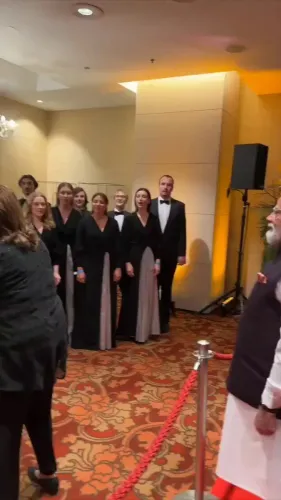
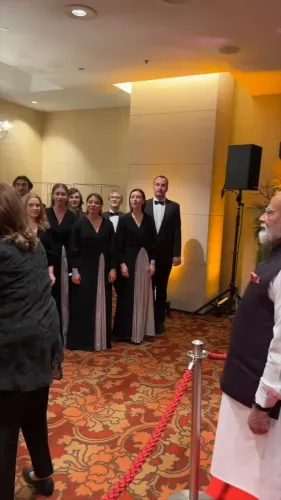
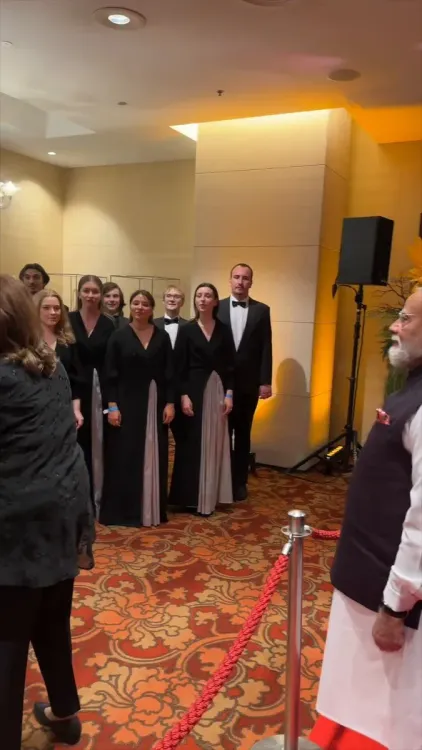
Slovak state folk ensemble Lúčnica performed Vande Mataram at Prime Minister Narendra Modi 's official welcome in Bratislava on 15 June 2026 .
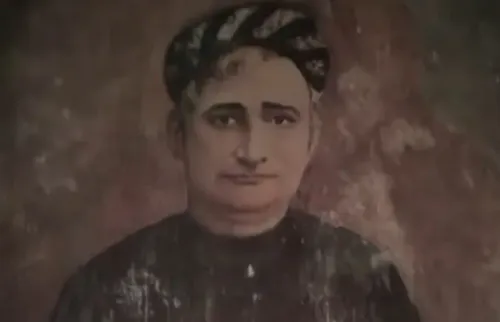
2026 marks the 150th anniversary of the composition of Vande Mataram by Bankim Chandra Chatterjee .
Vande Mataram was adopted as India's national song by the Constituent Assembly in January 1950 .
The performance is part of India's cultural diplomacy strategy of integrating national symbols into state visits, especially across Europe .
India and Slovakia have maintained growing bilateral ties since the 1990s ; Slovakia is a member of the European Union .
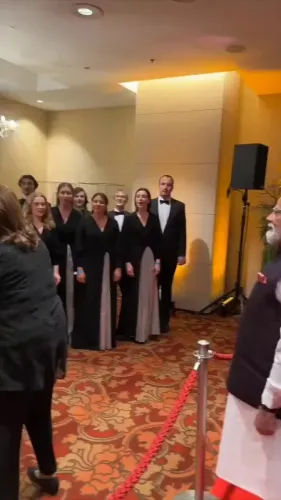
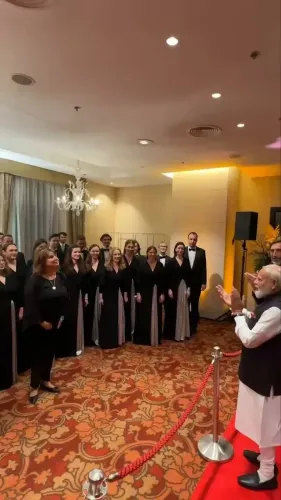
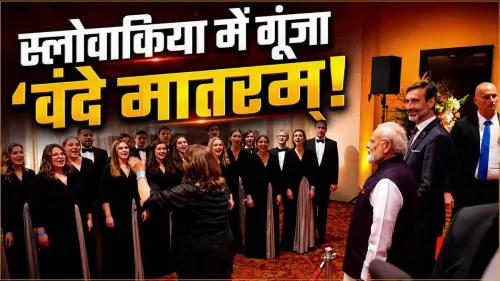
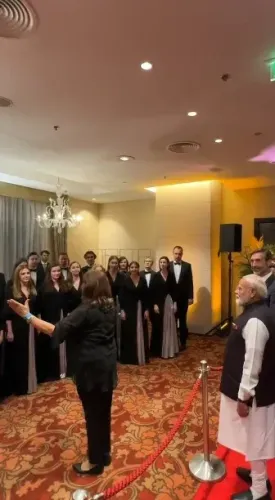
Prime Minister Narendra Modi was welcomed in Bratislava on Monday, 15 June 2026 with a rendition of Vande Mataram — India's national song — performed by members of the Lúčnica, Slovakia's renowned state folk ensemble, in a rare cultural gesture at an official state reception.
Sharing the moment on X, Prime Minister Modi noted that the performance came at a particularly resonant time: 'Prichádza to v čase, keď si pripomíname 150 rokov od vzniku piesne Vande Mataram' — 'This comes as we mark 150 years since the composition of Vande Mataram and its significant contribution to India's history and the struggle for her freedom.'
Context
Vande Mataram, composed by Bankim Chandra Chatterjee in the 1870s and first published in 1882, served as a rallying cry against British colonial rule and became one of the most powerful anthems of India's independence movement. The Constituent Assembly of India formally adopted it as the national song in January 1950. The year 2026 marks the 150th anniversary of the song's composition, making the Bratislava performance a symbolically charged moment.
Policy Backdrop
India has a well-established tradition of weaving performances of iconic national symbols into the fabric of state visits, particularly across Europe, as an instrument of cultural diplomacy. By having a Slovak state ensemble — rather than an Indian troupe — perform Vande Mataram, the welcome in Bratislava added a layer of local participation that amplified the gesture's diplomatic significance. India and Slovakia have maintained growing economic and cultural engagement since the 1990s, with Slovakia being a member of the European Union.
The Government of India had previously marked the 125th anniversary of Vande Mataram with nationwide programmes in 2001–02, establishing a precedent for state-level commemoration of the song's milestones.
Stakeholders and Impact
The Lúčnica ensemble, widely respected for performing traditional Slovak folk music and dance at official state occasions, lent institutional weight to the rendition. For the Indian diaspora in Central Europe and cultural organisations tracking soft-power initiatives, the moment represents a convergence of anniversary diplomacy and bilateral outreach. The performance is likely to resonate with audiences both in India and among Indians abroad who regard Vande Mataram as an emotional cornerstone of national identity.
What's Next
With 2026 designated as the 150th year of Vande Mataram, official events in India and at Indian missions abroad are expected to mark the anniversary through cultural festivals and possible parliamentary references. Prime Minister Modi's visit to Bratislava and his highlighting of the ensemble's performance signals that the anniversary commemoration will carry an international dimension, reinforcing India's strategy of projecting its civilisational heritage on the world stage through bilateral engagements.
Frequently Asked Questions
Why did a Slovak ensemble sing Vande Mataram for PM Modi?
Members of Lúčnica , Slovakia's state folk ensemble, performed Vande Mataram as part of the official welcome for Prime Minister Narendra Modi in Bratislava on 15 June 2026 , reflecting India's tradition of cultural diplomacy during state visits.
What is the significance of Vande Mataram in 2026?
2026 marks the 150th anniversary of the composition of Vande Mataram by Bankim Chandra Chatterjee . The song, first published in 1882 , was central to India's independence movement and was adopted as the national song in January 1950 .
Who composed Vande Mataram?
Vande Mataram was composed by Bankim Chandra Chatterjee , a Bengali novelist and poet, in the 1870s . It was first published in 1882 and became a rallying anthem against British colonial rule.
What is India's national song?
Vande Mataram is India's national song, formally adopted by the Constituent Assembly of India in January 1950 . It is distinct from the national anthem, Jana Gana Mana .