PM Modi: Slovak Ensemble Sang Vande Mataram in Bratislava
Synopsis
Prime Minister Narendra Modi highlighted that Slovakia's Lucnica Ensemble performed Vande Mataram during his official welcome in Bratislava, calling it especially meaningful as India marks 150 years of the national song and its role in the freedom struggle.
Key Takeaways
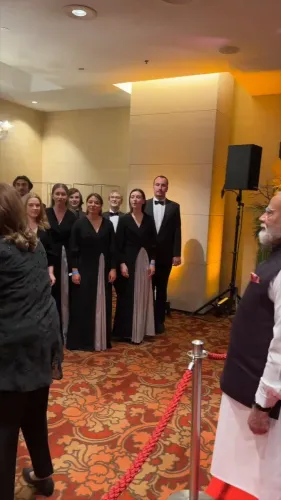
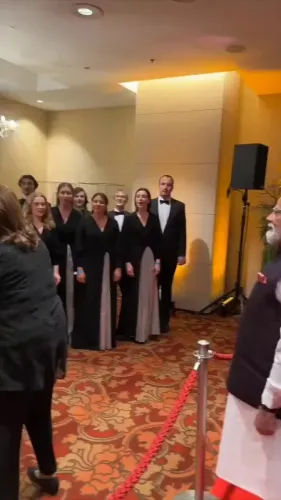
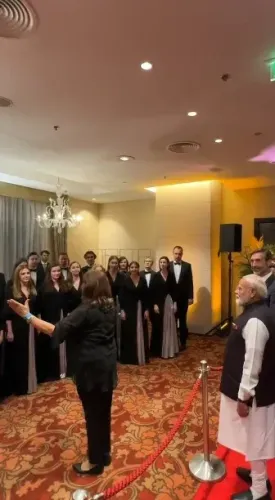
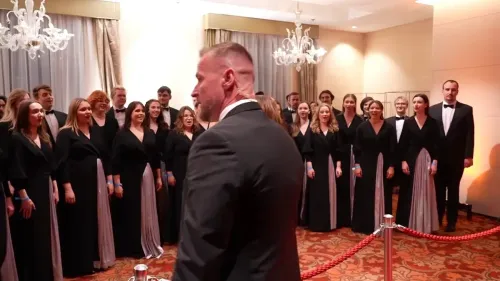
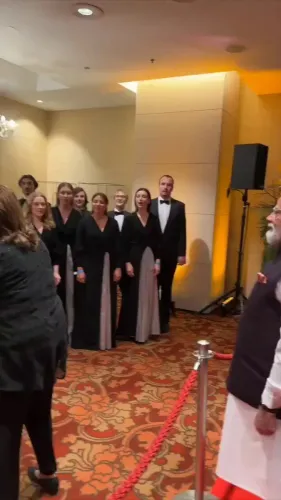
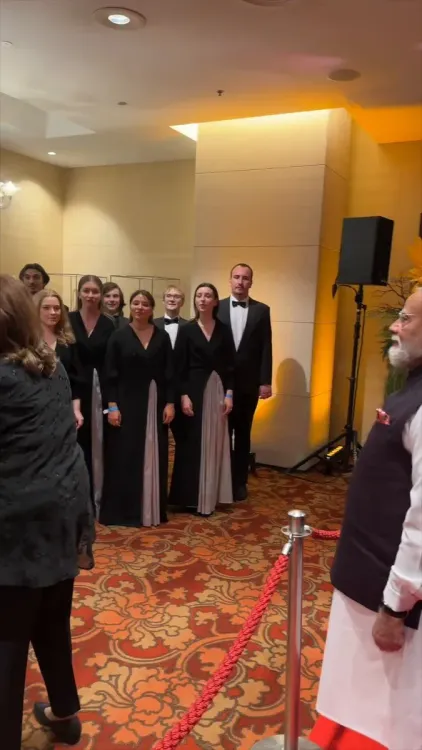
The Lucnica Ensemble , a Slovak state folk ensemble, performed Vande Mataram as part of PM Modi's official welcome in Bratislava .
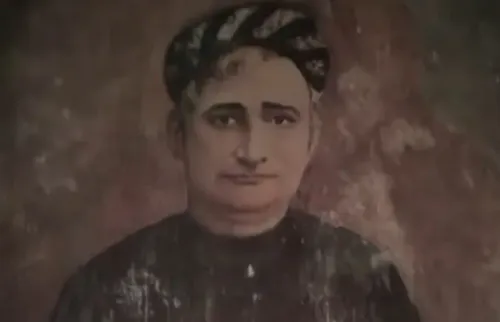
2026 marks 150 years of Vande Mataram , composed by Bankim Chandra Chatterjee in the 1870s .
The song was first publicly performed at the 1896 Indian National Congress session and adopted as the national song in 1950 .
The performance reflects India's practice of weaving national cultural symbols into high-level overseas engagements.
The episode is expected to form part of the broader commemorative record of the 150-year Vande Mataram milestone.
Prime Minister Narendra Modi on Monday, June 15, 2026, shared that the Lucnica Ensemble performed Vande Mataram — India's national song — as part of his official welcome in Bratislava, Slovakia, a moment he described as especially resonant given the song's 150th anniversary this year.
Context
The performance by the Lucnica Ensemble, a Slovak state folk ensemble known for its traditional music and dance, came during the ceremonial welcome extended to Prime Minister Modi in Bratislava. Modi noted on X that the occasion coincided with India 'marking 150 years of Vande Mataram and recalling its glorious contribution to India's history and freedom struggle.'
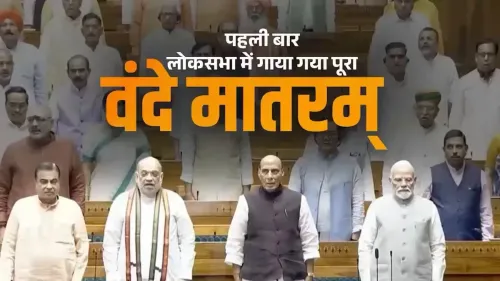
Vande Mataram, meaning 'I bow to thee, Mother,' was composed by Bengali writer Bankim Chandra Chatterjee in the 1870s. It became one of the most powerful rallying cries of India's independence movement before being formally recognised as the national song by the Constituent Assembly in 1950.
Policy Backdrop
Vande Mataram was first publicly sung at the 1896 Indian National Congress session, marking the beginning of its journey as a symbol of national identity and anti-colonial resistance. The song's 150th anniversary has prompted commemorations both within India and, as this episode illustrates, at diplomatic engagements abroad.
Indian leaders have, since 2014, regularly incorporated national cultural symbols into the ceremonial fabric of overseas visits, using local ensembles and diaspora communities to project India's civilisational heritage as part of its soft-power outreach. A European capital performing Vande Mataram in a local folk idiom fits squarely within that pattern.
Stakeholders and Impact
The performance carries significance for the Indian diaspora across Europe, for whom such moments of cultural recognition abroad reinforce a sense of national pride. It also signals the depth of people-to-people warmth between India and Slovakia, with a Slovak state ensemble voluntarily learning and presenting a song central to India's freedom narrative.
Cultural organisations and historians marking the 150-year Vande Mataram milestone are likely to note the Bratislava performance as part of the broader commemorative record, alongside events planned on Indian soil.
What's Next
Attention will turn to the official calendar of 150-year Vande Mataram commemorations being organised across India, as well as any cultural cooperation agreements that may emerge from the India-Slovakia engagement in Bratislava. The Lucnica Ensemble's gesture could open a conversation about deeper artistic exchanges between the two countries, building on the goodwill generated by the welcome performance.
Point of View
Embedding India's freedom-struggle heritage into the choreography of a bilateral visit. By highlighting a European ensemble's rendition of Vande Mataram during the song's 150th-anniversary year, Modi's communication reinforces a consistent arc: projecting India's civilisational identity as a living, globally resonant force rather than a domestic artifact. The choice also subtly frames the India-Slovakia relationship within a shared respect for cultural heritage, giving the bilateral engagement a symbolic depth beyond trade or security. For the BJP government, such moments serve a dual audience — domestic voters who prize national pride, and international partners being invited to see India through the lens of its historical grandeur.
NationPress
13 Sept 2026
Frequently Asked Questions
What is Vande Mataram and why is it significant?
Vande Mataram is India's national song, composed by Bengali writer Bankim Chandra Chatterjee in the 1870s . It became a rallying cry during India's independence movement and was formally adopted as the national song by the Constituent Assembly in 1950 .
Why is 2026 special for Vande Mataram?
2026 marks 150 years of Vande Mataram , prompting commemorations in India and at diplomatic events abroad, including the Bratislava performance during PM Modi's visit.
Who is the Lucnica Ensemble?
The Lucnica Ensemble is a Slovak state folk ensemble specialising in traditional music and dance. It performed Vande Mataram as part of the official welcome for Prime Minister Narendra Modi in Bratislava .
When was Vande Mataram first publicly performed?
Vande Mataram was first publicly sung at the 1896 Indian National Congress session , marking the beginning of its role as a symbol of national identity and anti-colonial resistance.
What is the significance of a Slovak ensemble performing Vande Mataram?
The performance by a Slovak state ensemble during PM Modi's official welcome in Bratislava underscores India's soft-power outreach, using national cultural symbols to deepen people-to-people ties and bilateral goodwill during high-level visits.