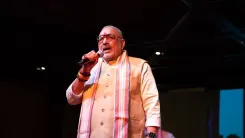
Shekhawat Honours Artists at 65th National Art Exhibition
Synopsis
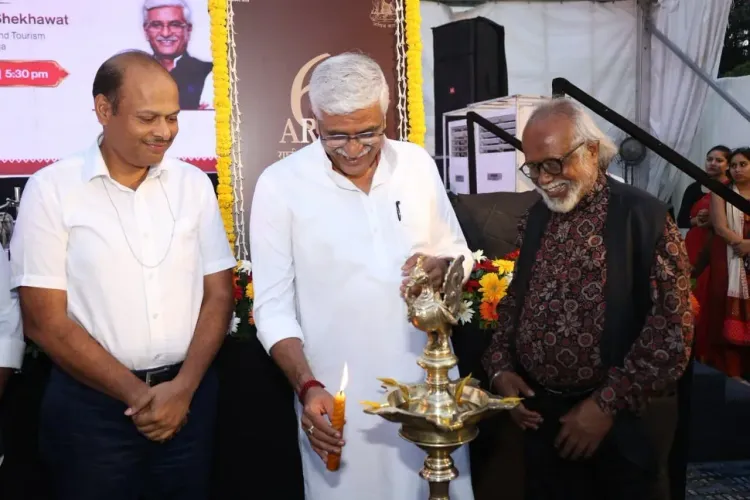
Union Culture Minister Gajendra Singh Shekhawat attended the closing ceremony of the 65th National Art Exhibition 2026 at Rabindra Bhavan, New Delhi, honouring artists nationwide and releasing the exhibition catalogue and a monograph on artist Abdul Aziz Raiba.
Key Takeaways
Union Culture and Tourism Minister Gajendra Singh Shekhawat attended the closing ceremony of the 65th National Art Exhibition 2026 on 29 September 2026 .
The event was held at Lalit Kala Gallery, Rabindra Bhavan, New Delhi , organised by the Lalit Kala Akademi .
The National Art Exhibition has been held annually since 1955 , making it one of India's longest-running state-backed visual arts platforms.
The Lalit Kala Akademi was established in 1954 under the Ministry of Culture as India's national academy of fine arts.
Two publications were released: the 65th National Art Exhibition catalogue and a monograph on artist Abdul Aziz Raiba .
Talented artists from across the country were honoured at the ceremony by the Union Minister.
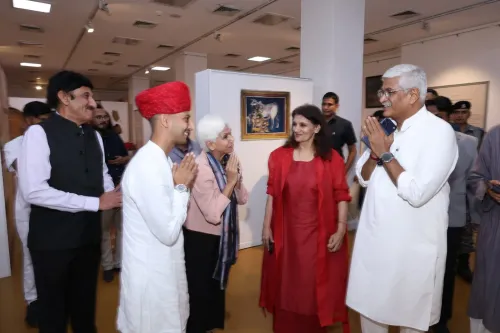
Seventy-one years of unbroken tradition met a single evening's spotlight on Tuesday, 29 September 2026, as Union Culture and Tourism Minister Gajendra Singh Shekhawat presided over the closing ceremony of the 65th National Art Exhibition 2026 at the Lalit Kala Gallery, Rabindra Bhavan, New Delhi — honouring talented artists from across the country in one of India's oldest and most prestigious platforms for contemporary visual arts.
Seven Decades of the National Art Exhibition
The National Art Exhibition has been held every year since 1955 — making it one of the longest-running state-backed showcases of Indian visual arts in the country's post-independence history. Organised by the Lalit Kala Akademi, India's national academy of fine arts established in 1954 under the Ministry of Culture, the exhibition was conceived as the primary annual platform for contemporary Indian artists to gain national recognition. Seventy-one editions later, that mandate remains unchanged.
Minister Shekhawat, posting on X in Hindi, described the exhibition as 'भारतीय दृश्यकला का अप्रतिम मंच' — 'an unparalleled platform for Indian visual arts' — underscoring the government's view of the Akademi's role as a cultural anchor, not merely an administrative body.
A Catalogue and a Monograph: Documenting Indian Art
Beyond the award ceremony, two publications were released at the event: the official catalogue of the 65th National Art Exhibition and a monograph on artist Abdul Aziz Raiba. The dual release signals the Akademi's continued emphasis on documentation alongside celebration — ensuring that the works and the artists recognised at the exhibition enter the permanent record of Indian art history.
Abdul Aziz Raiba is an Indian artist whose practice is now the subject of this dedicated monograph, a form of institutional recognition that the Lalit Kala Akademi periodically extends to significant figures in the visual arts landscape.
Rabindra Bhavan: The Address of Indian Culture
Rabindra Bhavan in New Delhi is the cultural complex that houses the Lalit Kala Akademi galleries alongside other national academies, making it one of the most symbolically loaded addresses in India's institutional arts world. Holding the closing ceremony here — rather than at a commercial venue — is itself a statement about the exhibition's standing within the government's cultural framework.
The Ministry of Culture's consistent support for Akademi events reflects a long-standing post-independence policy architecture: national academies as the state's primary instruments for nurturing, documenting, and projecting Indian artistic identity. The 65th edition is one more chapter in that architecture — and, if the pattern holds, the 66th is already on the calendar.
Point of View
Rather than a junior official's, signals that the Ministry of Culture is treating the Lalit Kala Akademi as a visible policy priority. The simultaneous release of the exhibition catalogue and a monograph on Abdul Aziz Raiba points to a broader push to document, not just celebrate, Indian visual arts. Over time, such documentation efforts shape which artists and movements enter the official canon — a quiet but consequential form of cultural power.
NationPress
29 Sept 2026
Frequently Asked Questions
What is the 65th National Art Exhibition 2026?
The 65th National Art Exhibition 2026 is the latest edition of an annual exhibition of contemporary Indian visual arts organised by the Lalit Kala Akademi since 1955. The closing ceremony was held at Rabindra Bhavan, New Delhi on 29 September 2026.
What is the Lalit Kala Akademi?
The Lalit Kala Akademi is India's national academy of fine arts, established in 1954 under the Ministry of Culture. It organises the National Art Exhibition annually as the primary platform for recognising contemporary Indian visual artists.
Who is Abdul Aziz Raiba?
Abdul Aziz Raiba is an Indian artist on whom the Lalit Kala Akademi released a dedicated monograph at the 65th National Art Exhibition closing ceremony in September 2026.
Where is Rabindra Bhavan in New Delhi?
Rabindra Bhavan is a cultural complex in New Delhi that houses the Lalit Kala Akademi galleries and other national academies. It is one of the most significant institutional arts addresses in India.
How long has the National Art Exhibition been held?
The National Art Exhibition has been held annually since 1955, making the 2026 edition the 65th in an unbroken run of over seven decades.