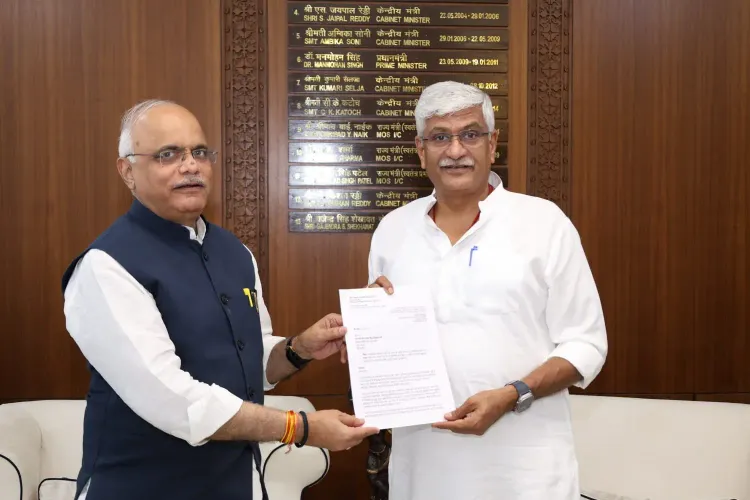
Shekhawat meets Sahasrabuddhe on Asiatic Society Mumbai heritage
Synopsis
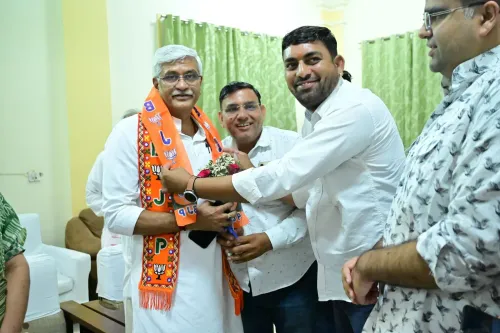
Union Culture and Tourism Minister Gajendra Singh Shekhawat met BJP leader Vinay Sahasrabuddhe in New Delhi on 24 June 2026 to discuss the preservation and promotion of the Asiatic Society of Mumbai's cultural and intellectual heritage, continuing the government's engagement with India's oldest learned institutions.
Key Takeaways
Gajendra Singh Shekhawat , Union Minister of Culture and Tourism, held a meeting with Vinay Sahasrabuddhe in New Delhi on 24 June 2026 .
Discussions focused on conserving and promoting the cultural and intellectual heritage of The Asiatic Society of Mumbai , founded in 1804 .
Sahasrabuddhe is a senior BJP leader, former Rajya Sabha MP, and ex-vice-president of the party with a background in cultural organisations.
The Asiatic Society of Mumbai holds rare manuscripts, books, and archives on Indology and Asian studies, supported historically by central government grants.
The National Mission for Manuscripts (launched 2003 ) provides the policy framework under which such institutions receive Ministry of Culture support.
Possible follow-up announcements on digitisation funding or infrastructure support are expected in the next budget cycle or monsoon parliamentary session.
Union Culture and Tourism Minister Gajendra Singh Shekhawat met senior BJP leader Vinay Sahasrabuddhe in New Delhi on Wednesday, 24 June 2026, for discussions centred on the preservation and promotion of the cultural and intellectual heritage of The Asiatic Society of Mumbai, one of India's oldest and most distinguished learned institutions.
Context
Shekhawat shared the meeting on X, writing: 'Aaj Delhi mein Shri Vinay Sahasrabuddhe ji ne mujhse bhent kar pratishthit saanskritik sanstha The Asiatic Society of Mumbai ke vishay mein charcha ki' — 'Today in Delhi, Shri Vinay Sahasrabuddhe met me and discussed the prestigious cultural institution The Asiatic Society of Mumbai.' The minister noted that an extensive exchange took place on conserving and advancing the institution's cultural and intellectual legacy.
Sahasrabuddhe, a former Rajya Sabha MP and ex-vice-president of the BJP, has long been associated with cultural and educational organisations. His outreach to the Culture Ministry on behalf of the Asiatic Society signals continued civil-society engagement with the government on heritage priorities.
Policy Backdrop
The Asiatic Society of Mumbai, founded in 1804, houses an extensive collection of manuscripts, rare books, and archival material focused on Indology and Asian studies, making it one of the continent's foremost repositories of scholarly heritage. The institution has historically received grant-in-aid support from the central government for research and conservation work.
The National Mission for Manuscripts, launched in 2003 by the Ministry of Culture, has provided a formal policy framework for documenting and conserving India's manuscript wealth through institutions such as the Asiatic Society. Successive governments have maintained this relationship, reflecting a stable preference for supporting colonial-era learned societies within a national heritage framework.
Stakeholders and Impact
Indology scholars, archivists, and heritage researchers stand to benefit most directly from any renewed focus on the Asiatic Society's collections. The institution's holdings — spanning ancient manuscripts, numismatic records, and rare printed volumes — are considered irreplaceable resources for academic communities across India and internationally.
Cultural bodies and universities that draw on the Society's archives for research could see enhanced access or conservation outcomes if the discussions translate into budgetary or infrastructural support from the Ministry of Culture.
What's Next
Observers will watch for follow-up announcements on digitisation funding or infrastructure grants for the Asiatic Society of Mumbai in the next Culture Ministry budget cycle. Parliamentary questions on grants to heritage bodies are also anticipated during the upcoming monsoon session of Parliament.
The meeting underscores the Culture Ministry's ongoing engagement with long-established learned societies, and any concrete commitments — whether on digitisation, staffing, or building conservation — would mark a tangible step in the government's broader agenda to safeguard India's archival and intellectual heritage.
Point of View
Signalling that the current government views these institutions as central to its heritage preservation agenda. Sahasrabuddhe's role as an interlocutor — rather than an official functionary — suggests that civil-society channels remain active in shaping cultural policy priorities. The focus on the Asiatic Society of Mumbai, with its irreplaceable manuscript and archival holdings, points to growing recognition that physical and digital conservation of such collections requires renewed institutional attention. If this engagement yields budgetary outcomes, it would reinforce the Culture Ministry's positioning of Indology and archival scholarship as pillars of India's soft-power strategy.
NationPress
24 Jun 2026
Frequently Asked Questions
What did Gajendra Singh Shekhawat and Vinay Sahasrabuddhe discuss?
They discussed the preservation and promotion of the cultural and intellectual heritage of The Asiatic Society of Mumbai during a meeting in New Delhi on 24 June 2026.
What is the Asiatic Society of Mumbai?
The Asiatic Society of Mumbai is a learned society founded in 1804 that houses extensive collections of manuscripts, rare books, and archives focused on Indology and Asian studies. It is one of India's oldest and most prestigious cultural institutions.
Who is Vinay Sahasrabuddhe?
Vinay Sahasrabuddhe is a senior BJP leader, former Rajya Sabha MP, and former vice-president of the BJP, known for his involvement in cultural and educational organisations.
What is the National Mission for Manuscripts?
The National Mission for Manuscripts is a scheme launched in 2003 by India's Ministry of Culture to document and conserve the country's manuscript heritage, with institutions like the Asiatic Society of Mumbai among its key partners.
Will the Culture Ministry provide more funding to the Asiatic Society of Mumbai?
No specific funding commitment has been announced. Observers expect possible follow-up announcements on digitisation or infrastructure support in the next Culture Ministry budget cycle or during the monsoon session of Parliament.