Shekhawat: Opposition's double standard on delimitation, women's quota to be exposed in Monsoon Session
Synopsis
Ahead of Parliament's Monsoon Session, Union Minister Gajendra Singh Shekhawat accused the Opposition of hypocrisy on both delimitation and the Women's Reservation Act — arguing the two are constitutionally linked and that resistance to one is resistance to the other. The charge sets up a pointed political confrontation the moment the session opens.
Key Takeaways
Gajendra Singh Shekhawat attacked the Opposition on 17 July in Jodhpur , alleging 'double standards' on delimitation and the Women's Reservation Act .
He argued delimitation is a constitutional necessity under the Delimitation Act , with a fresh exercise mandated after 2025 .
Shekhawat linked delimitation directly to the implementation of women's reservation in elected bodies.
The Centre is upgrading approximately 1,500 railway stations under the Amrit Bharat Station Scheme ; railway and operational facilities worth over ₹1,000 crore are being developed in the Jodhpur-Jaisalmer region.
More than 42 new train services have been introduced for Jodhpur; stations at Jodhpur , Phalodi , and Ramdevra are being upgraded.
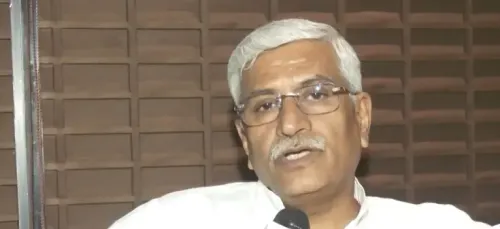
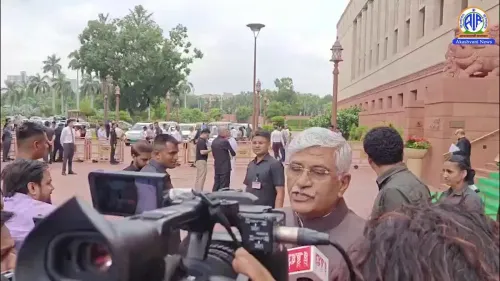
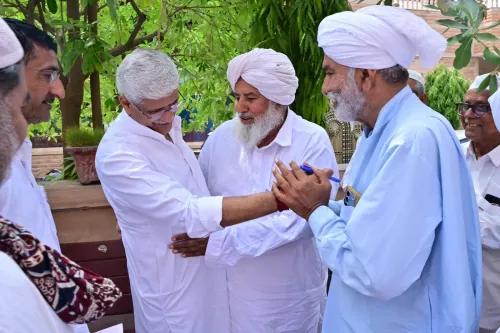
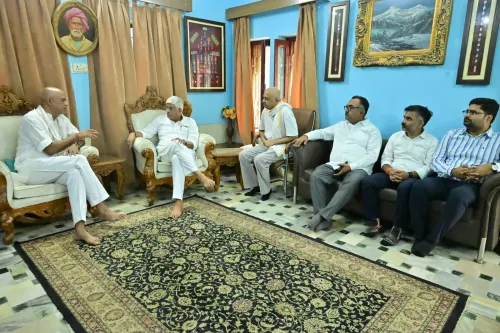
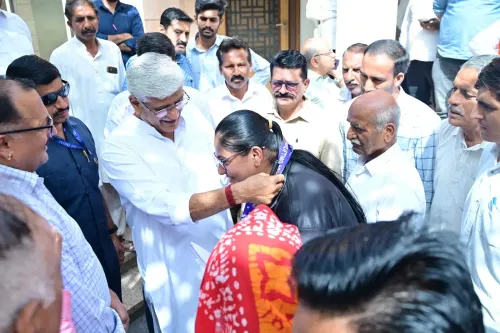
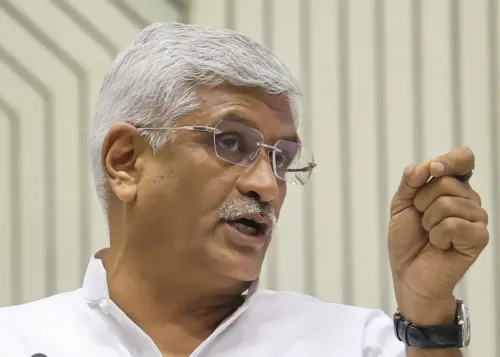
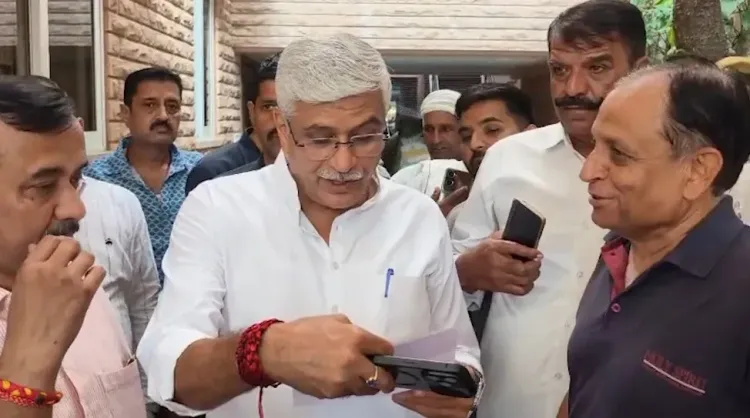
Union Minister for Culture and Tourism Gajendra Singh Shekhawat on Friday, 17 July launched a pointed pre-session offensive against the Opposition, alleging that parties resisting delimitation and the Women's Reservation Act would once again be exposed before the country when Parliament's Monsoon Session begins. Shekhawat made the remarks while addressing the media at his residence in Jodhpur.
Double Standards Charge Against the Opposition
Shekhawat claimed the Opposition's 'double standards' on both delimitation and women's reservation had already come to light during the previous Parliament session, and maintained that the upcoming session would repeat the pattern. He alleged that the Opposition's stance during earlier legislative discussions had revealed what he called an 'anti-women mindset'.
He said that once the Monsoon Session convenes, the Business Advisory Committee will determine the legislative agenda, and those opposing the Women's Reservation measure should be prepared to answer before the electorate.
Why Delimitation Is a Constitutional Necessity, per Shekhawat
The Union Minister argued that rising voter populations across Lok Sabha and Assembly constituencies have made delimitation constitutionally unavoidable. He noted that provisions for delimitation were embedded in the Constitution after Independence, and that the Delimitation Act envisages a fresh exercise after 2025.
Shekhawat further said that delimitation is an essential precondition for implementing women's reservation in elected bodies, framing it as a structural reform rather than a political choice. According to him, Prime Minister Narendra Modi is committed to ensuring women's effective representation in legislatures, not merely their symbolic participation in nation-building.
Infrastructure Push: Railways, Airports, and Rajasthan
Calling the day historic for India's infrastructure development, Shekhawat said the country is undergoing rapid transformation under the 'Viksit Bharat' vision. He highlighted that the Centre is modernising approximately 1,500 railway stations nationwide under the Amrit Bharat Station Scheme, with investments running into thousands of crores.
On regional development, Shekhawat — who described Jaisalmer as both his birthplace and former workplace — said the past decade has brought remarkable improvements to roads, rail, and aviation across Rajasthan. He noted that railway electrification has expanded rapidly, hydrogen-powered trains are expected to be introduced soon, and the number of airports across India has more than doubled.
In Jodhpur, a modern airport has been developed, and railway stations at Jodhpur, Phalodi, and Ramdevra are being upgraded. Railway maintenance, washing, and operational facilities worth over ₹1,000 crore are being developed in the Jodhpur-Jaisalmer region, and more than 42 new train services have been introduced for Jodhpur over recent years.
Political Context Ahead of the Monsoon Session
Shekhawat's remarks come as the ruling Bharatiya Janata Party (BJP) sharpens its political messaging ahead of the session. The Women's Reservation Act, passed in 2023, is contingent on delimitation for its implementation — a link the Opposition has contested, arguing it defers women's representation indefinitely. The delimitation debate carries particular electoral sensitivity given its potential impact on seat distribution across states.
With the Monsoon Session set to open shortly, both sides appear to be staking out positions on issues that blend constitutional process with political optics. How the government chooses to sequence delimitation and reservation implementation will be closely watched.
Point of View
The BJP frames any Opposition resistance to the former as opposition to the latter — a politically costly position to defend. What the framing obscures is that the Women's Reservation Act's dependence on delimitation is itself a structural delay built into the legislation, one that critics argue was a deliberate design choice. The real accountability question — when delimitation will actually be completed and seats redistributed — remains unanswered. Until that timeline is clear, the political charge of 'double standards' cuts both ways.
NationPress
15 Oct 2026
Frequently Asked Questions
What did Gajendra Singh Shekhawat say about the Opposition ahead of the Monsoon Session?
Shekhawat alleged that Opposition parties opposing delimitation and the Women's Reservation Act have 'double standards' that were already exposed in the previous Parliament session and would be exposed again in the upcoming Monsoon Session. He made the remarks on 17 July at his residence in Jodhpur.
Why does Shekhawat say delimitation is necessary?
He argued that rising voter populations across Lok Sabha and Assembly constituencies make delimitation a constitutional necessity. He also noted that the Delimitation Act mandates a fresh exercise after 2025, and that delimitation is a prerequisite for implementing women's reservation in elected bodies.
What is the Women's Reservation Act and why is it linked to delimitation?
The Women's Reservation Act, passed in 2023, reserves a share of seats in Parliament and state legislatures for women. Its implementation is contingent on the completion of delimitation, which will redraw constituency boundaries — a link the Opposition has criticised as an indefinite deferral.
What infrastructure projects did Shekhawat highlight in Rajasthan?
Shekhawat highlighted the modernisation of approximately 1,500 railway stations under the Amrit Bharat Station Scheme, over ₹1,000 crore in railway facilities in the Jodhpur-Jaisalmer region, upgrades to stations at Jodhpur, Phalodi, and Ramdevra, more than 42 new train services for Jodhpur, and a new airport in Jodhpur.
When is Parliament's Monsoon Session expected to begin?
The exact start date was not specified in Shekhawat's remarks, but he indicated the session was imminent and that the Business Advisory Committee would determine the legislative agenda once it convenes.