Shekhawat pays tribute at Tawang War Memorial to 1962 heroes
Synopsis
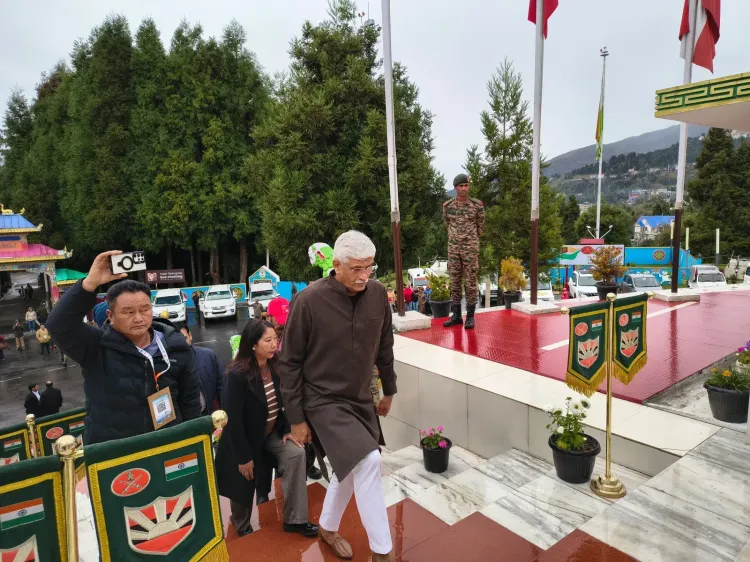
Union Culture and Tourism Minister Gajendra Singh Shekhawat visited the Tawang War Memorial in Arunachal Pradesh on October 30, 2026, paying solemn homage to Indian soldiers who died in the 1962 Sino-Indian War, calling their sacrifice an eternal inspiration to the nation.
Key Takeaways
Gajendra Singh Shekhawat , Union Minister of Culture and Tourism, visited the Tawang War Memorial in Arunachal Pradesh on October 30, 2026 .
He paid tribute to Indian soldiers who made the 'supreme sacrifice' defending India in the 1962 India-China War .
The Tawang War Memorial is dedicated to soldiers who fell in the eastern sector of the Sino-Indian War of 1962 .
Tawang remains one of India's most strategically sensitive towns, situated near the contested Line of Actual Control with China.
Ministerial visits to border war memorials have become a recurring feature, especially around the October–November anniversary of the 1962 conflict.
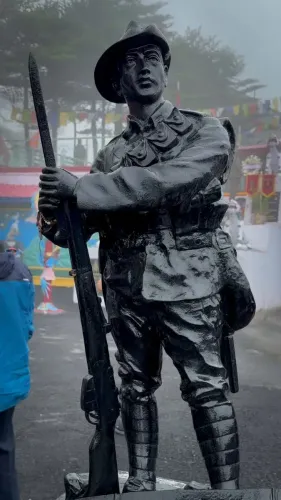
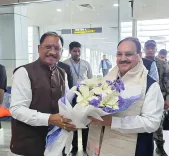
At the foot of the Himalayas, where India's northeastern frontier meets contested history, Union Culture and Tourism Minister Gajendra Singh Shekhawat arrived at the Tawang War Memorial in Arunachal Pradesh on Friday, October 30, 2026, to bow in solemn remembrance before the soldiers who gave their lives defending the motherland in the 1962 India-China War.
Posting on X, Shekhawat wrote: 'Tawang Yuddh Smarak pahunchkar 1962 ke Bharat-China yuddh mein matrubhumi ki raksha karte hue sarvochch balidan dene wale veer jawanon ko shraddhapoorna naman kiya' — 'Reaching the Tawang War Memorial, I paid reverent homage to the brave soldiers who made the supreme sacrifice defending the motherland in the 1962 India-China War.' He added that their courage, dedication, and sacrifice would forever inspire the people of the nation, and that 'the country will never forget these valiant sons of Mother India.'
The memorial that guards Tawang's memory
The Tawang War Memorial stands in Tawang district, one of India's most strategically sensitive towns, perched at roughly 10,000 feet in the Eastern Himalayas. It is dedicated specifically to Indian Army soldiers who fell in the eastern sector battles of the Sino-Indian War of 1962 — a conflict that reshaped India's strategic consciousness and continues to inform its posture along the Line of Actual Control. The memorial is among the most visited sites of military remembrance in the northeast, drawing officials, veterans, and civilians alike.
1962 and the eastern front India has not forgotten
The 1962 war was fought simultaneously across two fronts — Ladakh in the west and what is today Arunachal Pradesh in the east. In the eastern sector, Chinese forces advanced rapidly through high-altitude passes, including those near Tawang, inflicting heavy casualties before a ceasefire was declared in November 1962. Tawang itself, a town of deep cultural and strategic significance, became a symbol of both the trauma and the tenacity of that conflict. Decades later, the border in this sector remains among the most sensitive stretches of the India-China frontier.
Ministerial visits and the politics of remembrance
Ministerial homage at border war memorials has become a recurring feature of India's official calendar, particularly around the October–November anniversary window of the 1962 conflict. As the Union Minister for Culture and Tourism, Shekhawat's presence at Tawang carries both symbolic and institutional weight — culture ministry portfolios in India have increasingly encompassed the curation of military heritage and the promotion of memorial tourism at sites of national sacrifice. His visit underscores the continued political salience of honouring the 1962 generation at a moment when India's relationship with China remains a live and closely-watched dynamic.
For the families of soldiers who never returned from those Himalayan slopes, no diplomatic calendar can dim the meaning of a single wreath laid at the memorial wall.
Point of View
And official homage at frontier memorials carries weight beyond mere ceremony. As China-India border tensions along the LAC have periodically flared in the years following the 2020 Galwan clash, such visits reinforce a deliberate state narrative of remembrance and resolve. The culture portfolio's expanding role in curating military heritage and memorial tourism reflects a broader policy push to embed strategic memory into India's national identity. Tawang, with its dual religious and military significance, is the sharpest possible venue for that message.
NationPress
30 Oct 2026
Frequently Asked Questions
What is the Tawang War Memorial?
The Tawang War Memorial is a monument in Tawang, Arunachal Pradesh, dedicated to Indian soldiers who were killed during the 1962 Sino-Indian War, particularly in the eastern sector battles near the frontier with China.
Why did Gajendra Singh Shekhawat visit Tawang?
Union Culture and Tourism Minister Gajendra Singh Shekhawat visited the Tawang War Memorial on October 30, 2026, to pay solemn tribute to the soldiers who gave their lives defending India in the 1962 India-China War.
What happened at Tawang during the 1962 India-China War?
During the 1962 Sino-Indian War, Chinese forces advanced through high-altitude passes in the eastern sector, including areas near Tawang in what is today Arunachal Pradesh, inflicting significant casualties on Indian Army units before a ceasefire was declared in November 1962.
What is the significance of Tawang strategically for India?
Tawang is one of India's most strategically sensitive towns, located in Arunachal Pradesh near the Line of Actual Control with China. China has historically contested India's sovereignty over the region, making it a perennial flashpoint in bilateral relations.
When is the anniversary of the 1962 India-China War?
The 1962 Sino-Indian War was fought between October and November 1962, with the Chinese ceasefire declared on November 21, 1962. October and November are therefore the primary anniversary months for commemorative events.