Shekhawat pays tribute to flag designer Pingali Venkayya
Synopsis
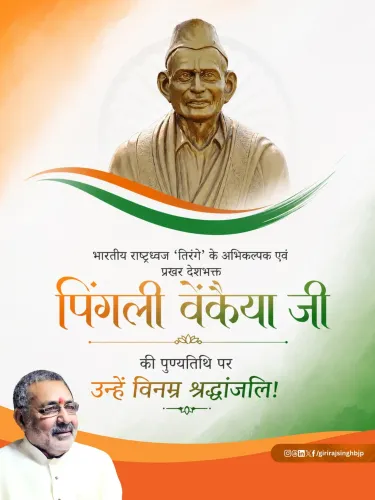
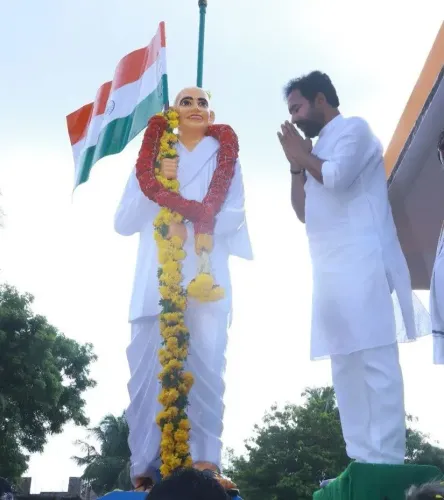
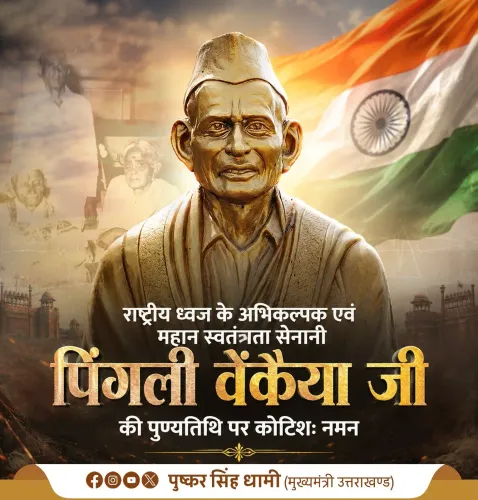
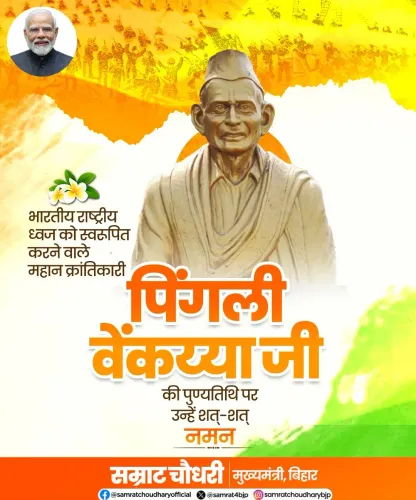
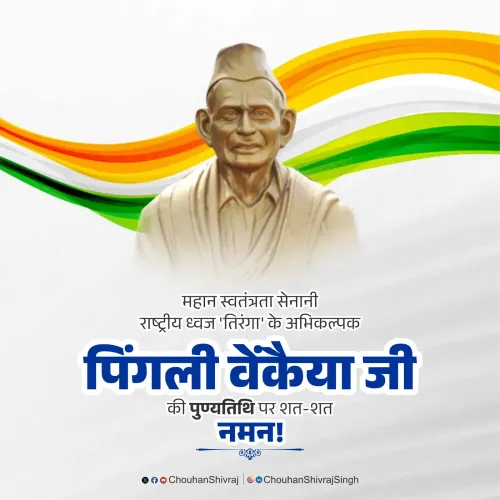
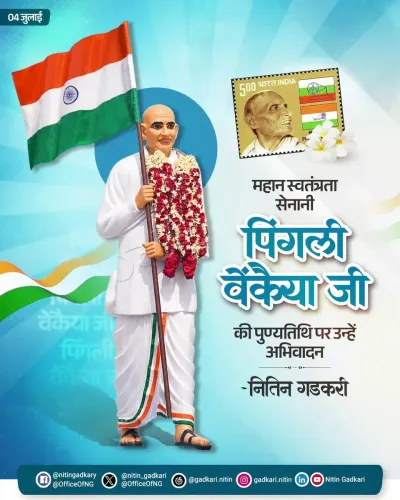
Union Culture and Tourism Minister Gajendra Singh Shekhawat paid homage to Pingali Venkayya, designer of the Indian national flag, on his death anniversary on 4 July 2026, calling him a symbol of India's self-respect and unity.
Key Takeaways
Gajendra Singh Shekhawat , Union Culture and Tourism Minister, offered tribute to Pingali Venkayya on his death anniversary on 4 July 2026 .
Pingali Venkayya ( 1876–1963 ) designed the Indian national flag in 1921 and presented it to Mahatma Gandhi at Vijayawada.
The tricolour was formally adopted by the Constituent Assembly on 22 July 1947 and hoisted as the national flag on 15 August 1947 .
The Flag Code of India , codified in 2002 and amended in 2021–22 , governs the display of the national flag by citizens.
Shekhawat described Venkayya as a symbol of India's swabhimaan (self-respect) and unity in his tribute post.
Union Culture and Tourism Minister Gajendra Singh Shekhawat on Saturday, 4 July 2026, paid homage to Pingali Venkayya, the designer of India's national flag, on his death anniversary, calling him a symbol of the nation's self-respect and unity.
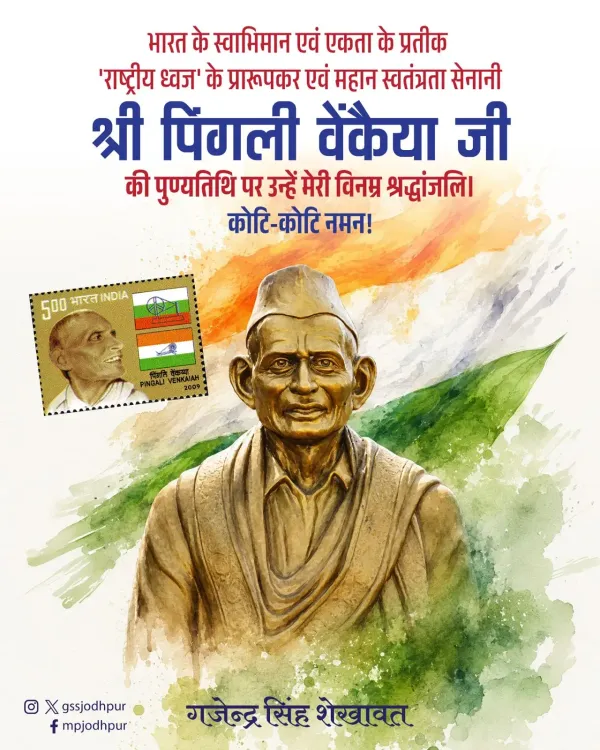
In a post on X, Shekhawat wrote in Hindi: 'भारत के स्वाभिमान एवं एकता के प्रतीक राष्ट्रीय ध्वज के प्रारूपकर एवं महान स्वतंत्रता सेनानी श्री पिंगली वेंकैया जी की पुण्यतिथि पर उन्हें मेरी विनम्र श्रद्धांजलि। कोटि-कोटि नमन!' — translated: 'My humble tribute to Shri Pingali Venkayya Ji, the designer of the National Flag — the symbol of India's self-respect and unity — and a great freedom fighter, on his death anniversary. A million salutations!'
Context
Pingali Venkayya (1876–1963) was a freedom fighter, educationist, and geologist from Andhra Pradesh who designed the Indian national flag in 1921 and presented it to Mahatma Gandhi at the All India Congress Committee session in Vijayawada. His death anniversary is observed each year as an occasion to recall his singular contribution to the visual identity of independent India.
Venkayya's design — featuring saffron, white, and green stripes with a navy-blue Ashoka Chakra — was adopted by the Constituent Assembly on 22 July 1947 and became the official national flag on 15 August 1947. Despite his central role in shaping one of the republic's most enduring symbols, Venkayya received formal state recognition relatively late in his lifetime.
Policy Backdrop
The Flag Code of India was first codified in 2002 and was subsequently amended in 2021–22, permitting broader public display of the tricolour on specified occasions. These amendments were accompanied by the government's 'Har Ghar Tiranga' campaign, which sought to deepen citizen engagement with the national flag ahead of Independence Day celebrations.
Since 2014, successive governments have made periodic efforts to highlight the contributions of pre-independence figures associated with national symbols, including through commemorative postal honours, curriculum references, and public memorials. Tributes by senior ministers on the death anniversaries of such figures form part of this broader pattern of institutional remembrance.
Stakeholders and Impact
Venkayya's legacy holds particular significance for Andhra Pradesh and Telangana, where cultural organisations and civic groups have long campaigned for greater national recognition of his contribution. The Ministry of Culture, which Shekhawat heads, oversees policies relating to the preservation of national heritage and the commemoration of freedom fighters.
For the broader Indian public, annual tributes by senior constitutional authorities serve to keep the narratives of lesser-celebrated freedom fighters in public memory, reinforcing the symbolic importance of the national flag beyond formal flag-hoisting ceremonies.
What's Next
Attention will turn to the run-up to Independence Day on 15 August, when the national flag occupies the centre of state ceremony. Any further government announcements — such as memorials, curriculum inclusions, or commemorative events in Venkayya's honour — are likely to be made in that window. Parliamentary references to his legacy during the Budget Session or special commemorative sittings also remain a possibility.
Point of View
Particularly those from regions outside the traditional Hindi heartland. By invoking the language of 'swabhimaan' and 'unity', Shekhawat aligns the flag's origins with the ruling dispensation's broader cultural-nationalist messaging. The timing — weeks before Independence Day — amplifies the political salience of such gestures. Whether this annual ritual of remembrance translates into concrete policy recognition, such as a memorial or curriculum inclusion, remains the more substantive question.
NationPress
4 Jul 2026
Frequently Asked Questions
Who was Pingali Venkayya?
Pingali Venkayya ( 1876–1963 ) was a freedom fighter, educationist, and geologist from Andhra Pradesh who designed the Indian national flag in 1921 and presented it to Mahatma Gandhi at the All India Congress Committee session in Vijayawada.
When did India adopt its national flag?
The Indian national flag was adopted by the Constituent Assembly on 22 July 1947 and became the official national flag when it was hoisted on 15 August 1947 at Independence.
What is the Har Ghar Tiranga campaign?
' Har Ghar Tiranga ' is a government campaign launched under the amended Flag Code of India (2021–22) that encourages citizens to hoist or display the national flag at their homes, particularly around Independence Day .
Why is Pingali Venkayya's death anniversary observed?
Venkayya's death anniversary is observed to honour his singular contribution in designing the tricolour that became India's national flag. Cultural organisations, especially in Andhra Pradesh and Telangana , and senior government figures mark the day with tributes.
What does the Ministry of Culture do regarding freedom fighters?
The Ministry of Culture oversees policies for preserving national heritage and commemorating freedom fighters through memorials, postal honours, curriculum references, and official tributes by the minister on significant anniversaries.