Shekhawat Pays Tribute to Revolutionary Batukeshwar Dutt
Synopsis
Union Culture and Tourism Minister Gajendra Singh Shekhawat on 20 July 2026 paid homage to revolutionary freedom fighter Batukeshwar Dutt on his death anniversary, saluting his defiance of British colonial rule — a tribute aligned with the government's broader effort to honour India's revolutionary nationalist tradition.
Key Takeaways
Gajendra Singh Shekhawat , Union Minister of Culture and Tourism, paid tribute to Batukeshwar Dutt on his death anniversary on 20 July 2026 .
Batukeshwar Dutt and Bhagat Singh threw smoke bombs in the Central Legislative Assembly on 8 April 1929 to protest British colonial legislation.
The tribute is consistent with a post- 2014 official effort to recognise revolutionary, non-Congress figures of the independence movement at the national level.
The Azadi Ka Amrit Mahotsav , launched in 2021 , provided an institutional framework for commemorating both Gandhian and revolutionary streams of the freedom struggle.
Possible government announcements on memorials or curriculum initiatives linked to the Bhagat Singh circle may follow around 15 August or 28 September .
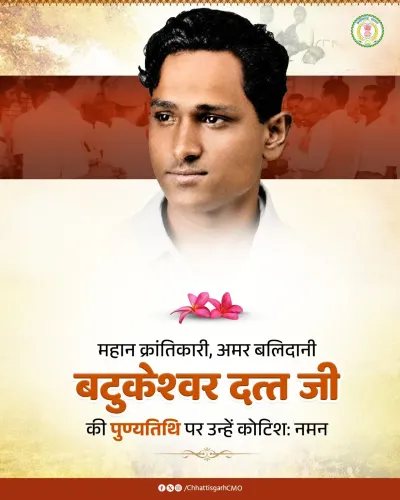
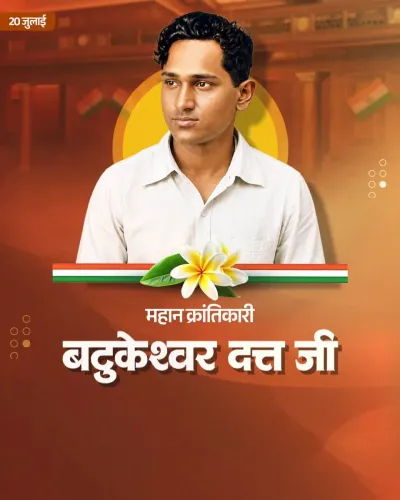
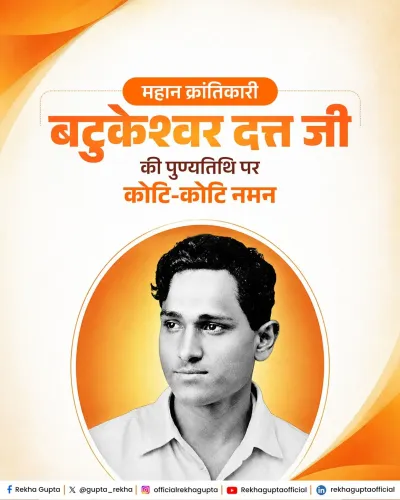
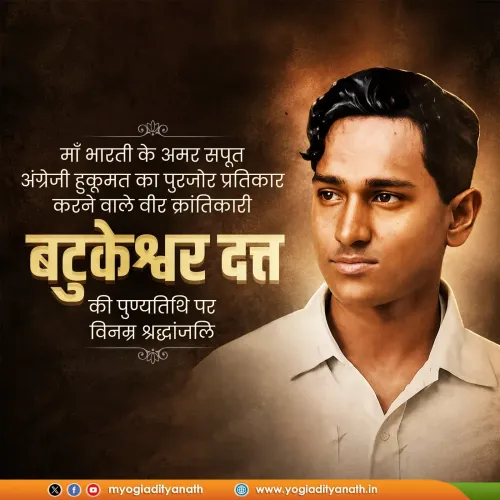
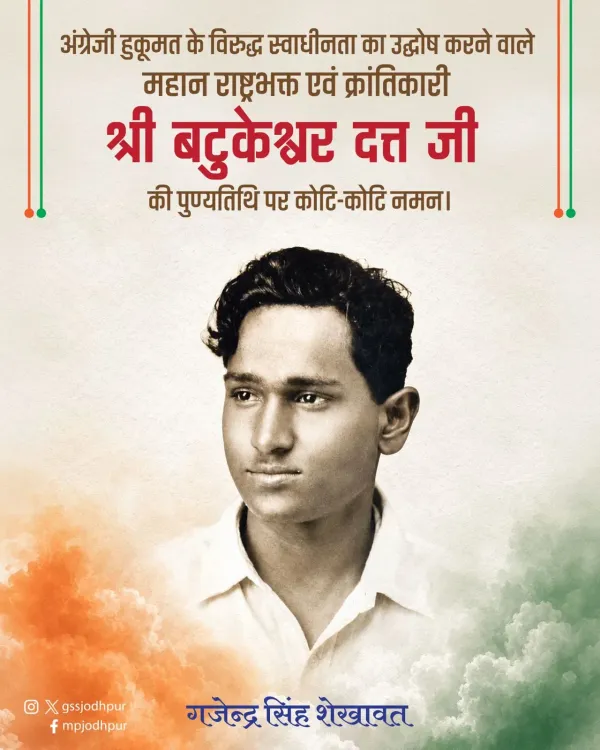
Union Culture and Tourism Minister Gajendra Singh Shekhawat on Monday, 20 July 2026 paid homage to freedom fighter Batukeshwar Dutt on his death anniversary, saluting the revolutionary's defiance of British colonial rule.
Posting on X in Hindi, Shekhawat wrote: 'Angrezi hukumat ke viruddh swaadhinta ka udgosh karne wale mahan rashtrbhakt evam kraantikari Shri Batukeshwar Dutt ji ki punyatithi par koti-koti naman' — loosely translated as, 'Heartfelt salutations on the death anniversary of the great patriot and revolutionary Shri Batukeshwar Dutt, who proclaimed the call for freedom against British rule.'
Context
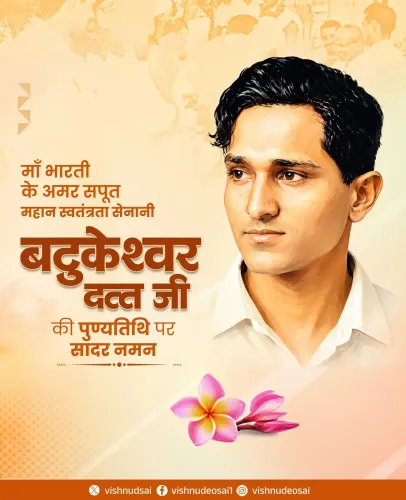
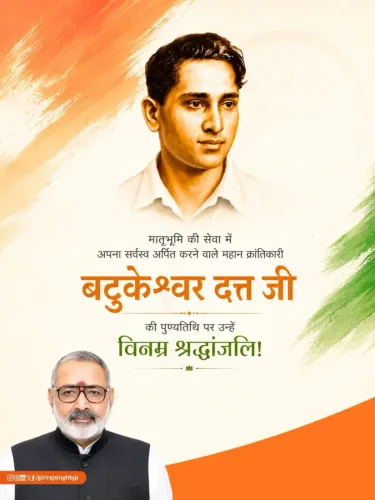
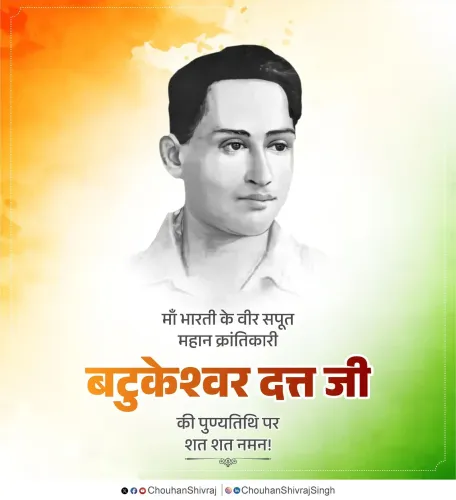
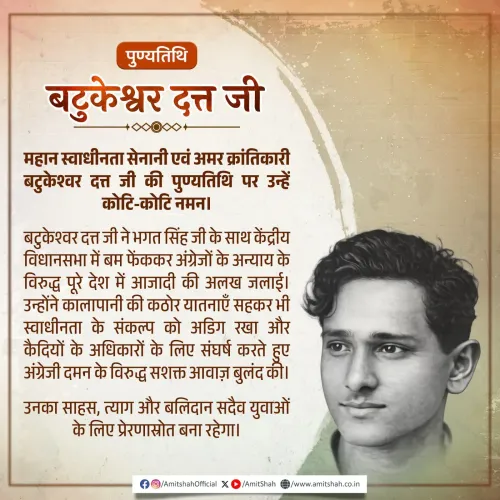
Batukeshwar Dutt is remembered as one of the most daring figures of India's revolutionary independence movement. On 8 April 1929, he and Bhagat Singh threw non-lethal smoke bombs inside the Central Legislative Assembly in Delhi to protest the Public Safety Bill and the Trade Disputes Bill — acts they described as making 'the deaf hear.' The act was as much a political statement as it was a physical one; both men surrendered to the authorities immediately after, using their subsequent trial as a platform to articulate the case for independence.
Dutt was subsequently tried and convicted, spending years in prison including a prolonged hunger strike demanding equal treatment for political prisoners. He remained a committed, if less publicly celebrated, figure of the revolutionary stream of the freedom struggle long after independence.
Policy Backdrop
Shekhawat's tribute fits within a sustained official effort, accelerated since 2014, to formally expand the pantheon of independence-era icons recognised at the national level — particularly those from the revolutionary, non-Congress tradition. The Azadi Ka Amrit Mahotsav, launched in 2021 to mark 75 years of Indian independence, explicitly included commemorations of both Gandhian and revolutionary streams of the freedom movement, providing an institutional framework for such tributes.
As Union Minister of Culture, Shekhawat holds direct responsibility for how the government curates and communicates India's historical memory, making his social-media tributes to figures like Dutt a visible extension of that mandate.
Stakeholders and Impact
The tribute carries symbolic weight for historians, educators, and students who have long argued that revolutionary nationalists like Dutt received less official recognition than leaders of the mainstream independence movement. For the BJP, honouring such figures reinforces a political narrative that situates the party within a broader, more diverse tradition of Indian nationalism.
Civil society groups focused on preserving the legacy of Bhagat Singh and his associates — including Batukeshwar Dutt — have frequently called for greater inclusion of their stories in school curricula and public memorials.
What's Next
Observers will watch for possible government announcements — around 15 August (Independence Day) or 28 September (Bhagat Singh's birth anniversary) — on new memorials, curriculum modules, or state honours linked to the Bhagat Singh circle of revolutionaries, of which Batukeshwar Dutt was a central member. Shekhawat's ministry has previously used cultural anniversaries as launch points for heritage and education initiatives.
Point of View
Decade-long effort by the BJP-led government to reclaim and amplify the revolutionary nationalist tradition as a counterweight to the Congress-centric narrative of India's independence movement. By using the platform of the Culture Ministry, Shekhawat signals that such commemorations carry institutional, not merely personal, weight. The timing and consistency of these tributes suggest a structured cultural-political calendar, not spontaneous sentiment. Whether the ministry translates this symbolic recognition into concrete policy — new memorials, textbook revisions, or heritage projects — will be the real measure of its commitment.
NationPress
21 Jul 2026
Frequently Asked Questions
Who was Batukeshwar Dutt?
Batukeshwar Dutt was an Indian revolutionary freedom fighter who, alongside Bhagat Singh, threw smoke bombs in the Central Legislative Assembly in Delhi on 8 April 1929 to protest British colonial laws. He was subsequently tried, convicted, and imprisoned, and is remembered as a key figure in the revolutionary stream of India's independence movement.
What did Batukeshwar Dutt and Bhagat Singh do in 1929?
On 8 April 1929, Batukeshwar Dutt and Bhagat Singh threw non-lethal smoke bombs inside the Central Legislative Assembly in Delhi to protest the Public Safety Bill and the Trade Disputes Bill. Both men surrendered immediately and used their trial as a public platform to advocate for Indian independence.
Why did Gajendra Singh Shekhawat pay tribute to Batukeshwar Dutt?
Shekhawat paid tribute on Batukeshwar Dutt's death anniversary, honouring his role as a patriot and revolutionary who defied British rule. As Union Minister of Culture and Tourism, Shekhawat has a mandate to preserve and promote India's historical legacy, including the contributions of revolutionary freedom fighters.
What is Azadi Ka Amrit Mahotsav?
Azadi Ka Amrit Mahotsav is a Government of India initiative launched in 2021 to mark 75 years of Indian independence. It includes nationwide commemorations of both Gandhian and revolutionary streams of the freedom struggle, providing an official framework for recognising figures like Batukeshwar Dutt.
Is Batukeshwar Dutt related to Bhagat Singh?
Batukeshwar Dutt was a close associate and fellow revolutionary of Bhagat Singh, both being members of the Hindustan Socialist Republican Association. Their joint action in the Central Legislative Assembly in 1929 is one of the most iconic acts of the revolutionary independence movement.