Shekhawat Pushes Back on Ethanol Water-Use Claims

Synopsis
Union Minister Gajendra Singh Shekhawat has pushed back against a viral claim that producing 1 litre of ethanol consumes 10,000 litres of water, releasing a video on 3 August 2026 urging the public to understand the full context behind India's ethanol blending programme.
Key Takeaways
Union Minister Gajendra Singh Shekhawat posted a rebuttal video on 3 August 2026 targeting the claim that 1 litre of ethanol requires 10,000 litres of water .
He characterised the figure as a half-truth being deliberately circulated and called for context-aware understanding of the facts.
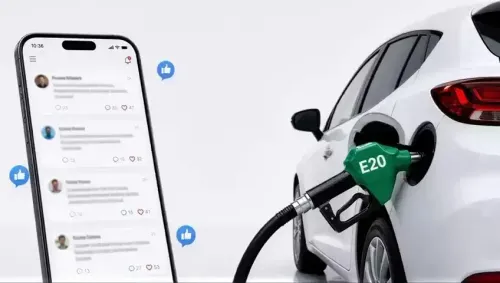
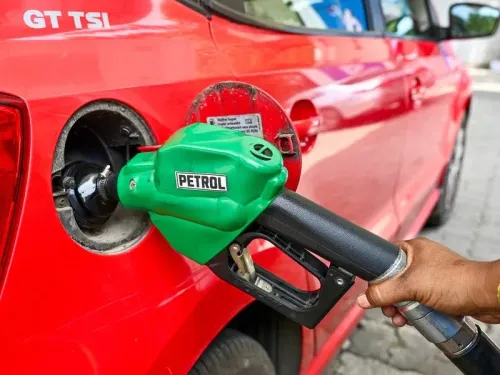
India's Ethanol Blended Petrol Programme , launched in 2003 , now targets 20% blending under the National Policy on Biofuels 2018 .
Ethanol production remains concentrated on water-intensive sugarcane in Uttar Pradesh and Maharashtra , fuelling recurring groundwater debates.
The programme directly benefits sugarcane farmers and distilleries through assured off-take by oil marketing companies.
Official communications have periodically countered high water-use narratives by pointing to revised processes and diversified feedstocks.
A viral claim — that producing 1 litre of ethanol consumes 10,000 litres of water — has drawn a pointed rebuttal from Union Culture and Tourism Minister Gajendra Singh Shekhawat, who on Monday, 3 August 2026 posted a video on X urging the public to examine the full picture before accepting the figure at face value.
Posting in Hindi, Shekhawat framed the claim as a deliberate half-truth being circulated to mislead: 'आधी-अधूरी जानकारी नहीं, पूरा सच जानिए' — 'not half-baked information, know the whole truth.' The video, he argued, places every fact in its proper context. He did not specify the origin of the claim.
Why the Ethanol-Water Debate Keeps Resurfacing
The controversy is not new. India's Ethanol Blended Petrol (EBP) Programme, launched in 2003 with a modest 5% blending target, has since grown into a flagship energy-security initiative. The National Policy on Biofuels, notified in 2018, widened the feedstock basket beyond molasses and set an ambitious roadmap toward 20% blending. With that scale-up has come sustained scrutiny: ethanol production in India remains heavily concentrated on sugarcane, a notoriously water-thirsty crop, grown primarily in Uttar Pradesh and Maharashtra — states already grappling with groundwater stress. That combination — a government push for higher blending volumes, a water-intensive feedstock, and stressed aquifers — has made the water-consumption figure a recurring flashpoint in public debate. Critics of the programme have used it to question whether the energy gains justify the environmental cost; supporters counter that modern distillery processes and diversified feedstocks significantly reduce water intensity compared with older benchmarks.Shekhawat's Intervention and the Broader Narrative War
Shekhawat's post fits a pattern of official communications actively working to counter what the government characterises as misinformation around the EBP. The minister's decision to release a dedicated explainer video — rather than a text rebuttal — signals a deliberate outreach strategy aimed at a wider, vernacular-language audience on social media. The stakes are real. Sugarcane farmers and ethanol distilleries depend on assured off-take by oil marketing companies, and any public backlash strong enough to slow the blending programme would have direct income consequences for growers in key political states. The water narrative, if left unchallenged, could provide ammunition to those seeking to roll back or cap the programme. What the video actually establishes about water consumption — and which specific data or process improvements it cites — remains to be seen. Policymakers and environmental groups alike will be watching whether it addresses groundwater depletion at the state level, and whether any revision to distillery water-use norms follows. The government has staked considerable political capital on ethanol blending as both a farmer-welfare and energy-independence story. Shekhawat's pushback makes clear it intends to defend that story — fact by fact.Point of View
Farmer-income, and import-substitution narratives. The ethanol blending roadmap is too central to the government's rural economy pitch to allow a single viral statistic to define public perception. By entering the information battle personally, a senior cabinet minister signals that the water-use critique has gained enough traction to warrant high-level damage control. The broader question — whether India's blending ambitions can be reconciled with groundwater sustainability in sugarcane belts — remains politically unresolved and will only intensify as the 20% target draws closer.
NationPress
3 Aug 2026
Frequently Asked Questions
Does making ethanol really use 10,000 litres of water per litre?
This specific figure is disputed. Minister Shekhawat has called it a misleading half-truth, arguing that water consumption depends heavily on the production process and feedstock used. Official communications point to improved distillery methods and non-sugarcane feedstocks as factors that significantly reduce water intensity.
What is India's Ethanol Blended Petrol Programme?
The Ethanol Blended Petrol (EBP) Programme was launched in 2003 to mix ethanol with petrol, reducing oil import dependence and supporting sugarcane farmers through guaranteed purchase by oil marketing companies. The National Policy on Biofuels 2018 expanded feedstocks and set a 20% blending target .
Why is ethanol linked to water scarcity concerns in India?
Most Indian ethanol is produced from sugarcane, a highly water-intensive crop grown largely in Uttar Pradesh and Maharashtra — states that already face groundwater stress. As blending targets rise, the volume of water required for feedstock cultivation and distillery operations becomes a significant environmental concern.
Who is Gajendra Singh Shekhawat?
Gajendra Singh Shekhawat is the Union Minister of Culture and Tourism , a senior BJP leader, and Lok Sabha MP from Jodhpur, Rajasthan . He has previously served as Jal Shakti Minister, giving him direct policy experience in water resource management.
What feedstocks can India use for ethanol besides sugarcane?
The National Policy on Biofuels 2018 expanded permitted feedstocks to include damaged food grains, surplus rice, maize, and other agricultural materials — reducing dependence on sugarcane and potentially lowering the water footprint of ethanol production.