Shekhawat Pays Tribute to Syama Prasad Mookerjee
Synopsis
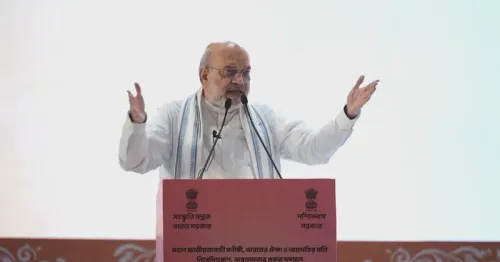
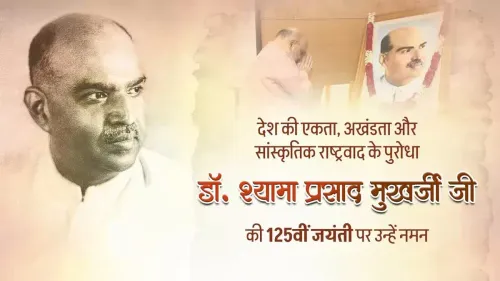
Union Culture and Tourism Minister Gajendra Singh Shekhawat on 6 July 2026 paid tribute to Bharatiya Jana Sangh founder Syama Prasad Mookerjee on his birth anniversary, honouring him as 'Bharat Kesari' and recalling his supreme sacrifice for India's territorial integrity.
Key Takeaways
Gajendra Singh Shekhawat , Union Minister of Culture and Tourism, paid tribute to Syama Prasad Mookerjee on 6 July 2026 , his birth anniversary.
Shekhawat described Mookerjee as 'Bharat Kesari' (Lion of India) and honoured his supreme sacrifice for the country's integrity.
Syama Prasad Mookerjee founded the Bharatiya Jana Sangh in 1951 , the predecessor of the BJP, and died in 1953 while protesting Jammu and Kashmir's special constitutional status.
The BJP has consistently invoked Mookerjee's legacy to frame the 2019 revocation of Article 370 as the fulfilment of his political vision.
The tribute reflects the Ministry of Culture's role in sustaining institutional memory of nationalist figures central to the BJP's ideological lineage.
Union Culture and Tourism Minister Gajendra Singh Shekhawat on Monday, 6 July 2026 paid tribute to Syama Prasad Mookerjee, describing the nationalist leader as 'Bharat Kesari' (Lion of India) and honouring his supreme sacrifice for the country's integrity.
Context
Shekhawat's post, shared on X, recalled Mookerjee's ultimate sacrifice in the cause of national unity, stating: 'Bharat Kesari' Dr. Mookerjee ne desh ki akhandata ke liye sarvoch balidan diya — 'Dr. Mookerjee, the Lion of India, gave the supreme sacrifice for the country's integrity.' The tribute reflects the BJP's enduring reverence for Mookerjee as a foundational ideological figure.
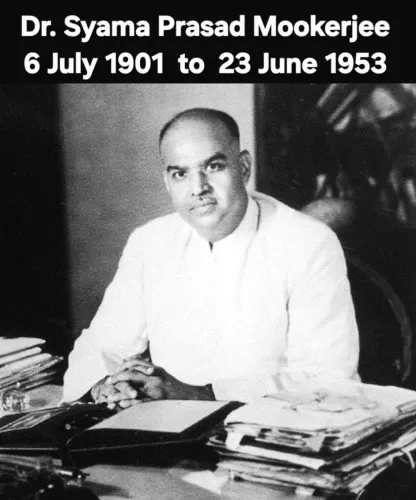
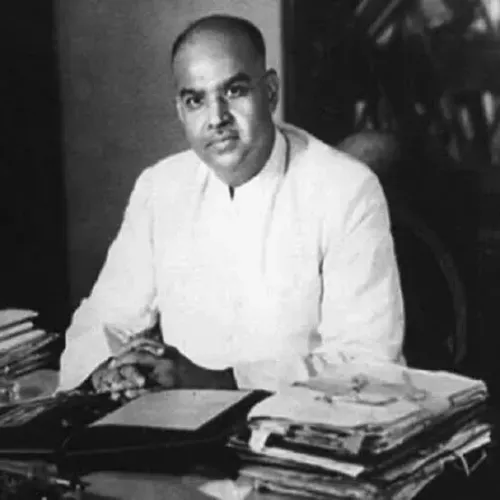
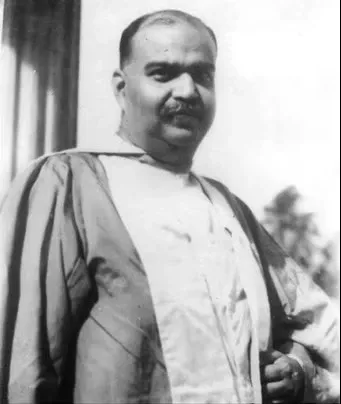
Syama Prasad Mookerjee was a Bengali scholar, politician, and nationalist who founded the Bharatiya Jana Sangh in 1951, the political predecessor of today's Bharatiya Janata Party. He died in 1953 under contested circumstances while in detention in Jammu and Kashmir, where he had gone to protest the region's special constitutional status and the requirement for a separate permit for Indian citizens to enter the state.
Policy Backdrop
Mookerjee's central political demand was the full constitutional integration of Jammu and Kashmir with the Indian Union, opposing the framework that gave the state a distinct status under Article 370. His slogan — 'Ek desh mein do Vidhan, do Pradhan aur do Nishan nahin chalenge' (One country cannot have two constitutions, two prime ministers, and two national emblems) — became a rallying cry for generations of Jana Sangh and BJP leaders.
The BJP government revoked Article 370 in August 2019, reorganising Jammu and Kashmir into two Union Territories. Since then, the party has consistently invoked Mookerjee's memory to frame that decision as the fulfilment of a decades-long nationalist aspiration, contrasting it with what it describes as Congress-era compromises on Kashmir's integration.
Stakeholders and Impact
Tributes to Mookerjee carry significance beyond ceremonial remembrance for the BJP and its wider ideological ecosystem. For BJP workers and supporters, Mookerjee represents the original articulation of complete national unity — a narrative that the party has actively reinforced in the years following the 2019 Kashmir reorganisation.
As Union Minister of Culture, Shekhawat's tribute also signals the ministry's role in sustaining public memory of nationalist figures. The Ministry of Culture has previously been involved in commemorative events tied to the birth and death anniversaries of leaders the ruling dispensation regards as foundational to India's modern identity.
What's Next
Mookerjee's death anniversary falls on 23 June, while his birth anniversary is on 6 July — the same date as this post — making this tribute consistent with the occasion of his birth anniversary. The BJP and affiliated organisations typically mark both dates with party programmes, seminars, and official commemorations across the country.
With the Ministry of Culture under Shekhawat's stewardship, formal institutional events honouring Mookerjee's legacy — including possible exhibitions, lectures, or commemorative publications — remain a possibility as the government continues to align cultural policy with its broader historical narrative around national integration and Jammu and Kashmir.
Point of View
Particularly the 2019 Kashmir reorganisation, to the sacrifices of its founding figures. For the Ministry of Culture, these tributes also serve a softer institutional purpose: embedding specific historical figures into the national commemorative calendar. The timing and language — 'supreme sacrifice for national integrity' — are consistent with the party's long-standing effort to position Mookerjee not merely as a BJP ancestor but as a pan-national hero deserving state-level recognition.
NationPress
5 Oct 2026
Frequently Asked Questions
Who was Syama Prasad Mookerjee?
Syama Prasad Mookerjee was a Bengali politician and scholar who founded the Bharatiya Jana Sangh in 1951 , the political party that later evolved into the BJP. He died in 1953 while in detention in Jammu and Kashmir, where he had gone to protest the state's special constitutional status under Article 370.
Why is Syama Prasad Mookerjee called Bharat Kesari?
Bharat Kesari , meaning 'Lion of India', is an honorific used by BJP leaders and supporters to describe Syama Prasad Mookerjee in recognition of his fierce advocacy for complete national integration and his willingness to sacrifice his life for the cause.
When is Syama Prasad Mookerjee's birth anniversary?
Syama Prasad Mookerjee was born on 6 July 1901 . His birth anniversary is observed annually on 6 July , and his death anniversary falls on 23 June .
What did Gajendra Singh Shekhawat say about Mookerjee?
Union Culture and Tourism Minister Gajendra Singh Shekhawat described Mookerjee as 'Bharat Kesari' and stated that he gave the supreme sacrifice for the country's integrity, paying tribute on 6 July 2026 .
How is Syama Prasad Mookerjee connected to Article 370?
Syama Prasad Mookerjee was one of the earliest and most vocal opponents of Article 370 , which gave Jammu and Kashmir a distinct constitutional status. He died in detention in the state in 1953 while protesting this arrangement. The BJP cited his legacy when it revoked Article 370 in 2019 .